
Islamabad stayed on edge after last-minute delays to US–Iran talks left a large "Red Zone" sealed and the city under tight security. Markets were subdued, officials worked remotely and many children attended class online as transport disruptions hit small businesses and daily wage earners. Major firms also reported production slowdowns, yet many residents expressed pride in Pakistan's role hosting diplomacy that could help end weeks of regional fighting.
Islamabad Braces as US–Iran Talks Stall; Residents Frustrated by Security Lockdowns
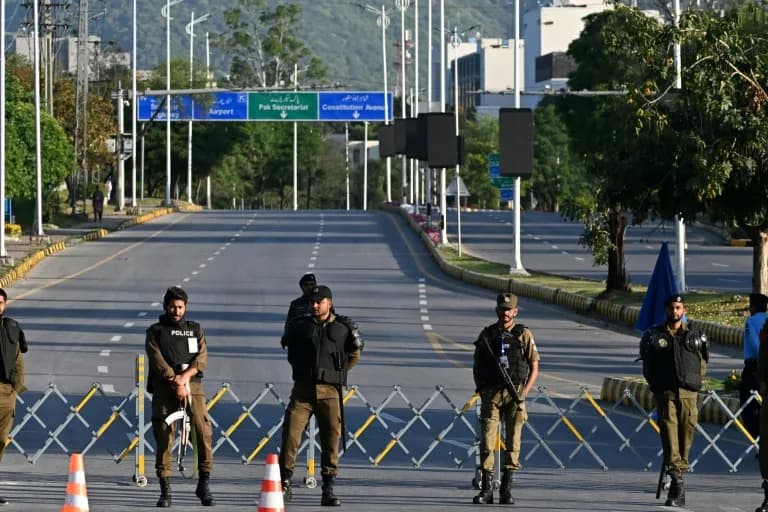
Islamabad's capital remained under tight security restrictions, despite the face that talks remained in limbo (Aamir QURESHI)(Aamir QURESHI/AFP/AFP)
Islamabad remained effectively immobilised on Wednesday after last-minute delays to planned US–Iran negotiations, while many residents grew increasingly weary of the personal and economic toll of stringent security measures.
Markets were quiet, government officials worked from home, children attended classes online and security forces maintained strict controls on access to the sprawling "Red Zone" around the negotiating venue. US Vice President JD Vance had been expected to arrive Wednesday morning but the White House abruptly changed plans; Iran's delegation also delayed a decision on whether to attend.
Economic And Daily-Life Disruption
Major roads have been closed in recent days to facilitate the arrival of foreign delegations and US cargo planes delivering equipment. The stop-start nature of this month's restrictions has hit small businesses and daily wage earners hardest, while larger firms have also reported operational disruptions.
No Customers: "The impact of the lockdown is that we are not seeing any customers here in the market... the government does not know what one day of their lockdown does to our households," said Muhammad Ahsan, 35, owner of a small jewellery kiosk. "Our stoves do not run, we do not find food (in the markets)."
Large companies felt the effect as well: major oil refiner Attock announced it was pausing production at a key unit because of transport disruptions.
Diplomacy And Public Sentiment
Residents expressed mixed feelings — pride that Pakistan was hosting high-stakes diplomacy that could help end weeks of fighting, but frustration over repeated closures and lost income. An earlier round of talks in Islamabad ended without an agreement, and US President Donald Trump extended a ceasefire as intense diplomacy continued to try to end the conflict that began after US and Israeli strikes on Iran on February 28.
"We have to live here, the Red Zone has been shut down. Children cannot go to school, and shops are closed from time to time," said office worker Zainab Ali Uthmankhail, 27.
Others vowed to accept short-term hardship for a larger peace dividend. "We are giving a small sacrifice to reduce the size of the larger sacrifice," said young doctor Syed Umar Hasnain Shah. "So we will continue to sacrifice."
Reporting codes: bur-ceg/aha/pbt
Help us improve.





















