Sen. Bill Cassidy faces HHS Secretary Robert F. Kennedy Jr. in two Senate hearings that could define congressional oversight of federal health policy and influence Cassidy’s reelection bid. Cassidy, a physician who helped secure Kennedy’s confirmation after receiving promises about vaccine policy, has since clashed with the secretary over proposals critics say roll back vaccine protections. With President Trump endorsing Cassidy’s primary challenger and Kennedy-aligned groups backing that opponent, the hearings will test Cassidy’s ability to balance scientific credibility and political survival.
Cassidy vs. RFK Jr.: Senate Hearings Will Test Loyalty To Trump, Scientific Oversight And His Reelection
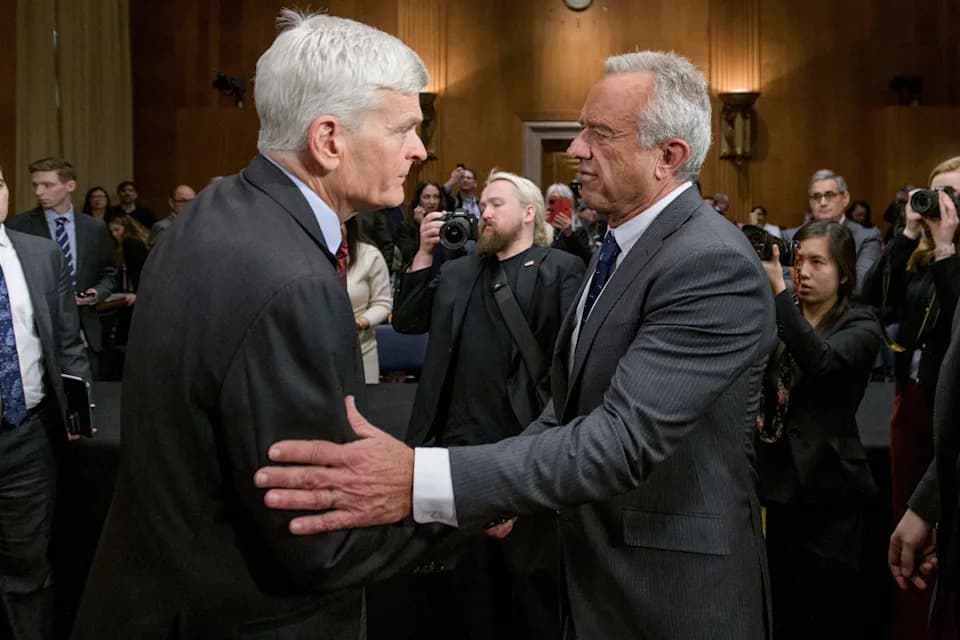
FILE - Robert F. Kennedy, Jr., right, President Donald Trump's nominee to serve as Secretary of Health and Human Services, talks with Committee Chairman Sen. Bill Cassidy, R-La., following his confirmation hearing on Capitol Hill, Jan. 30, 2025, in Washington. (AP Photo/Rod Lamkey, Jr., File)(ASSOCIATED PRESS)
Sen. Bill Cassidy’s overlapping roles as a physician, a Senate committee chair and an embattled reelection candidate converge this week as he faces HHS Secretary Robert F. Kennedy Jr. in two consequential Senate hearings. The sessions — convened by committees that oversee the Department of Health and Human Services — will spotlight tensions between scientific oversight and partisan loyalty at a volatile moment in health policy and politics.
What’s At Stake
As chair of the Senate Health, Education, Labor and Pensions (HELP) Committee and a member of another committee with jurisdiction over HHS, Cassidy has two opportunities to press Kennedy about policy changes that could reshape vaccine recommendations, research funding and public health programs. The hearings come amid criticism that Kennedy’s moves could weaken protections for illnesses such as influenza, hepatitis B and RSV, and as litigation attempts to block some of those changes.
Background: A Complex Political And Professional Balance
Cassidy, a Louisiana Republican and former liver specialist, has a long history of advocating for vaccines in his medical practice — for example, supporting newborn hepatitis B vaccination. Yet he voted to confirm Kennedy as HHS secretary last year after securing assurances that Kennedy would operate within the existing vaccine-approval and safety-monitoring systems and respect the childhood vaccine schedule.
Since taking office, Kennedy has proposed rollbacks of several vaccine recommendations and shifted some of his messaging toward diet and healthy-eating initiatives. Critics say parts of his agenda risk undermining established public-health protections; Kennedy’s allies argue he is pursuing reform.
Political Pressure
Cassidy’s choices during the hearings have immediate political consequences: President Donald Trump unusually endorsed one of Cassidy’s primary challengers, U.S. Rep. Julia Letlow, and Cassidy also faces a challenge from Louisiana Treasurer John Fleming. The MAHA PAC, aligned with Kennedy’s Make America Healthy Again movement, has pledged $1 million to Letlow’s campaign, raising questions about whether the backing partly reflects retaliation for Cassidy’s public criticism of Kennedy’s vaccine policy agenda.
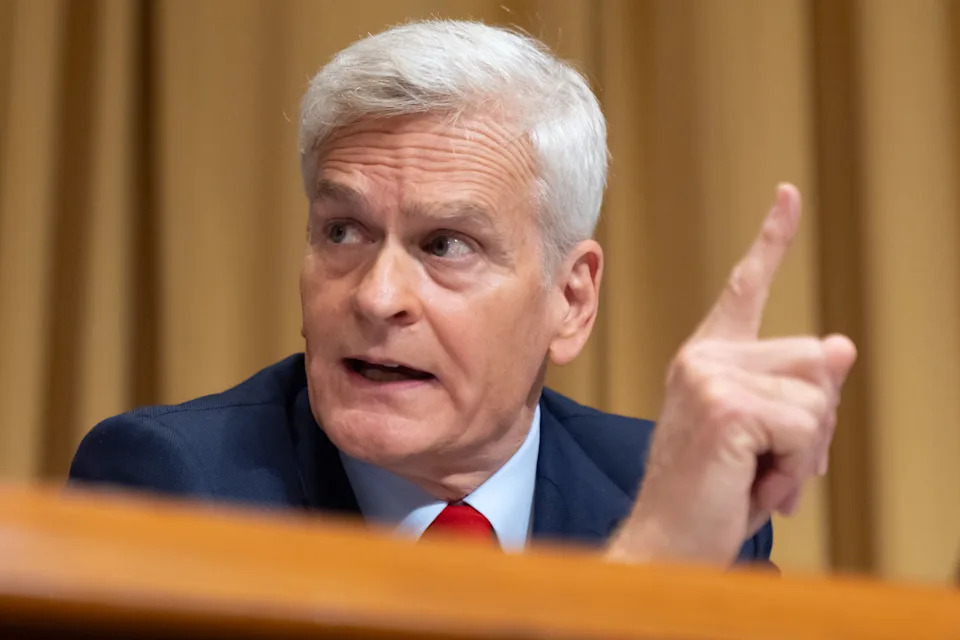
FILE - Sen. Bill Cassidy, R-La., speaks as Secretary of Health and Human Services Robert F. Kennedy Jr., appears before the Senate Finance Committee, on Capitol Hill in Washington, Sept. 4, 2025. (AP Photo/Mark Schiefelbein, File)(ASSOCIATED PRESS)
“He’s taken a risk showing any sort of resistance to RFK,” said Claire Leavitt, an assistant professor at Smith College who studies congressional oversight. “He may pay an electoral price for that.”
Past Confrontations And The Core Issues
At a September hearing, Cassidy publicly challenged Kennedy over cuts to mRNA vaccine research funding and moves to replace vaccine advisory committee members, raising potential conflict-of-interest concerns. Cassidy also convened a later hearing that featured Susan Monarez, the former CDC director removed by Kennedy, and Debra Houry, the CDC’s former chief medical officer who resigned citing an erosion of science at the agency.
Experts differ on how voters will respond if Cassidy presses hard on vaccines. Vaccine law scholar Dorit Reiss of UC Law San Francisco said the political downside for Cassidy may be limited and that focusing on the science is unlikely to alienate many voters. Louisiana consultant Mary-Patricia Wray suggested Cassidy could still attract crossover Democrats and undecided Republicans if he frames his oversight as consistent, principled leadership.
Consequences Beyond The Campaign
Beyond the immediate politics, the hearings will help determine how aggressively Congress oversees HHS. If Cassidy loses his chairmanship or his Senate seat, committee leadership could pass to another senator who may take a different approach to Kennedy and to public-health oversight more broadly.
Bottom line: Wednesday’s hearings are as much about policy and public trust in science as they are about Cassidy’s political future. How he balances medical credibility, committee responsibility and party loyalty will be scrutinized by voters, colleagues and public-health experts.
Associated Press writer Sara Cline contributed to this report.
Help us improve.