
Researchers find that small spore-bearing plants called lycophytes likely survived the Permian–Triassic mass extinction by using CAM or CAM-like photosynthesis—taking up CO2 at night to limit daytime water loss during extreme heat. The team combined fossil morphology, carbon isotope data from southern China, and climate modelling to support this explanation. Modern relatives (Isoetes/quillworts) can switch between C3 and CAM, offering a living analogue. The work suggests long-term metabolic flexibility helped plants endure ancient greenhouse extremes and may inform responses to future warming.
How Night-Time Photosynthesis Helped Primitive Plants Survive the Great Dying
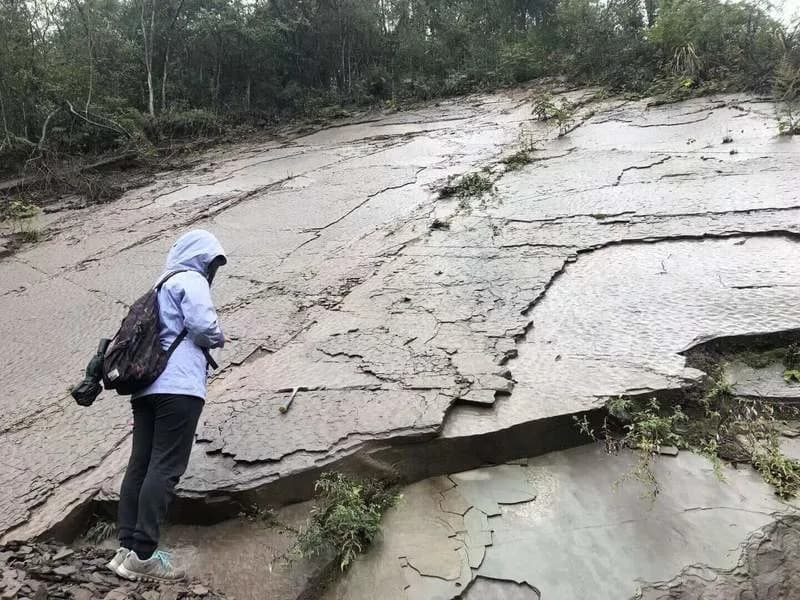
Fossil hunting by the research team in south China. (CREDIT: Benjamin Mills et al / University of Leeds)
After Earth’s most catastrophic extinction, life on land did not disappear entirely. While forests largely vanished and many familiar plant groups were wiped out, a lineage of small, spore-bearing plants called lycophytes expanded across devastated landscapes. New research suggests these survivors endured extreme heat and drought by shifting part of their carbon intake to the cooler night hours.
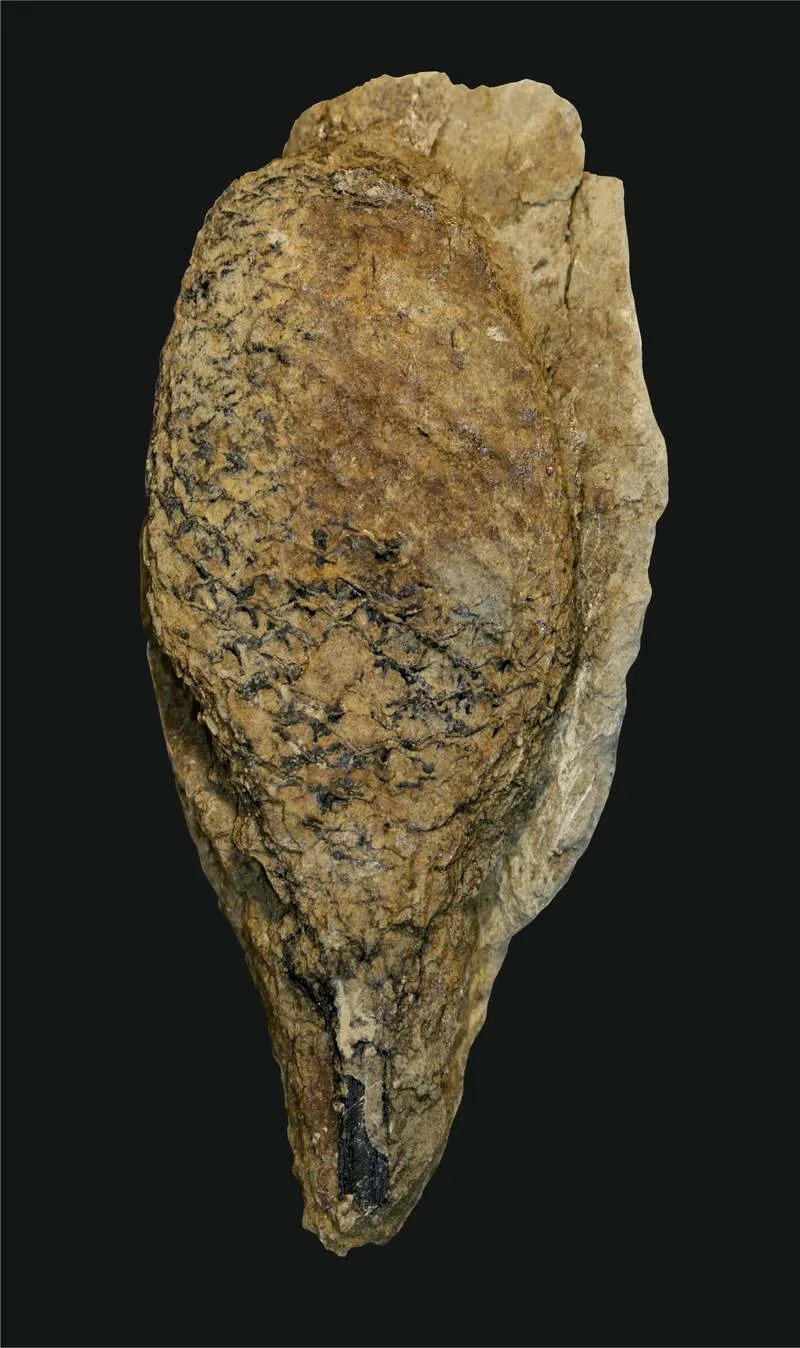
Lycophyte reproductive cones, belonging to the genus Lepacyclotes. (CREDIT: Benjamin Mills et al / University of Leeds)
Study Overview
Researchers from the University of Leeds combined paleontology, stable-isotope chemistry and climate modelling to investigate why lycophytes thrived after the Permian–Triassic mass extinction (the “Great Dying”), about 252 million years ago. The team examined 485 fossil and living sporophyll specimens, measured carbon isotopes from fossil plants in southern China, and compared fossil distributions with simulated Triassic climate conditions.
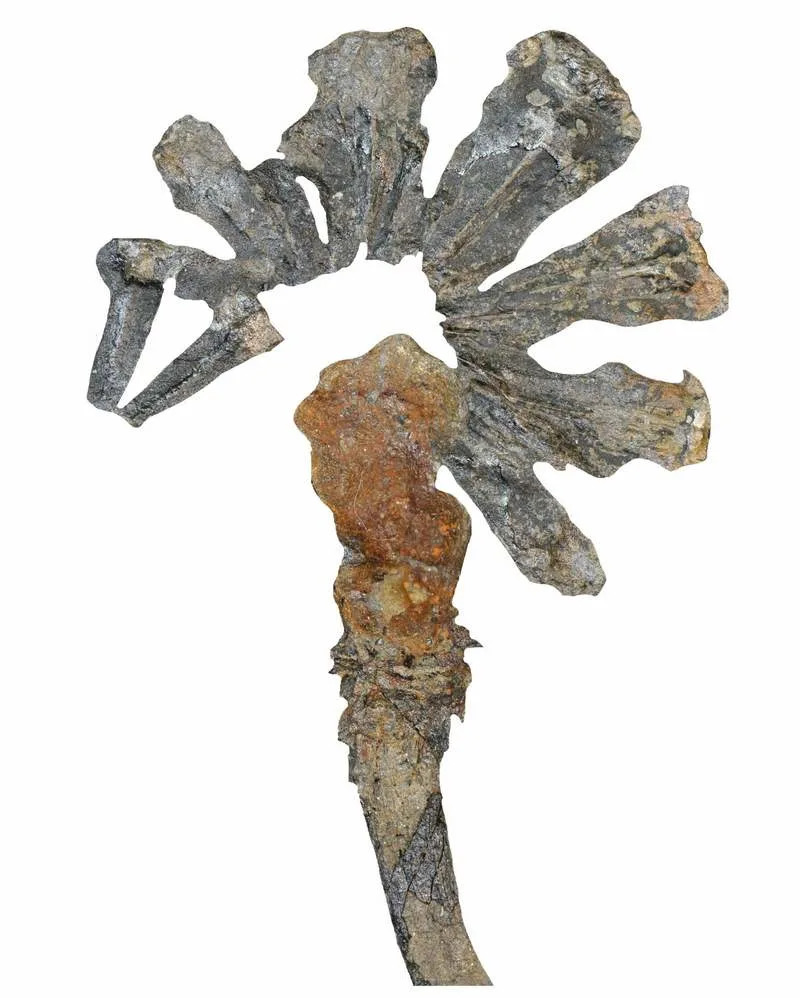
Lycophyte reproductive cones, belonging to the genus Lepacyclotes. (CREDIT: Benjamin Mills et al / University of Leeds)
Key Findings
The authors conclude that many post-extinction lycophytes likely relied on crassulacean acid metabolism (CAM) or a CAM-like pathway. CAM plants open stomata at night to take up CO2—storing it as organic acids—and close them during the day to reduce water loss. This nocturnal strategy would strongly reduce daytime transpiration and photorespiration under the extreme heat and aridity modelled for the early Triassic.

Representative lycophytes reconstructions from Late Permian to recent. (CREDIT: Nature Ecology & Evolution)
Isotope ratios preserved in fossil lycophytes were distinct from coeval plants, particularly during the extinction interval, consistent with nocturnal carbon uptake. As climates ameliorated, those isotopic differences narrowed and later disappeared.
Why This Matters
Climate models and fossil evidence indicate enormous environmental stress: prolonged volcanism from the Siberian Traps, large rises in atmospheric CO2, and sustained global warming. Reconstructions suggest equatorial sea-surface temperatures exceeded ~35 °C and land temperatures often surpassed 45 °C, with regional daily maxima reaching 50–60 °C in some modelled areas. Under such conditions, typical C3 photosynthesis becomes inefficient or lethal, while CAM-like strategies offer a survival advantage.

Neighbour-net of all lycopods species sporophyll. Each number at the end of each branch represents a lycopod sporophyll species. (CREDIT: Nature Ecology & Evolution)
Modern Analogues and Caveats
Support for the hypothesis comes from living relatives. Isoetes (quillworts), close relatives of the fossil forms such as Tomiostrobus, persist globally and some species can shift between C3 and CAM metabolism under stress—providing a living analogue for metabolic flexibility in ancient lycophytes.
The authors caution that the fossil record cannot directly record metabolism; stable isotopes are proxies that can be influenced by multiple factors, and Early Triassic fossils are relatively sparse. Nonetheless, the convergence of isotope evidence, morphology and climate simulations makes CAM—or a CAM-like nocturnal carbon uptake—an elegant explanation for how lycophytes survived and proliferated.
Implications
Beyond explaining a major paleobotanical puzzle, the study highlights deep evolutionary roots of metabolic flexibility. Lead author Dr. Zhen Xu (University of Leeds) notes that plants with CAM characteristics may become increasingly important under future warming. Professor Benjamin Mills adds that understanding past physiological strategies helps predict how vegetation and ecosystems might reorganize under accelerating climate change.
Publication: The full study is published in Nature Ecology & Evolution.
Help us improve.





















