
Some advisers say President Trump’s extreme social-media posts are deliberate attempts to seem unpredictable and intimidate Iran into negotiations. But the tactic has three critical flaws: it failed for Nixon, it requires consistent role-playing the president has not provided, and it misunderstands how credible deterrence works. A more effective alternative—what the author calls a Rational Leader approach—demands clear objectives, an understanding of the adversary, and alignment of words with actions. Given recent threats, strikes, and stop‑start diplomacy, Tehran has little reason to trust that bluster will be backed up—or restrained.
Why Trump’s ‘Madman’ Posts Are Imploding: Three Reasons the Tactic Won’t Work
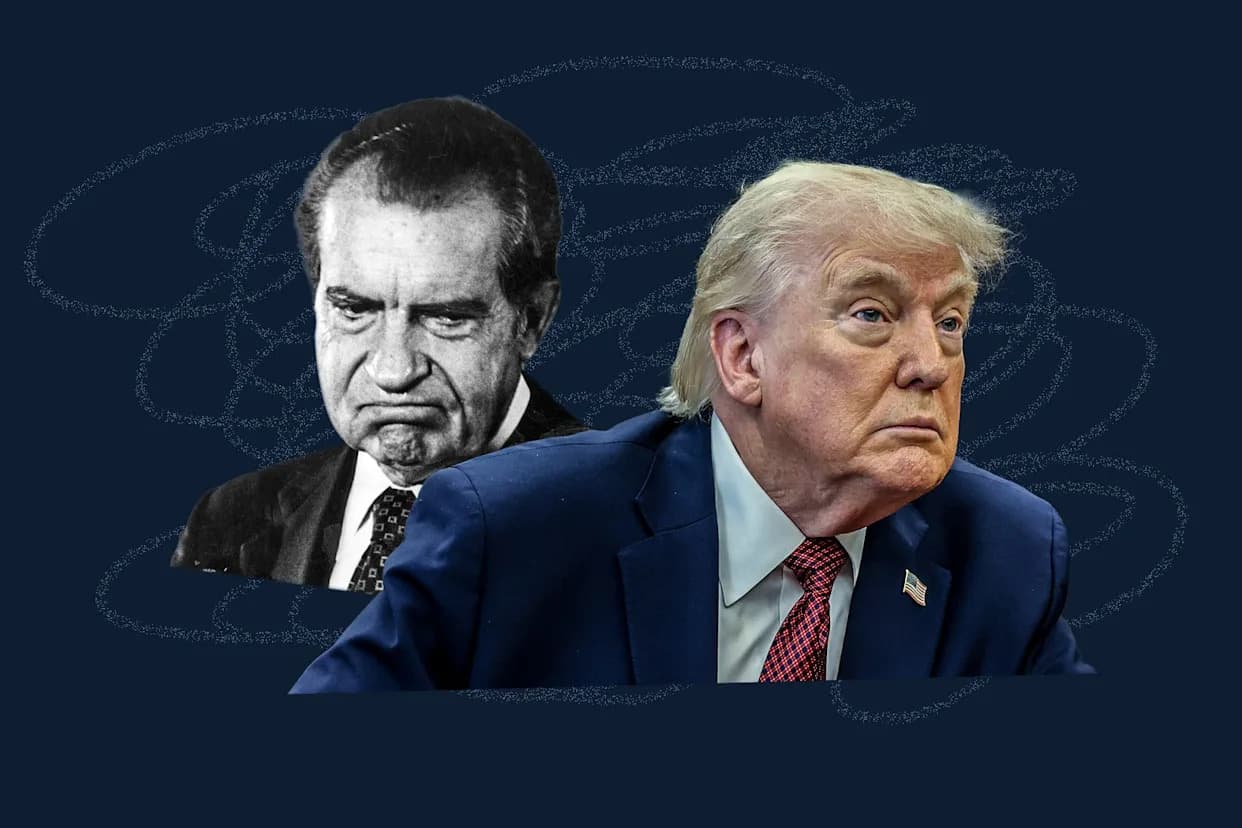
Some aides say President Donald Trump’s most extreme social-media outbursts are intentional—an effort to appear unpredictable and dangerous so foreign leaders will rush to placate him. The Wall Street Journal reports senior officials saying Mr. Trump explained this logic after a post that bizarrely included “Praise be to Allah” in a message threatening Iran: he wanted to seem “unstable and insulting” because he believed that would push Tehran toward talks. “How’s it playing?” he reportedly asked advisers.
What the “Madman Theory” Is—and Where It Came From
The so-called Madman Theory dates to Richard Nixon. During his 1968 campaign, Nixon told aide H.R. Haldeman that he wanted adversaries to believe he might do anything to end a conflict—even hinting he had his hand on the nuclear button—to compel them to negotiate. Nixon later tried signals such as putting forces on alert to influence the Kremlin and Hanoi, with limited success.
Three Reasons Trump’s Version Is Unlikely To Work
1. It Failed With Nixon
Historically the tactic did not produce the intended results for Nixon. After the 1968 election, his envoys carried the message to North Vietnam; Hanoi largely ignored the implied threats and pursued its objectives. Later nuclear signaling aimed at the Soviets also proved muddled—Soviet officials noted alerts were used so often they lost meaning. The historical record shows the approach is not a reliable shortcut to concessions.
2. It Requires Consistent Role‑Playing
For the Madman gambit to be credible, a leader must inhabit the role steadily: keep clear objectives, avoid publicly retreating from threats, and never announce that the performance is theater. Mixed messages—threats followed by abrupt reversals or by public admissions of bluffing—destroy credibility. According to reports, Mr. Trump has alternated threats, concessions, and public signaling in ways that make Iran’s leaders uncertain how to respond.
3. It Misreads Deterrence
Deterrence rests on tangible capabilities and institutional reliability—arsenals, command-and-control, doctrine and credible decision-making—not merely on performative outrage. Acting erratic on social media without consistent, demonstrable backing turns deterrence into noise rather than leverage.
An Alternative: The Rational Leader Approach
A more credible strategy—call it the Rational Leader Theory—emphasizes: clearly defined objectives; an understanding of the adversary’s motives; and alignment between words and demonstrable actions. In short: know what you want, show you can achieve it, and communicate consistently.
Why Iran Might Distrust Mr. Trump
Even critics of Iran’s government can see why Tehran would be skeptical. In his first term, Mr. Trump tore up the 159‑page nuclear agreement negotiated under President Barack Obama, despite inspector verification of Iranian compliance and broad expert support for the deal as preferable to no agreement. More recently—according to reporting—U.S. envoys engaged with Iranian officials; Tehran reportedly offered a restrictive package, but large-scale strikes later killed senior Iranian figures and appeared to undercut diplomatic momentum.
On Easter weekend, after reported weeks of strikes, Mr. Trump issued aggressive social-media warnings giving Iran 48 hours to reopen the Strait of Hormuz or face severe retaliation, including wide destruction of infrastructure. Iran responded with a reported 10‑point peace proposal. Mr. Trump accepted that proposal as a basis for talks—apparently to avoid carrying out his threats—then sent emissaries (including, reporting says, Vice President J.D. Vance) to negotiate. Public inconsistencies—threats of extreme retaliation followed by negotiation—make future threats less credible and encourage adversaries to test whether bluster will be followed by action.
So Is It Bluff—or Real Escalation?
These episodes raise urgent questions: what specific objective is supposed to justify the threatened devastation? If the goal is to reopen a shipping lane, is leveling civilian infrastructure proportional or believable? What exactly is “the deal” on offer, and if Tehran accepts, will Washington honor it? If the president again retreats at the last minute, adversaries may conclude stalling is a viable tactic; if he follows through, the human and regional costs could be catastrophic.
In short, this pattern looks less like a refined application of Madman Theory and more like chaotic escalation: performative threats, inconsistent diplomacy, and rising international alarm. Whether this path ends the conflict quickly or only expands it remains dangerously uncertain.
Help us improve.





















