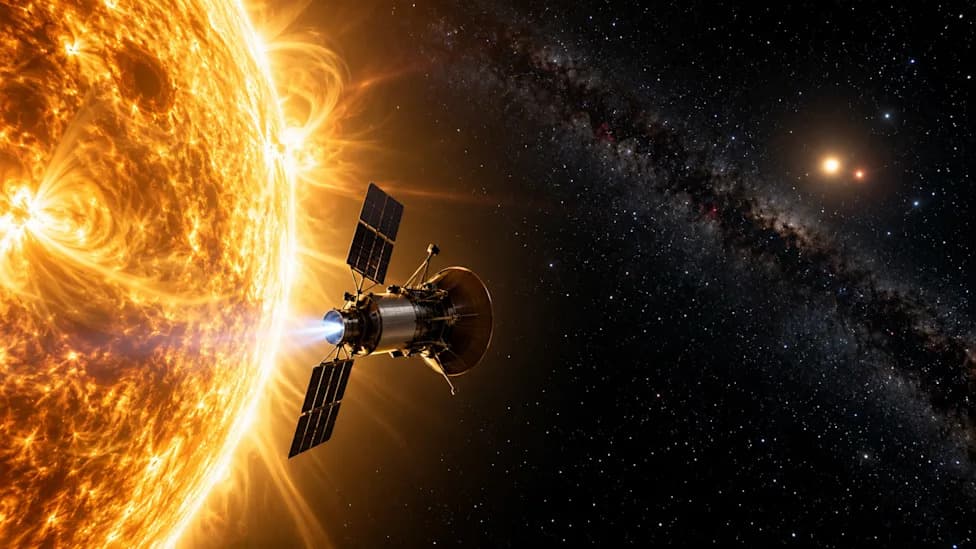
NASA detected a power drop on Voyager 1 during a 27 February roll and switched off the Low-energy Charged Particles (LECP) instrument as a precaution. Launched in 1977, Voyager 1 is now the most distant human-made object—more than 25 billion kilometres from Earth—and is powered by an RTG that loses about 4 watts per year. Two instruments remain active while engineers test a "far-out plan" to extend the probe's operational life and restore capabilities where possible.
Voyager 1 Losing Power: NASA Turns Off Instrument and Tests 'Far-Out Plan' to Keep Probe Alive
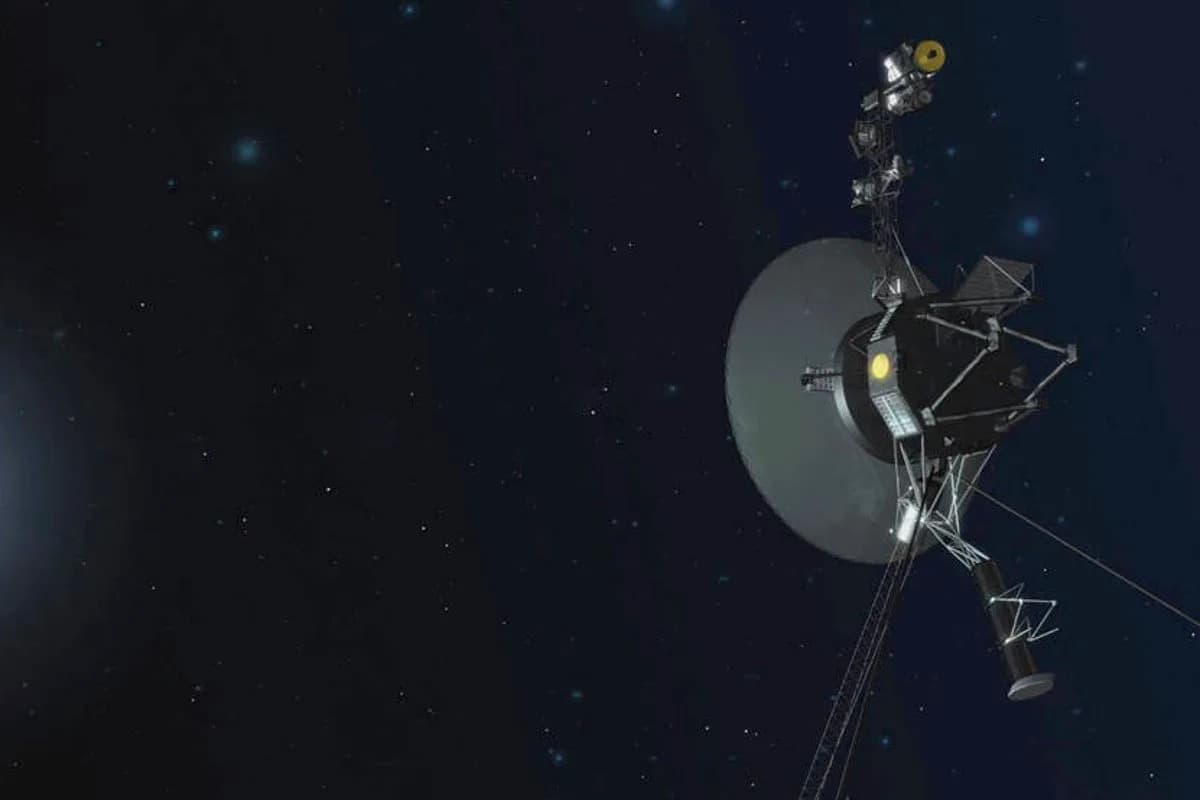
An artist’s impression of Nasa’s Voyager 1 satellite (Nasa)
NASA is racing to preserve Voyager 1 after engineers detected an unexpected drop in available power during a planned roll on 27 February. To prevent broader system shutdowns while teams work on a longer-term fix, mission operators have switched off one science instrument as a precaution.
Voyager 1, launched in 1977 and the most distant human-made object, crossed into interstellar space in 2012. The probe is now more than 25 billion kilometres (about 15 billion miles) from Earth and is powered by a radioisotope thermoelectric generator (RTG) that converts heat from decaying plutonium into electricity. The RTG’s output slowly declines—roughly 4 watts per year—so power management is critical to keeping the spacecraft operating.
An anomalous low-power condition was identified during the 27 February roll; engineers warned that any further drop could trigger an onboard protection sequence that would automatically shut down additional systems. To avoid that outcome, NASA temporarily turned off the Low-energy Charged Particles experiment (LECP).
"While shutting down a science instrument is not anybody's preference, it is the best option available," said Voyager mission manager Kareem Badaruddin.
The LECP instrument has been operating almost continuously for 49 years, measuring low-energy charged particles such as cosmic rays from the Milky Way and helping map the structure of the interstellar medium. Even with LECP offline, Voyager 1 continues to return valuable data: two science instruments remain active—a plasma wave detector and a magnetometer—which are still sending unique observations from a region no other human-made craft has sampled.
NASA described a "far-out plan" underway to extend the probe's operational life and restore full capability where possible. Engineers are evaluating power-management strategies and other options to stretch remaining energy resources while maintaining scientific return. The agency emphasizes the mission is being managed cautiously to maximize science return for as long as possible.
Outlook: With limited power margins and the RTG’s gradual decline, mission teams are likely to make further trade-offs between instruments and spacecraft functions in the coming years. For now, Voyager 1 continues to send rare data from interstellar space, even as engineers work to keep the mission alive.
Help us improve.