
Tooth enamel preserves chemical traces of diet formed during an animal's youth, making fossil teeth powerful tools for reconstructing ancient ecosystems. Analyses from Ethiopia's Afar region show a transition from wooded rivers and lakes about 4 million years ago to more open grasslands by 2–3 million years ago. Mammal enamel and tooth morphology reveal a range of diets and adaptations, while Australopithecus afarensis shows mixed, flexible feeding. These records link tectonic-driven landscape change to evolutionary shifts—highlighting the importance of dietary flexibility and tool use in human evolution.
Ancient Teeth Unlock How Early Human Ancestors Lived: From Forests to Expanding Grasslands
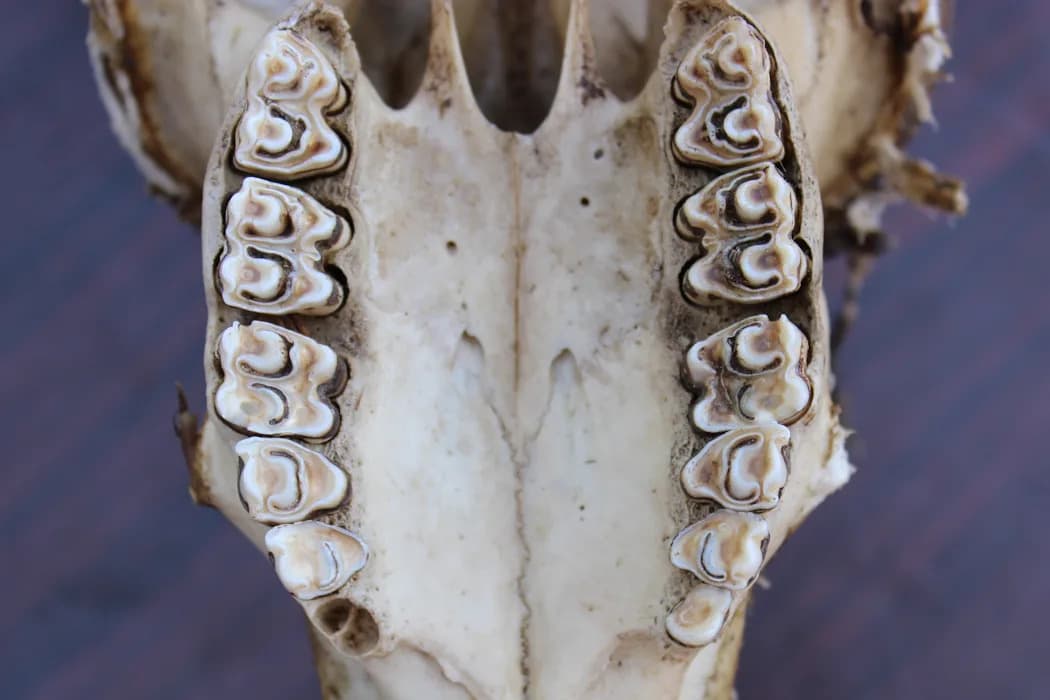
Chemicals in your tooth enamel record evidence of your diet that can last millions of years. Zelalem Bedaso
Teeth are tiny, durable time capsules. Tooth enamel, which forms during an animal's youth, remains chemically stable for life and can preserve traces of the food and water consumed when the animal was young. By reading those chemical signals, scientists can reconstruct diets, habitats and long-term environmental change—even millions of years after the animal died.
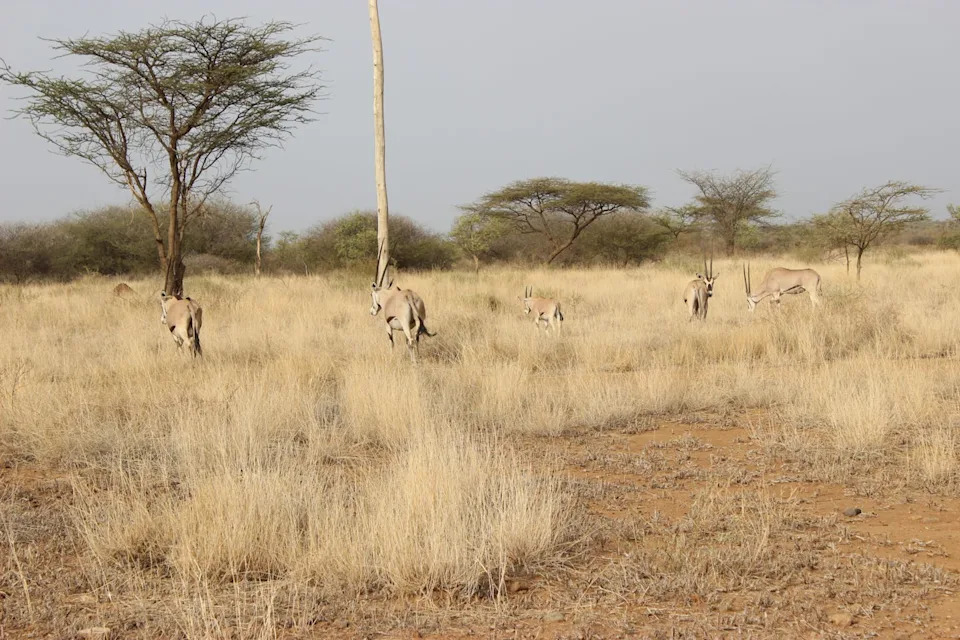
A small group of oryx forage in the open savanna of Awash National Park in Ethiopia, with scattered acacia trees and dry grasses illustrating the park’s semi-arid environment. Zelalem Bedaso
How Teeth Record Diet and Environment
When researchers remove a small amount of enamel powder from fossil teeth and analyze it in the lab, they detect chemical signatures that plants and environments leave behind. Different plants follow different photosynthetic pathways (commonly described as C3 and C4), and those pathways produce distinct carbon isotope patterns. Those patterns are passed up the food chain and become locked into enamel. In addition to carbon isotopes, other elemental and isotopic markers can indicate water sources, soil types and landscape use.
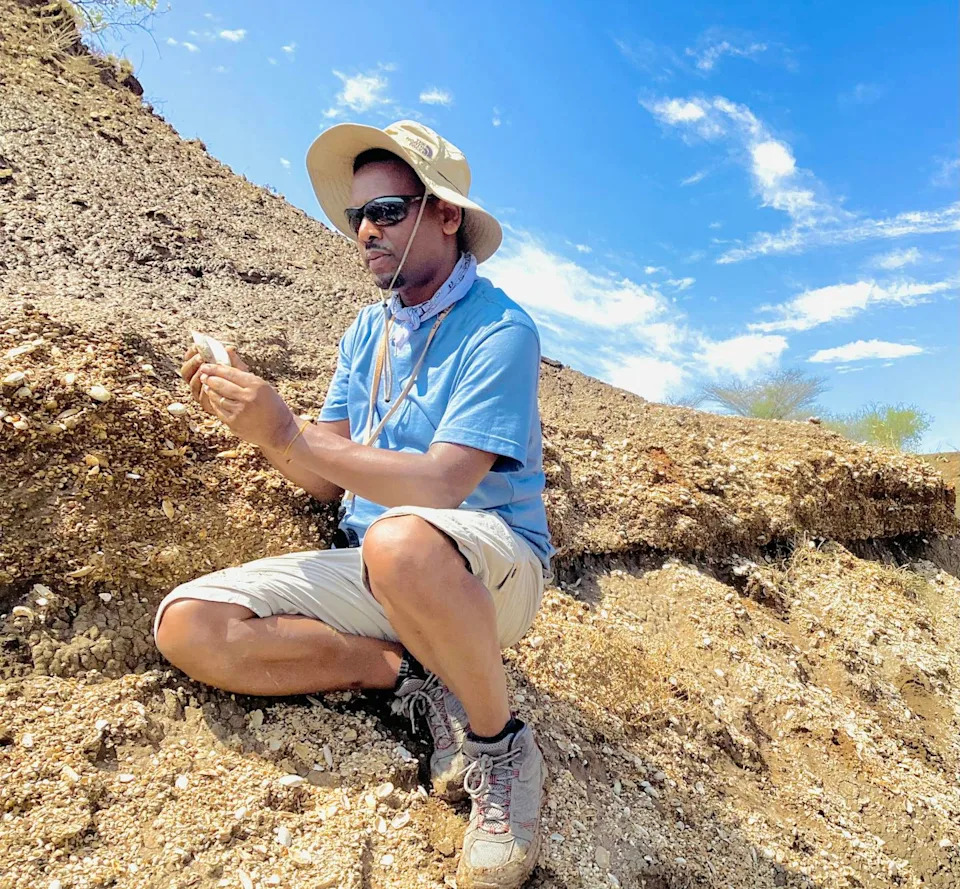
The author conducts fieldwork in the East African Rift, collecting samples from ancient lake and river deposits. Courtesy of Zelalem Bedaso
Reconstructing Landscapes in the Afar
For the past 30 years, scientists working in Ethiopia's Afar region—a key area for human origins—have used enamel chemistry to piece together past ecosystems. About 4 million years ago, the Afar was not the arid basin seen today. Fossils indicate a mosaic landscape of rivers winding through wooded corridors, scattered lakes and broad grassy plains.
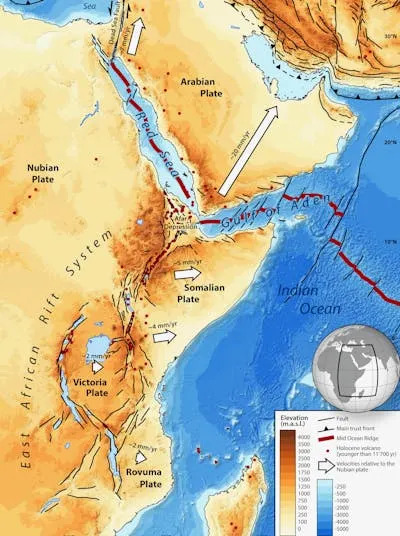
Three tectonic plates are pulling apart at the Afar region, near the Red Sea.Val Rim/Wikimedia Commons,CC BY-SA
Fossil teeth from antelopes, giraffes, pigs, horses, hippos and elephants preserve a wide range of dietary signals. Some species browsed on leaves and shrubs (C3 plants), while others fed on grasses (often C4 plants). These mixed signals show that grasslands were expanding at the time but that forests and wetlands still played important roles in the ecosystem.
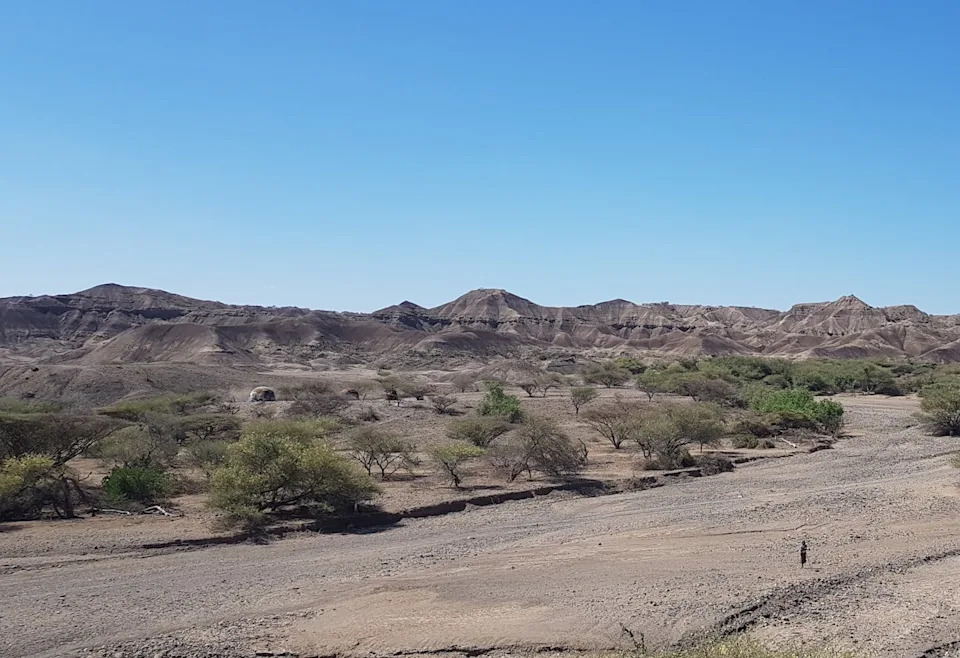
Ethiopia’s Afar Depression and Awash Valley, shaped by rifting and erosion, are among the world’s most important regions for fossil discoveries of human ancestors. Some of those fossils date back 3 million to 4 million years. Zelalem Bedaso
Rifting, Climate, and the Rise of Savannas
Between about 2 and 3 million years ago the Afar shifted more strongly toward open grasslands. The region sits at a triple junction where three tectonic plates are pulling apart; this rifting changed drainage patterns and regional climate. As wooded habitats fragmented, mixed grasslands and open savannas became more common. Species that fed on grasses prospered, while those that could not adapt declined.
These ecological shifts are recorded both in enamel chemistry and in tooth morphology. Grazing animals such as horses and some antelopes evolved higher-crowned, more wear-resistant teeth to process tough, gritty grasses—an adaptation mirrored in their enamel chemistry and wear patterns.
Implications for Early Human Ancestors
Early hominins lived in this dynamic, patchy landscape. Fossil teeth attributed to Australopithecus afarensis (the species that includes the specimen popularly known as "Lucy") show chemical evidence of mixed diets rather than heavy grass consumption. Their enamel signals indicate dietary flexibility—incorporating fruits, leaves, roots and other resources depending on availability.
In a landscape made up of woodland patches and open savanna, such flexibility likely conferred a survival advantage. This period also coincides with important evolutionary changes: habitual bipedalism, gradual increases in brain size, more complex behavior, and the earliest evidence for stone tool manufacture and use—technologies that would have helped hominins adapt to changing environments.
Why Enamel Matters
Across the East African Rift Valley, enamel chemistry over the last four million years provides a powerful record of how environments changed and how animals (including early hominins) responded. The key pattern is clear: species that adapted their diets to shifting landscapes were most likely to persist, and enamel helps us trace those adaptations.
Bottom line: Fossil teeth give us a direct, measurable link between ancient diets and ancient environments, improving our understanding of the ecological context in which human ancestors evolved.
Help us improve.





















