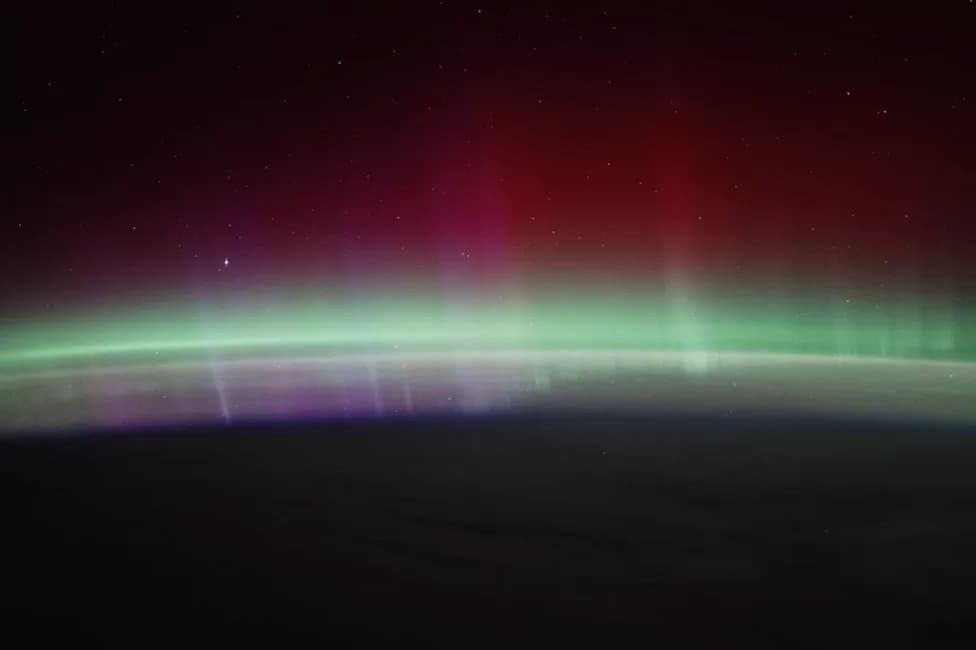
The UK STFC's fourth "Summary of Space Weather Worst-Case Environments" warns that extreme solar storms—plausible on a 100–200 year timescale—could disable satellites (including GPS) and damage power grids for up to two weeks, triggering cascading system failures. Dense satellite constellations (4,000+ new satellites in 2025) and rising LEO traffic increase systemic risk. Existing mitigations such as advanced tracking and passive deorbiting reduce some dangers but remain vulnerable. STFC calls for better forecasting, grid hardening, resilient satellite design and coordinated contingency planning.
STFC Warns: Modern Infrastructure Increasingly Vulnerable to Worst‑Case Solar Storms
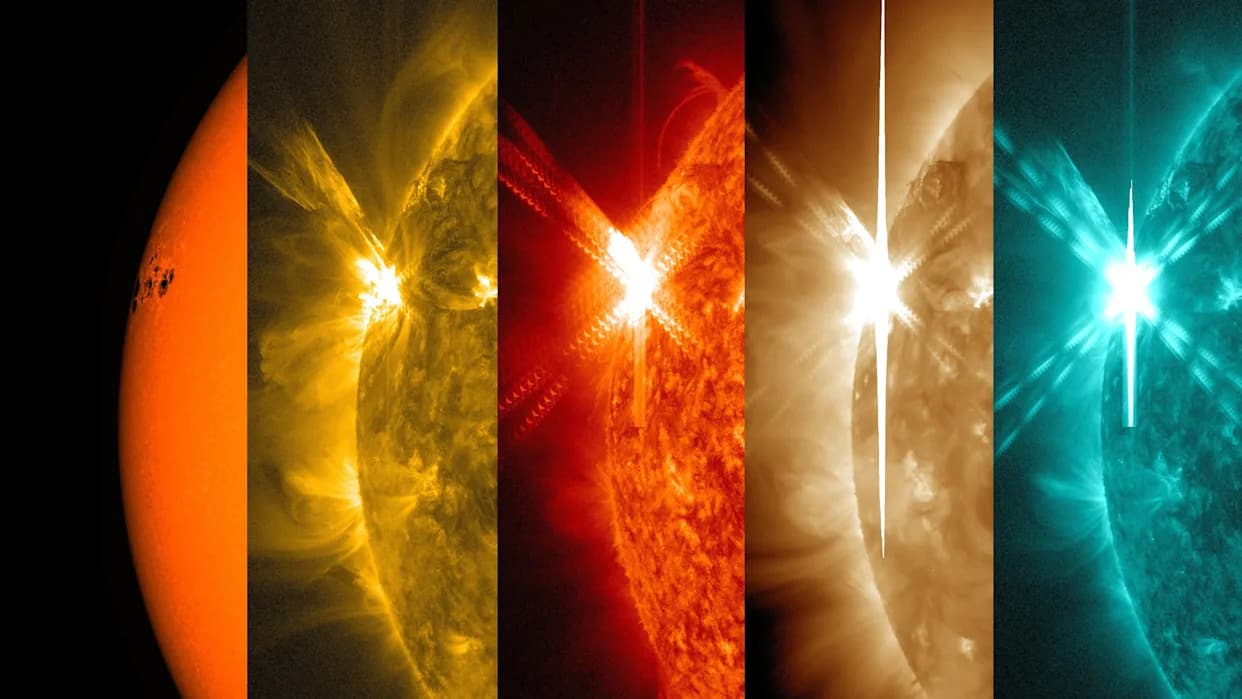
Solar flares are no joke, especially when your society depends on wireless communication. (Credit: NASA)
The UK Science and Technology Facilities Council (STFC) has released the fourth edition of its report, "Summary of Space Weather Worst-Case Environments," offering a stark assessment of how extreme solar activity could affect 21st-century infrastructure.
The main conclusion: a wide range of critical technologies—satellites (including GPS), terrestrial power grids and dependent systems—are more exposed to severe space weather than commonly assumed, and that exposure is growing each year.
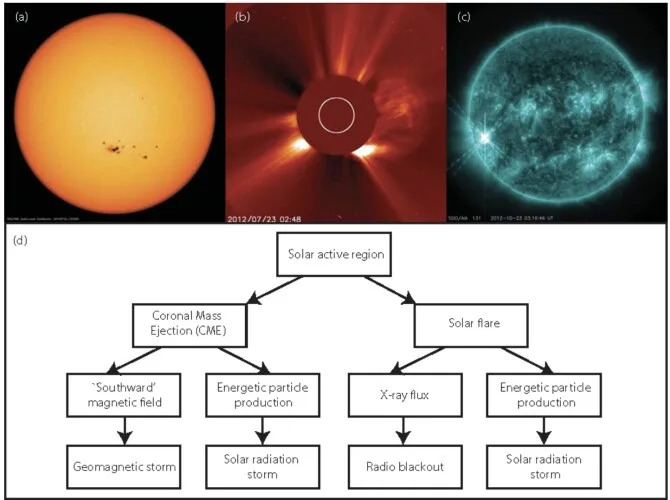
solar flare figure space weather report
What the Report Says
STFC defines space weather as "disturbances of the upper atmosphere and near-Earth space that disrupt a wide range of technological systems—and, in a few cases, pose a direct threat to human health."
The report focuses on plausible "worst-case" solar events that could occur on roughly a 100–200 year timescale. Such storms can still happen in any given year and may last up to two weeks. During an extreme event, outages would not be limited to short-term communications disruptions: hardware can be physically damaged, repairs could take months, and interdependent systems are likely to cascade into unpredictable failures.
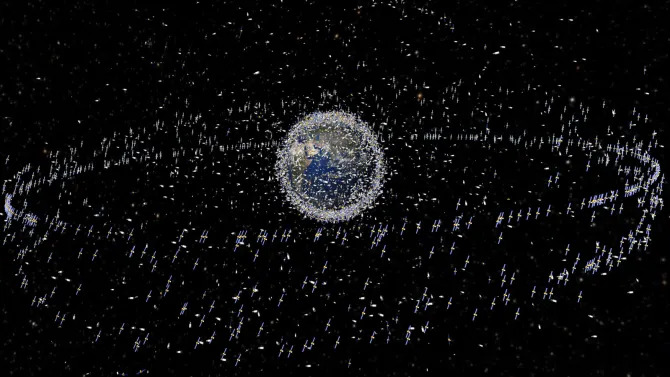
lots of satellites in LEO
Major Risks Highlighted
- Large geomagnetic storms could disable or permanently damage satellites, including GPS constellations, and can induce currents that harm terrestrial power transformers and grid infrastructure.
- Dense low-Earth orbit (LEO) constellations and increasing satellite traffic reduce overall fault tolerance: loss of control during a storm could trigger collisions and cascading failures.
- Operators point to mitigations—improved tracking, autonomous collision avoidance, and passive deorbiting—but these measures remain partly vulnerable to severe space weather and may not prevent large-scale service loss.
For example, a geomagnetic storm in 2022 caused increased atmospheric drag that led to the loss of about 40 recently launched Starlink satellites; those satellites passively deorbited and burned up, which removed debris but still represented a significant service loss. In 2025, more than 4,000 new satellites were placed into orbit, further concentrating traffic in LEO and increasing systemic risk.
Mitigation and Human Spaceflight
Space industry systems such as SpaceX's Stargaze are intended to improve tracking and coordination of thousands of objects in LEO, but tracking and command links themselves can be degraded by space weather. The STFC report also highlights crewed missions: agencies including NASA accept that they cannot fully protect astronauts from very rare, high-consequence solar particle events and therefore schedule activities to minimize exposure during predicted high-activity periods.
What Should Be Done?
The STFC recommends strengthened protections and preparedness across governments and industry: better forecasting and early warning systems, grid hardening and transformer protection, resilient satellite design and operational procedures, and coordinated contingency planning to manage cascading failures. Improved public and private investment in mitigation and response will reduce the likelihood of long-term, widespread disruption.
Bottom line: Severe solar storms are low-frequency but high-impact threats. As societies place more critical services in space and interconnect infrastructures on the ground, the consequences of a worst-case event grow—making proactive mitigation essential.
Help us improve.