
Northumbria University leads a five-year, £4m research programme to investigate unpredictable changes in the Earth's radiation belts that can disrupt satellites, GPS and communications. The team will combine spacecraft observations from multiple missions with advanced computer modelling to improve forecasting accuracy. The project will focus on how solar-wind energy is transferred into the belts and whether tiny differences in conditions can produce large, chaotic outcomes. It was funded as an STFC Large Award to tackle this major space-weather challenge.
£4m Boost for Northumbria Team to Solve Earth's Radiation-Belt Mysteries Disrupting Satellites
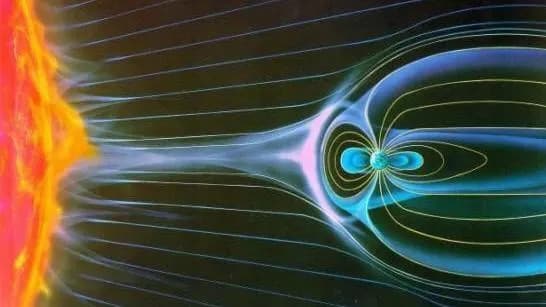
Scientist are currently unable to predict the Earth's radiation belts' behaviour [NASA]
Researchers have been awarded £4 million to investigate persistent "space radiation" mysteries that disrupt satellites and shape space weather. Led by Northumbria University, the five-year programme will combine observations from multiple spacecraft with advanced computer modelling to improve forecasts and protect critical satellite services.
Why This Matters
The Earth's radiation belts can change dramatically in intensity and size within hours or days in response to disturbances from the Sun. These rapid shifts can degrade GPS navigation, interrupt telecommunications, and complicate weather forecasting and satellite operations. Despite earlier NASA missions, the radiation belt environment remains, in the words of lead researcher Prof Clare Watt, "frustratingly unpredictable." Scientists currently lack reliable ways to forecast many of these changes.
What The Project Will Do
Over five years the team will:
- Combine spacecraft data from multiple missions to create a more complete picture of particle behaviour in near-Earth space;
- Develop and apply advanced numerical models and data-driven simulations to test physical mechanisms that drive belt variability;
- Address two central research questions: what controls how much solar-wind energy is transferred into the radiation belts, and whether the system is sensitive to tiny differences in initial conditions (i.e., inherently chaotic).
Watt said: "This project will help us understand whether that's because we don't fully grasp the physics involved, or because parts of the system are inherently chaotic and sensitive to tiny changes in conditions."
The programme was selected by UK Research and Innovation's Science and Technology Facilities Council (STFC) as one of its Large Awards, a scheme designed to fund research that tackles major scientific challenges and could deliver world-leading results. Improved forecasting of radiation-belt behaviour could help satellite operators mitigate risk, extend spacecraft lifetimes, and reduce service disruption for users worldwide.
Partners and funder: Northumbria University; funded by the Science and Technology Facilities Council (STFC) under UK Research and Innovation.
Help us improve.





















