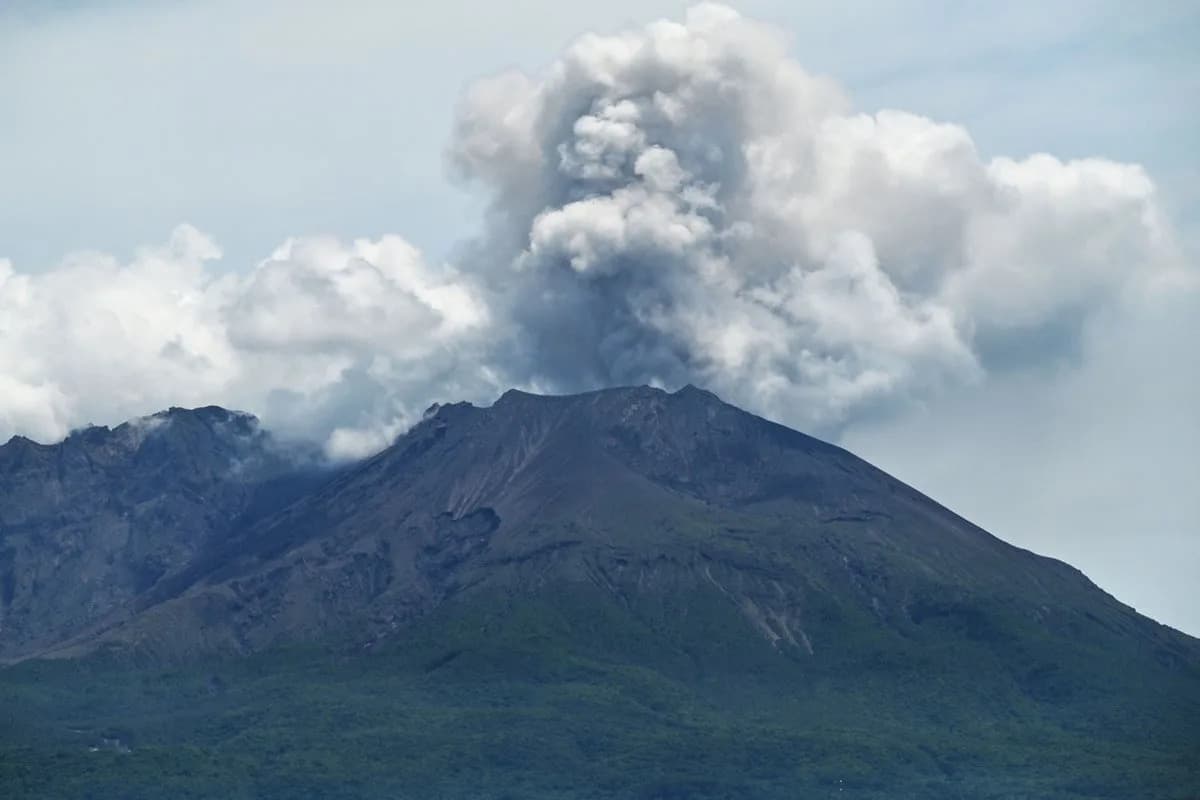
Sakurajima erupted on Saturday, sending a roughly 3.4 km ash plume from the Minamidake crater and scattering debris up to 1 km from the vent. The Japan Meteorological Agency raised the alert to Level 3, and flights at Kagoshima Airport were grounded or delayed while road closures were reported in nearby towns. Officials said the eruption relieved much of the pressure buildup beneath the volcano; Sakurajima has been highly active for decades and sits about 8 km from central Kagoshima.
Sakurajima Erupts: 3.4 km Ash Plume Grounds Flights, Prompts Level 3 Alert
Flights grounded as Japan’s most active volcano erupts for second time in four months
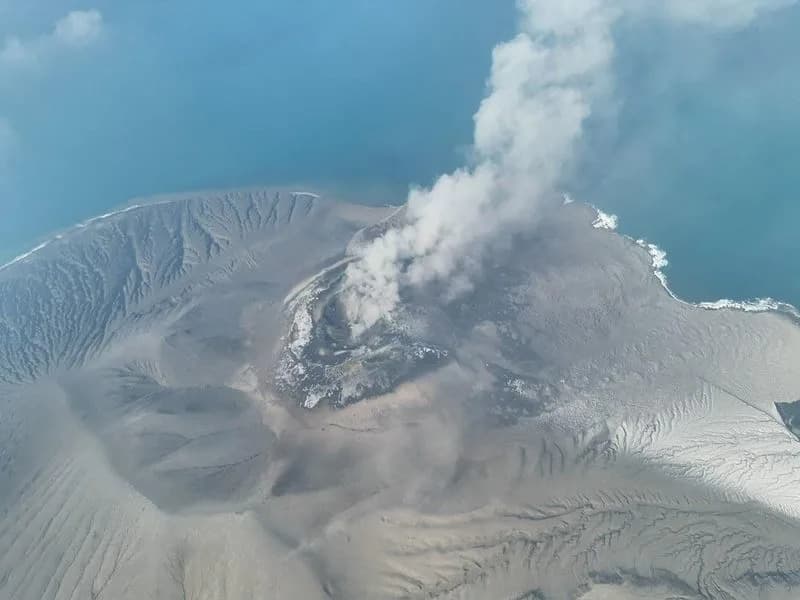
Japan’s most active volcano, Sakurajima, erupted on Saturday afternoon, sending an ash column about 3.4 km into the air and blanketing nearby Kagoshima in volcanic debris. The eruption, from the Minamidake crater just after noon local time, scattered ejecta up to 1 kilometre from the vent and disrupted travel and road access in the region.
Immediate Impact
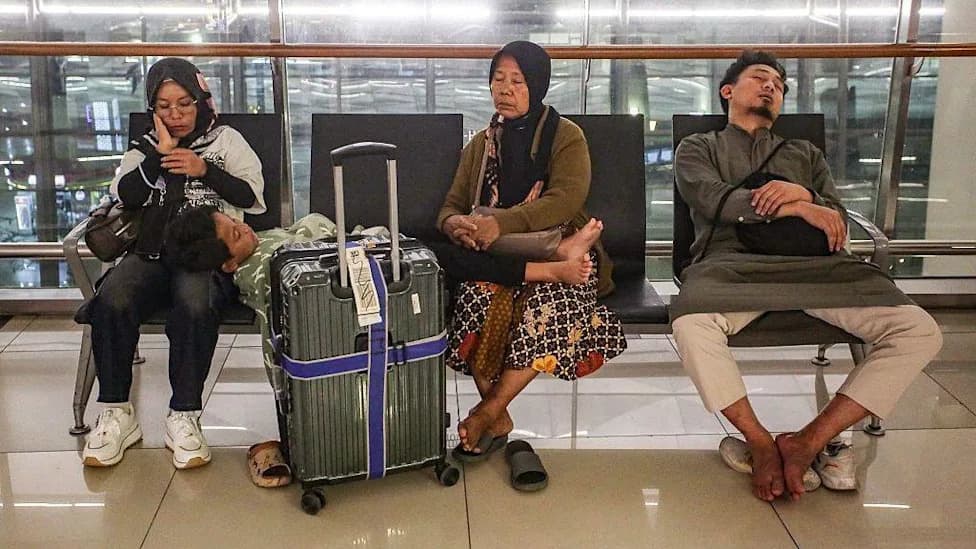
The Japan Meteorological Agency raised the volcanic alert to Level 3 on its five-step scale and advised residents to stay away from the volcano because of the risk of falling rocks and possible pyroclastic flows. Flights at Kagoshima Airport were grounded or delayed, and authorities reported road closures in Kagoshima city and nearby municipalities such as Tarumizu and Kanoya where ash made driving hazardous.
What the Authorities Say
The Meteorological Agency said the eruption relieved much of the crustal deformation—the pressure buildup beneath the volcano caused by accumulating magma—that had been developing under Sakurajima. Local news outlet Yomiuri Shimbun reported this was the volcano’s first explosive eruption since 13 December last year.
Background and Recent Activity
Sakurajima sits about 8 km from central Kagoshima and has deposited ash on the city repeatedly since the eighth century. The volcano was formerly an island until a major 1914 eruption produced lava flows that connected it to the mainland; that historic event killed 58 people and sent ash as far north as Honshu.
The volcano has been in a near-continuous state of activity since 1955. Recent notable events include a November 2025 eruption that produced a 4.4 km ash plume and ejected rocks nearly 1.2 km from the crater, and multiple smaller eruptions in May 2025 that also disrupted air travel. In August 2013 Sakurajima produced a 5 km ash column, its largest since 2006.
Geological Context
Sakurajima occupies part of the Aira Caldera, a roughly 25 km-wide depression in Kagoshima Bay formed about 28,000 years ago when an enormous eruption expelled hundreds of cubic kilometres of ash and pumice and caused the magma chamber beneath to collapse. The volcano lies on Japan’s section of the Pacific Ring of Fire, the seismically active belt that accounts for much of the world’s volcanic and earthquake activity.
Advice for Residents: Follow instructions from local authorities, avoid the volcano and ash-affected areas, wear masks or eye protection if venturing outdoors, and exercise caution while driving on ash-covered roads.
Help us improve.