
Artemis II sent astronauts farther from Earth than any previous crewed mission and ended with a successful splashdown that drew broad praise. While the flight is being celebrated as a triumph, the BBC warns that “the really hard part lies ahead” as NASA targets a Moon landing by 2028 but faces delays in critical hardware. Experts say the mission has renewed public enthusiasm for lunar exploration and underscored the program’s next challenges: finishing landers, surface systems, and logistics.
Artemis II Triumphs — Historic Voyage Rekindles Moon Ambition, But Hard Work Lies Ahead
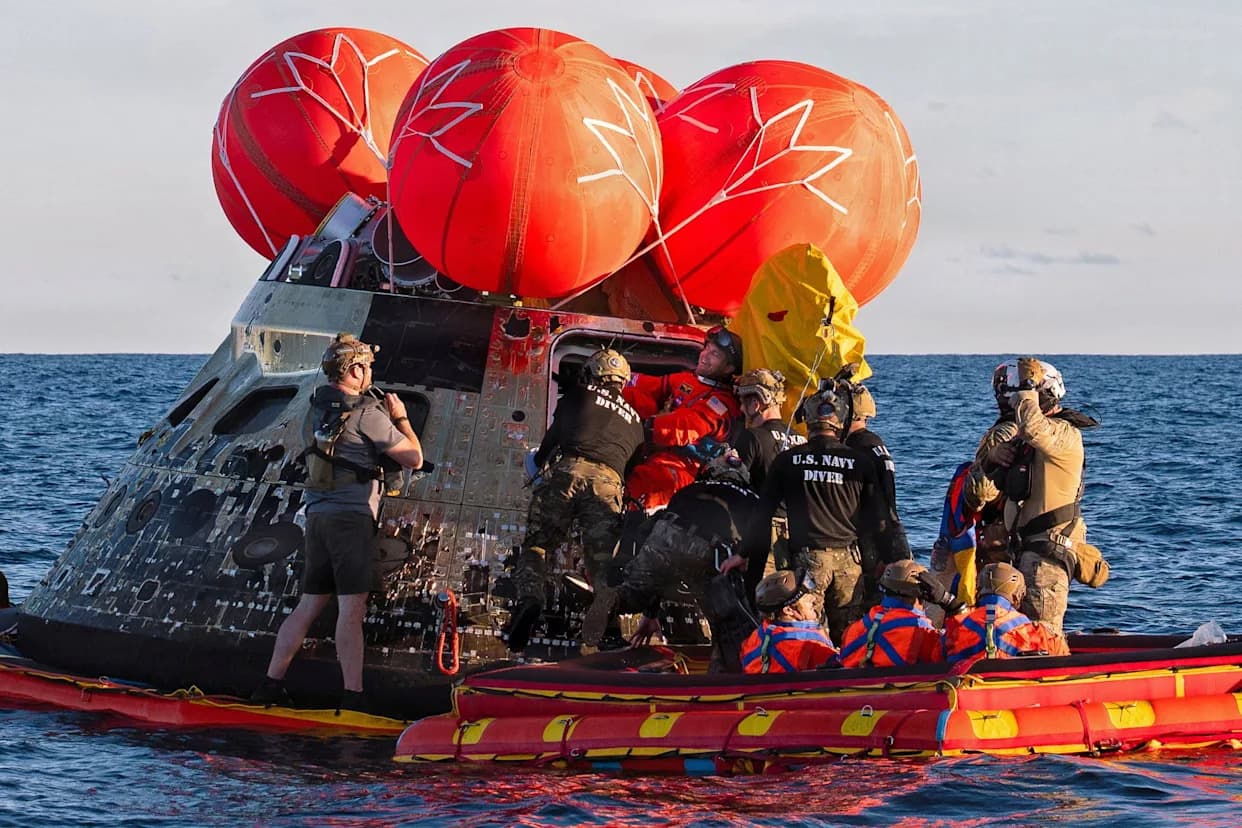
NASA’s Artemis II mission carried astronauts farther from Earth than any human-crewed flight in history and concluded with a successful splashdown on Friday. The mission was celebrated as a major technical and public-relations win for human space exploration, but officials and analysts caution that the more difficult work required to return humans to the lunar surface still lies ahead.
Mission Highlights
Artemis II demonstrated the Orion spacecraft and crew systems on a deep-space trajectory, validating key operations and recovering the capsule safely at the end of the flight. The mission’s success has renewed public interest in lunar exploration and showcased progress in NASA’s Artemis program.
Challenges Ahead
While enthusiasm is high, outlets such as the BBC have noted that "the really hard part lies ahead." NASA has set an ambitious goal to land astronauts on the Moon again by 2028, but critical hardware and infrastructure needed for a crewed lunar landing remain behind schedule. Completing the development and integration of landers, lunar surface systems, and supporting logistics will be the next, most demanding phase.
Scientific American: "The mission tapped into the thrill of exploration and discovery, feeding the curiosity that makes us human. Earth without the Moon would not be Earth as we know it."
Public Reaction and Next Steps
Planetary scientists and mission advocates say Artemis II has reignited public excitement about returning to the Moon, an important factor for sustained political and financial support. NASA’s immediate priorities include accelerating hardware buildouts, refining mission schedules, and maintaining international and commercial partnerships to meet lunar-landing objectives.
Bottom line: Artemis II is a clear technical and symbolic success that advances deep-space capabilities — but translating that momentum into a crewed Moon landing will require timely delivery of complex systems and continued investment.
Help us improve.





















