
ESA’s European Service Module was essential to NASA’s Artemis II, providing life support and propulsion for the Orion crew capsule. Europe supplied components from roughly 100 companies across 13 countries and plans further lunar activity, including the Argonaut uncrewed lander around 2030. ESA aims to send European astronauts on Artemis IV (2028) and build toward a continuous presence on the Moon before 2040, while tackling technical challenges like water extraction, oxygen production and radiation protection.
Europe Returns to the Moon: ESA’s Key Role in Artemis II and Ambitious Lunar Plans
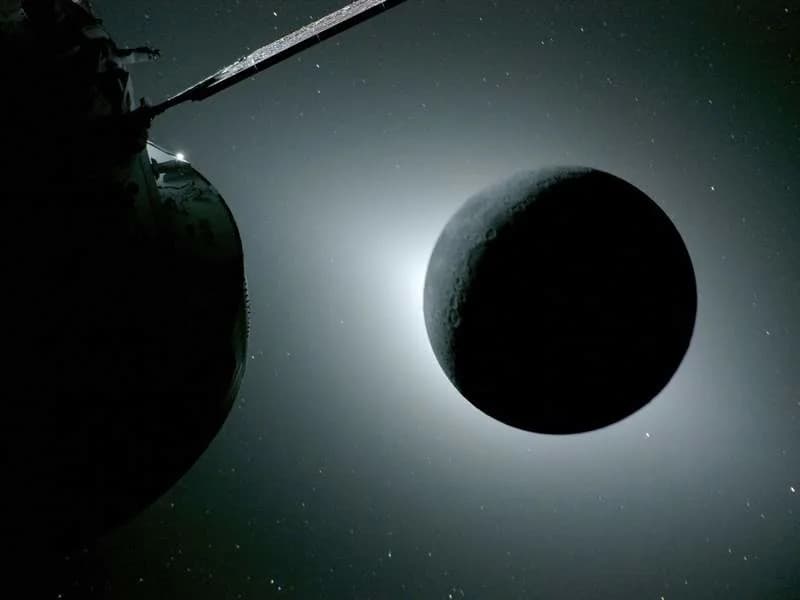
The Moon, backlit by the Sun during a solar eclipse, photographed by the Orion spacecraft external camera mounted on the solar array as the Artemis II mission approaches the Moon showing on day 6 of the mission around the far side of the moon from Space. Nasa/Nasa/Planet Pix via ZUMA Press Wire/dpa
Europe played a decisive role in NASA’s Artemis II mission and is already planning its own sustained lunar activities, the European Space Agency’s director for human and robotic exploration said.
ESA Contribution to Artemis II
Daniel Neuenschwander highlighted that the mission — the first return to the Moon’s vicinity since 1972 — would not have been possible without the European Service Module (ESM). Supplied by ESA, the ESM provided the Orion crew capsule with oxygen, water, electrical power and the propulsion needed for translunar and return manoeuvres.
In total, about 100 companies from 13 European countries contributed components or services to the mission, underlining Europe’s industrial commitment to international deep-space exploration.
European Astronauts and Upcoming Missions
European astronauts are expected to fly on an Artemis mission beginning with Artemis IV, currently scheduled for 2028. ESA director-general Josef Aschbacher has indicated that a German astronaut will be first among ESA crew candidates to visit the Moon.
Argonaut: Europe’s Uncrewed Moon Lander
ESA plans to deliver uncrewed cargo to the lunar surface around 2030 using the Argonaut lander. Neuenschwander said Argonaut’s first flight is planned on an Ariane 6 rocket and that the lander could deliver up to 1.5 tonnes of cargo — for example rovers or scientific instruments.
Scientific Goals and the Lunar South Pole
"The objective is to deepen our scientific understanding of the Moon," Neuenschwander said, noting a specific focus on the lunar South Pole where resources such as water ice may be present and sunlight conditions are favourable for solar power generation.
Long-Term Vision
ESA laid out an ambitious timeline: demonstrate key capabilities by 2030, build up infrastructure from 2031, and aim for a continuous European presence on the Moon before 2040. "We want to go there to stay," Neuenschwander said, stressing that the United States will remain an essential partner for crewed transport.
Technical Challenges and Broader Benefits
Major technical hurdles remain before humans can live on the Moon: reliable life-support systems, extracting water from lunar regolith, producing oxygen, protecting crews from radiation, and surviving the roughly 14-day-long lunar night. Solutions in these areas will also inform future Mars missions.
International Cooperation and InspirationNeuenschwander emphasised that lunar efforts strengthen cooperation within Europe and with partners such as the US, Japan and Canada. He also argued that high-profile projects are vital to inspire the next generation of scientists and engineers across Europe.
Key Takeaways
- ESA’s ESM was critical to Artemis II’s success, supplying life support and propulsion for Orion.
- About 100 companies from 13 European nations contributed to the mission.
- Argonaut is planned as an uncrewed lander around 2030, launched on Ariane 6 and capable of delivering up to 1.5 tonnes.
- European crew are expected to join Artemis IV (planned 2028), with a German astronaut likely to be among the first ESA moonwalkers.
- ESA aims for a lasting European presence on the Moon before 2040, focusing on the South Pole and resource exploration.
Help us improve.





















