
The Moon’s appearance changes with latitude: observers at different places see the same face but at different orientations. Opposite poles reverse features like Tycho, temperate cities can differ by nearly 100°, and the Northern and Southern hemispheres observe phase progressions in opposite directions. Near the equator the Moon’s face can seem to rotate dramatically across a single night — an effect of perspective, synchronous rotation, and small librations.
Does the Moon Look the Same From Every Place on Earth? Here's Why It Doesn't
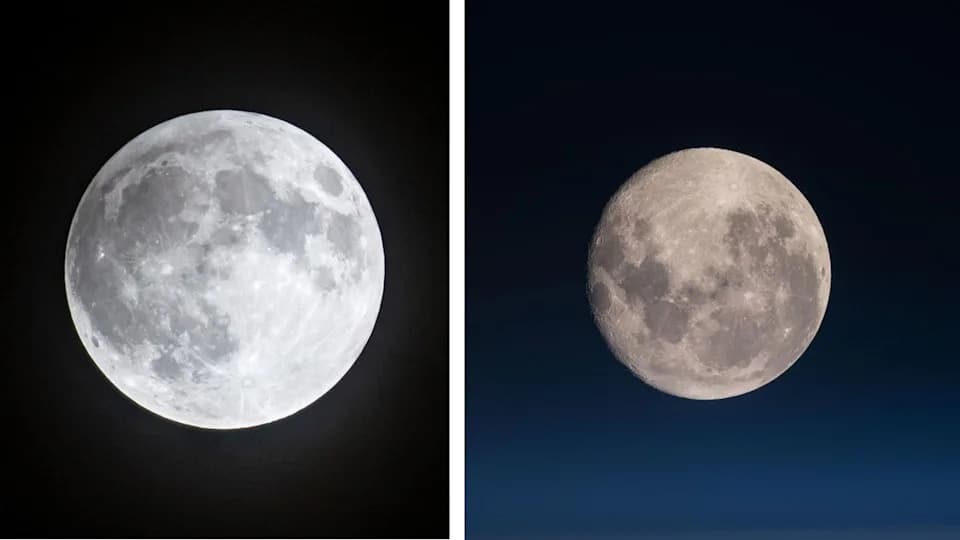
The full moon appears rotated by 180 degrees from the Southern Hemisphere compared with the view from the Northern Hemisphere. . | Credit: NASA/GRC/Jordan Salkin
People everywhere look up at the Moon — to enjoy a lunar eclipse, spot familiar craters through a telescope, or simply admire the night sky. But the Moon does not appear the same from every spot on Earth. Its apparent orientation and the direction its phases move depend on your latitude and perspective.
Different Views From Different Latitudes

Life's Little Mysteries logo with a question mark in a magnifying glass
From the North Pole, a full Moon shows the Tycho crater and its bright ejecta rays near the bottom of the lunar disk. At the South Pole, that same crater appears toward the top. Temperate locations show smaller but noticeable variations: data from the Lunar and Planetary Institute indicate the Moon's orientation in Wellington, New Zealand, is rotated about 97.1° counterclockwise compared with the view from Los Angeles. These differences arise because observers at different latitudes view space from different orientations.
Same Face, Different Angles
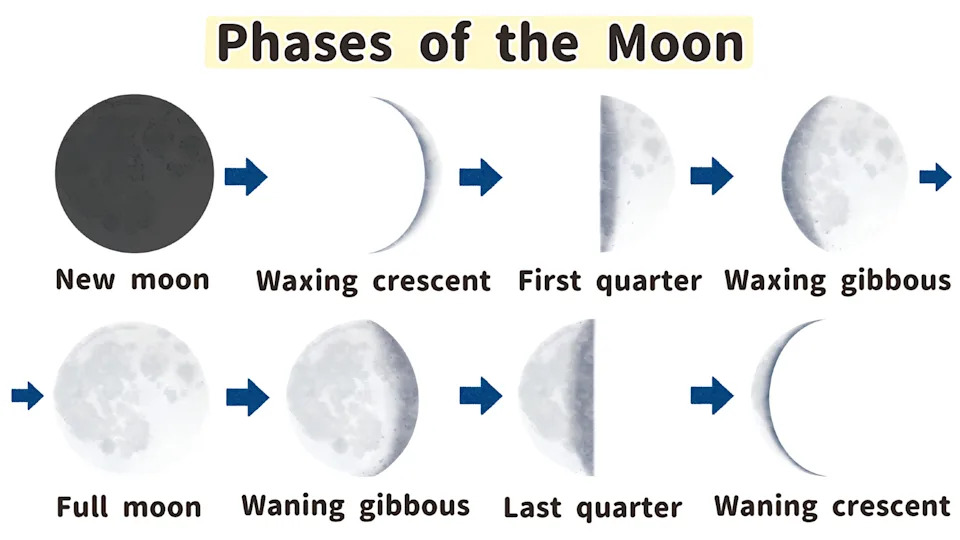
Differences in perspective mean that calendar symbols for the first-quarter and third-quarter moon, which have been designed from a Northern Hemisphere viewpoint, are the reverse of what Southern Hemisphere folks witness. | Credit: Koyuki via Getty Images
Everyone on Earth sees essentially the same lunar hemisphere because the Moon rotates on its axis in the same time it takes to orbit Earth — a state called synchronous rotation. Small librations (wobbles in the Moon's motion) let observers glimpse slightly different edges at different times, but the broad pattern of visible features remains consistent.
Phases Look Opposite in Each Hemisphere
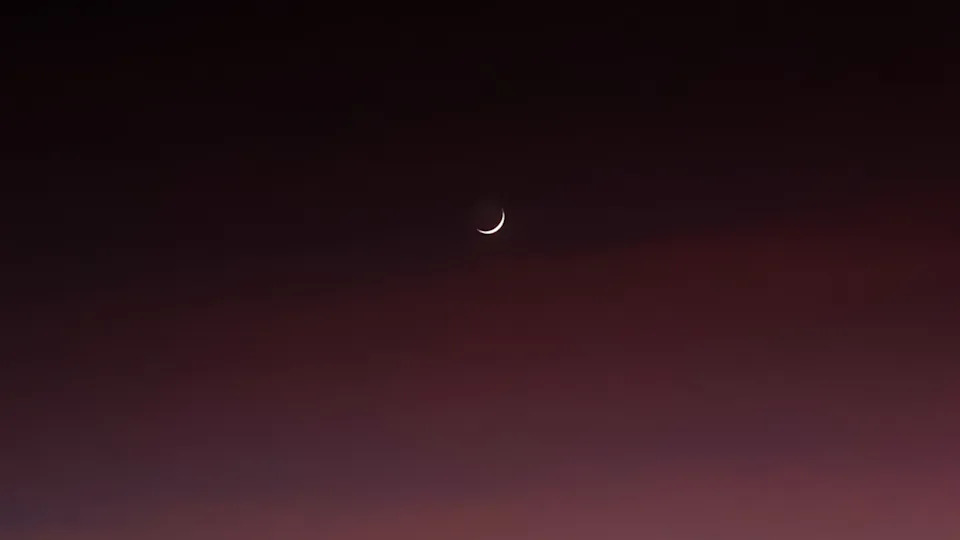
If you live far from the equator, you may be used to seeing a vertical or near-vertical crescent moon. But near the equator, as in this picture from Bali, Indonesia, the crescent moon appears like a smile or a boat. | Credit: Ella Needham via Getty Images
The way the Moon's phases appear to progress — crescent to full and back — also depends on hemisphere. Far from the equator the terminator (the boundary between lit and dark) tends to appear nearly vertical, so phases advance horizontally. In the Northern Hemisphere the illuminated portion usually grows and shrinks from right to left; in the Southern Hemisphere it goes from left to right. This geometric effect explains why some quarter-moon emoji and calendar symbols (designed from a Northern Hemisphere viewpoint) can look reversed to Southern Hemisphere viewers.
Strange Behavior at the Equator
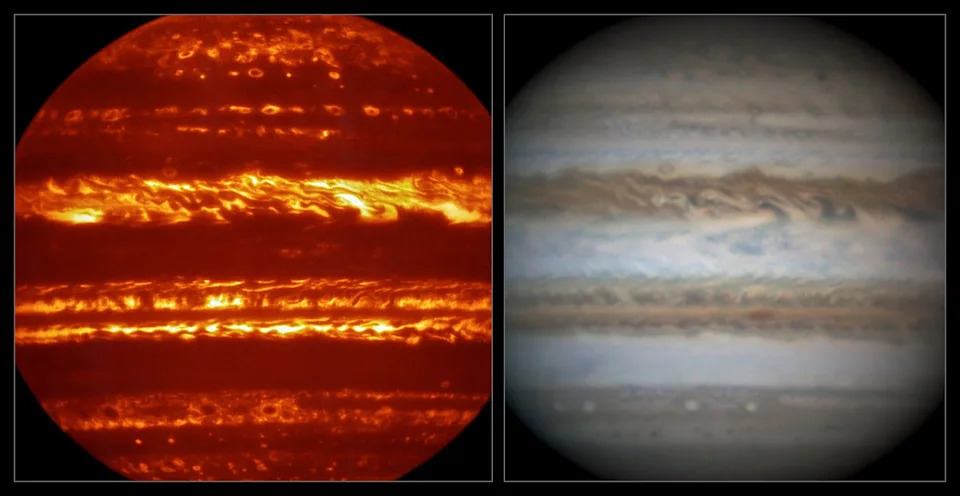
The moon isn't the only celestial object whose face seems to change from different locations on Earth. Other objects lying near Earth's orbital plane also look different depending on the geographical location. For example, most pictures present Jupiter from a Northern Hemisphere perspective, with its Great Red Spot south of its equator. But this photograph, taken by European Southern Observatory telescopes, shows the gas giant as it appears to observers in the Southern Hemisphere, with the Great Red Spot north of the equator. | Credit: ESO/L.N. Fletcher/Damian Peach
At the equator the Moon can behave differently: when it rises, the illuminated portion often expands vertically, so a crescent may look like a small boat. Observers near the equator may also perceive the Moon's face to rotate dramatically — in some cases by roughly 180° over the course of a single night. This apparent rotation happens because the Moon often passes near the zenith for equatorial viewers; you face east at moonrise and must turn to face west at moonset, so the Moon's orientation appears to "roll" as you follow its arc.
Why the Moon Seems to Turn
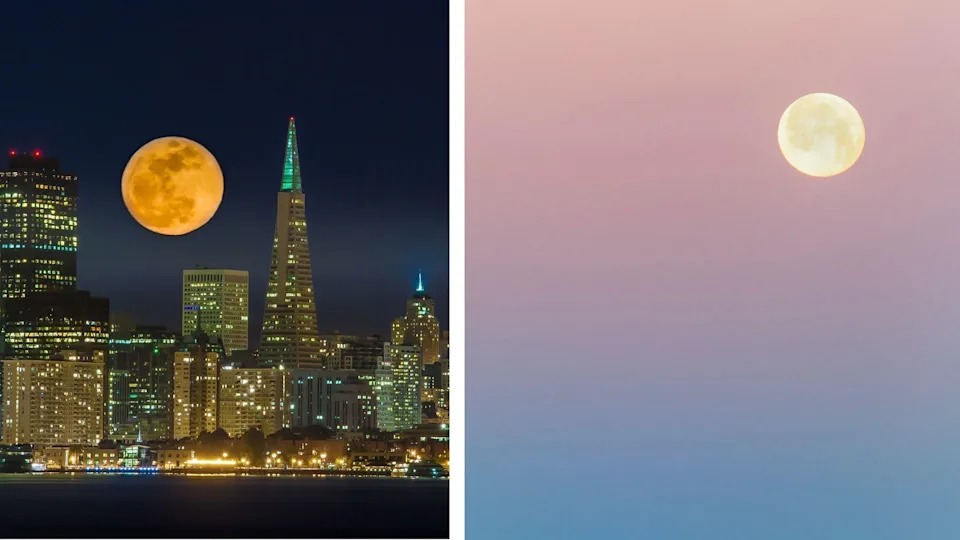
Notice how the features on the moon appear to rotate from moonrise to moonset. | Credit: Christopher Chan via Getty Images and Nick Lust via Alamy Images
The important point is that the Moon itself isn't twisting unusually — it's your viewing angle and the direction you face that change. As Pamela Gay of the Planetary Science Institute explains, "How we see the Moon and stars is all a matter of perspective." Catherine Miller of Middlebury College adds that the local horizon plane and geometry of the Earth–Moon–Sun system determine how phases and orientations appear to different observers.
What to Look For
When you travel between latitudes, take a moment to compare the Moon's orientation and the direction its phases change. Notice the position of familiar features like Tycho and watch whether the crescent looks more horizontal or vertical — you may be surprised at how much the view changes simply because of where you stand on Earth.
Help us improve.





















