
US Vice‑President JD Vance warned Iran not to "play" the US as he flew to Islamabad for high‑stakes talks that could determine whether a fragile ceasefire holds or the conflict escalates. Tehran says it will not join negotiations until Israel stops bombing Lebanon and Iran’s frozen assets are released. President Trump warned that US forces are rearming and would be ready to use force if diplomacy fails. The Islamabad talks are expected to focus on the Strait of Hormuz, Iran’s nuclear programme, sanctions relief and detained Americans.
JD Vance Warns Iran Not To ‘Play’ The US As High-Stakes Islamabad Talks Loom
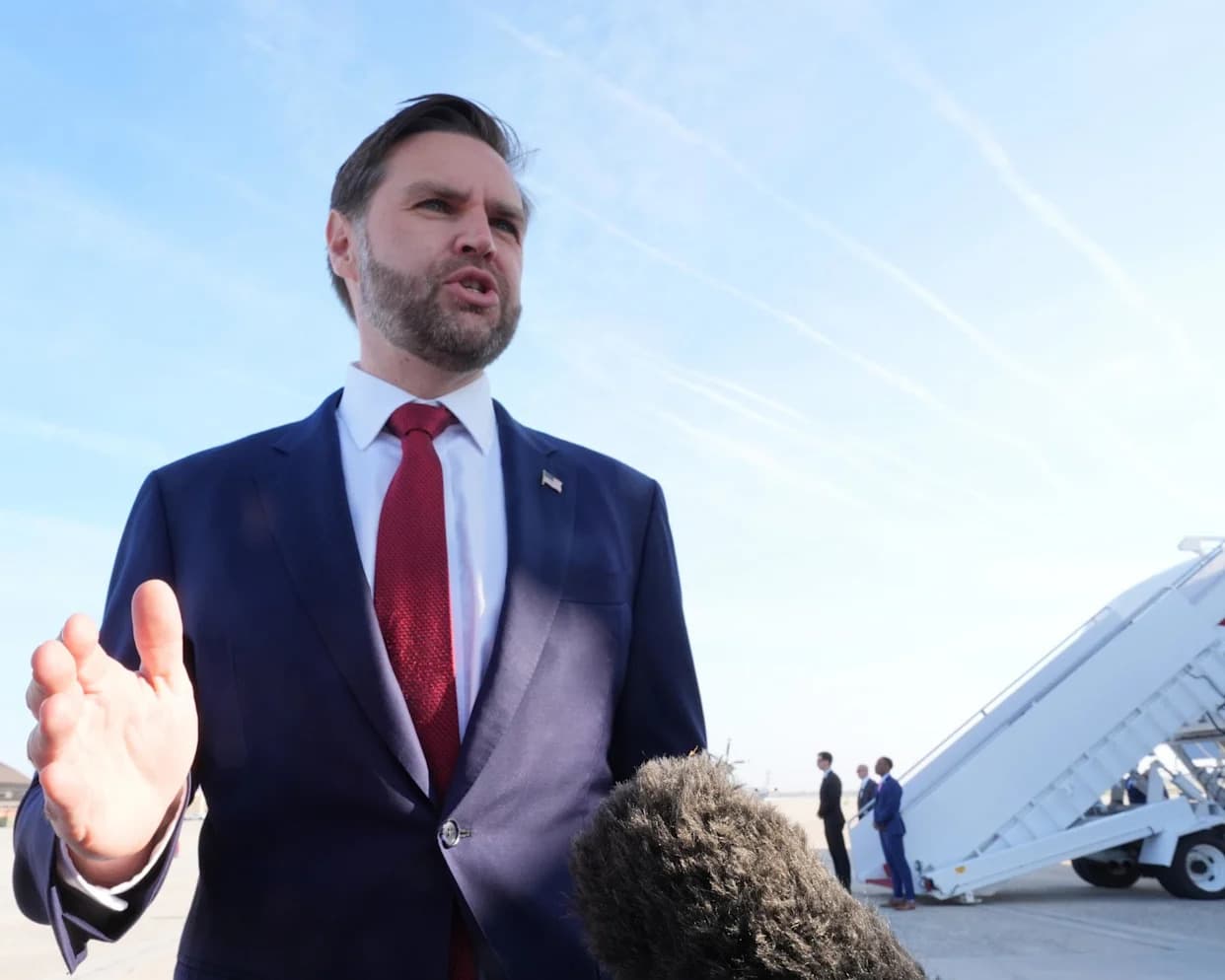
JD Vance addresses reporters before flying to Pakistan via Joint Base Andrews near Washington DC on Friday.Photograph: Jacquelyn Martin/Getty Images(Photograph: Jacquelyn Martin/Getty Images)
US Vice‑President JD Vance cautioned Iran against attempting to "play" Washington as he departed for Islamabad for talks due to begin on Saturday, while Tehran said it would not attend until Israeli bombing of Lebanon stops and Iran’s frozen assets are released.
The negotiations, convened amid a fragile two‑week ceasefire, could determine whether the truce holds or the conflict escalates again — a development with serious implications for regional stability and the global economy.
Uncertainty Over Attendance And Preconditions
With only hours to go before the scheduled opening, doubts persisted about whether the talks would proceed. Mohammad Baqer Qalibaf, Iran’s parliamentary speaker and co‑leader of the Iranian delegation, posted on X that two measures agreed between the parties had not been implemented: a ceasefire in Lebanon and the release of Iran’s blocked assets. He said both conditions must be met before negotiations can begin.
By Friday evening it remained unclear whether Qalibaf and Iran’s foreign minister, Abbas Araghchi, would still travel to Islamabad to lead the delegation. Earlier reports said Israel had removed both from its targeting list at Washington’s request.
US Position And Rhetoric
As he boarded Air Force Two, Vance struck a cautiously optimistic tone. "We’re looking forward to the negotiation. I think it’s going to be positive," he said. "If the Iranians are willing to negotiate in good faith, we’re certainly willing to extend the open hand. If they’re going to try and play us, then they’re going to find that the negotiating team is not that receptive."
President Donald Trump, however, injected sharper rhetoric and a warning of force. Speaking to the New York Post, he said US forces were "loading up the ships with the best ammunition, the best weapons ever made" and warned that if diplomacy failed the United States would be prepared to use military power. He later posted on his social platform that "The Iranians don’t seem to realize they have no cards, other than a short term extortion of the World by using International Waterways. The only reason they are alive today is to negotiate!"
Dispute Over Ceasefire Scope And The Strait Of Hormuz
Iranian and Pakistani mediators say the two‑week ceasefire agreed between the US and Iran included Lebanon; both Trump and Israeli Prime Minister Benjamin Netanyahu dispute that interpretation. Israel has continued strikes in Lebanon as part of its campaign against Hezbollah, Iran’s closest regional ally, even after signalling a willingness to enter talks with the Lebanese government.
The closure of the Strait of Hormuz by Iran — and earlier attacks on Iran — have pushed oil prices higher and heightened global economic concerns. Trump has publicly criticised Iran’s handling of maritime traffic and framed the issue as politically sensitive ahead of US congressional elections.
Human Cost And Regional Fallout
More than 300 Lebanese civilians have been killed by Israeli strikes since the ceasefire began. Lebanon’s president, Joseph Aoun, reported that 13 state security personnel were killed in a strike on a government building in Nabatieh. Fighting continued in southern Lebanon, with Hezbollah reporting strikes on Israeli positions near Bint Jbeil and launching rocket volleys into Israel.
Hezbollah’s deputy leader, Naim Qassem, urged the Lebanese government to "cease making gratuitous concessions," saying the group would not accept a return to the status quo and vowing to continue fighting to "expel the occupier." The Lebanese army bolstered security in Beirut and enforced a decision to keep arms under state control in the capital following recent attacks.
Agenda, Delegations And Security In Islamabad
The Islamabad talks are expected to focus on reopening the Strait of Hormuz, the future of Iran’s nuclear programme, possible sanctions relief and the release of detained Americans. Iran has also said it will seek reparations for war damage. According to reporting, the US delegation may include Vance alongside informal negotiators such as Steve Witkoff and Jared Kushner.
Advance teams from both sides reportedly checked into the Serena Hotel in central Islamabad, where Pakistani officials are acting as intermediaries. Pakistan established a roughly 3 km (2‑mile) security perimeter around the hotel, locked down the city centre and declared a public holiday as it hosted what officials described as a major mediation effort.
Outlook
The talks carry high stakes: a successful negotiation could reopen vital shipping lanes and ease economic pressure, while failure could precipitate renewed military confrontation. With hardline rhetoric from Washington and firm conditions from Tehran, the outcome remains uncertain as delegations prepare to meet.
Key quote: "If the Iranians are willing to negotiate in good faith, we’re certainly willing to extend the open hand," Vance said, adding a warning for those who "try and play us."
Help us improve.





















