The authors of a new preprint used metagenomic sequencing of a 1978 Shroud of Turin fragment and report a diverse mix of human, microbial, plant and animal DNA, leading them to suggest possible Indian yarn and Mediterranean exposure. Experts warn the paper is unreviewed and that plant and animal identifications are prone to false positives; the shroud's long history of handling could produce modern contamination. Metagenomics cannot date the cloth—1989 radiocarbon tests placed it at 1260–1390 C.E.—and overturning that would require destructive new dating and stronger independent validation.
Shroud of Turin DNA Study Sparks Interest but Fails To Prove Origin, Experts Warn
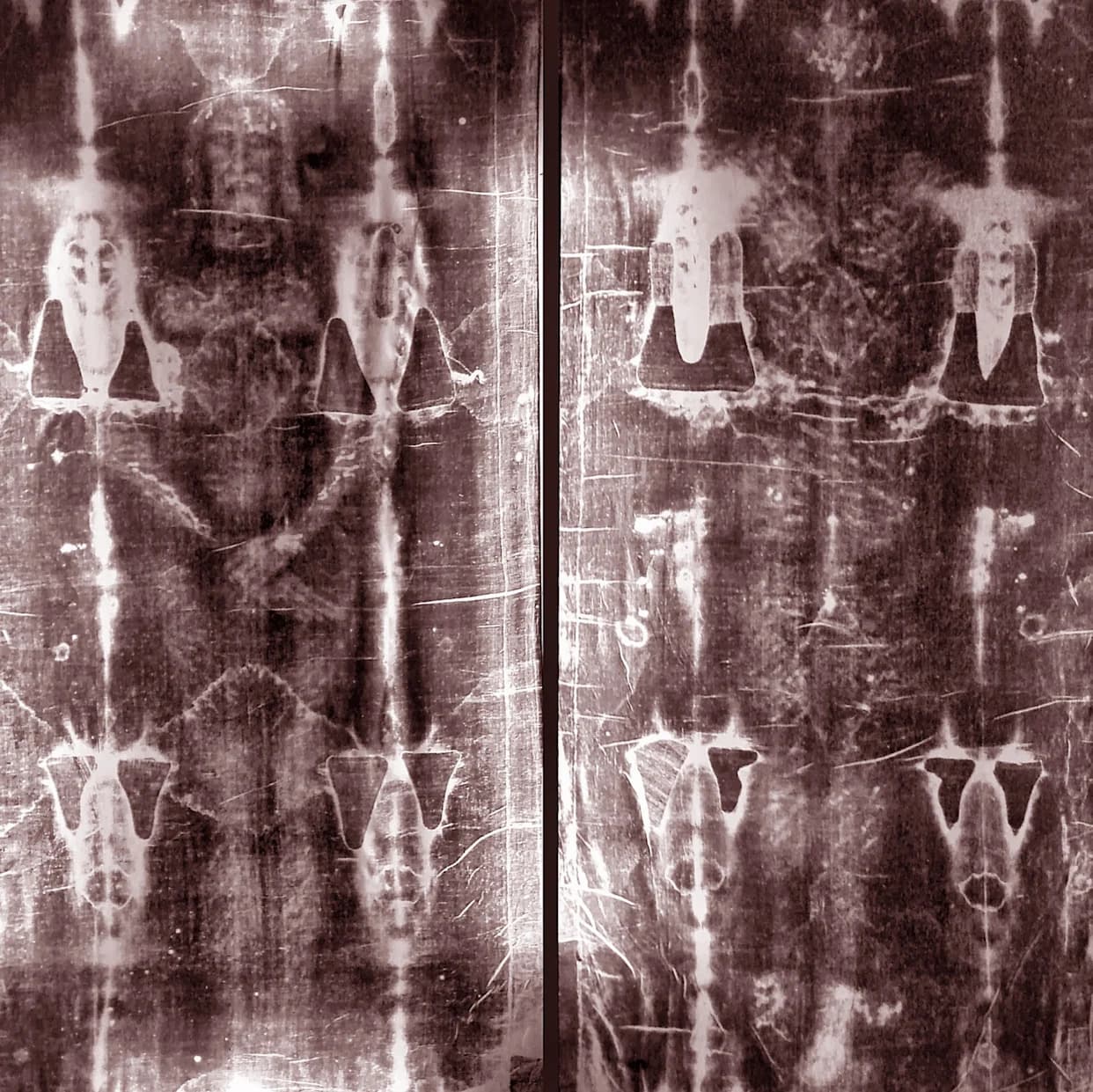
A photo-negative view of the Shroud of Turin highlights the image of a bearded man on the shroud, which is naturally sepia-toned.(Universal History Archive/UIG via Getty images)
A recent preprint reporting DNA recovered from a 1978 fragment of the Shroud of Turin has renewed interest in the relic, but outside experts say the findings do not establish where or when the cloth was made.
What The Study Did
Researchers used a metagenomic approach to sequence the mixed pool of genetic fragments present on a small piece of cloth removed in 1978. They matched those fragments to reference sequences for humans, microbes, plants and animals, producing a long list of taxonomic matches.
Key Findings Reported By The Authors
The team reported diverse DNA signatures, including human sequences tied to the original 1978 collector and to populations common in western Eurasia and the Near East. They also reported matches to domestic animals (cats, dogs, cattle, pigs) and to plants such as carrots, wheat, maize, peanuts and bananas. Based on these results, the authors suggested the possibility that some yarn used in the cloth originated in the Indian subcontinent and that the shroud has seen extensive exposure in the Mediterranean region.
Why Experts Urge Caution
Multiple specialists emphasize that the paper is a preprint and has not been peer-reviewed. Metagenomic sequencing can reliably identify human and many microbial signatures, but methods for matching short or degraded fragments to plants and animals are more error-prone and prone to false positives.
“There is a lot of legwork that needs to be done to actually convince me of any of these results,” — Allison Mann, biological anthropologist.
Andrea Nicolotti, a historian of medieval textiles, notes the shroud has an extended history of public display and handling across Europe—events that could introduce biological material from many places and eras. He also highlights textile-technology evidence suggesting that the shroud’s weaving style is consistent with medieval European looms rather than with textiles produced in the ancient Levant.
Harvard anthropologist Christina Warinner adds that while human and microbial identifications are probably trustworthy, the plant and animal matches require careful validation and may be data artifacts from the matching method used.
Radiocarbon Context And Limitations
Crucially, metagenomic results alone cannot date the cloth. In 1989, three laboratories published radiocarbon dates in Nature placing a sampled portion of the shroud between 1260 and 1390 C.E., a medieval age. Overturning that conclusion would require new radiocarbon tests on additional shroud material—destructive sampling the Vatican is unlikely to permit.
What Would Strengthen The Case
Independent replication, peer review, and additional genomic validation steps are needed. Techniques that can assess DNA damage patterns and fragment length distributions could help distinguish truly ancient molecules from modern contamination. Contextual evidence from textile analysis, archival records and non-destructive imaging would also be important to corroborate any claims about origin or age.
Bottom Line
The preprint documents a complex mixture of genetic material on a historic relic, which is scientifically interesting. But because of methodological limitations, potential contamination accrued over centuries of handling and display, and the lack of peer review, the study does not provide conclusive evidence that the Shroud of Turin originated in the Levant or that its yarn was produced in India.
Help us improve.