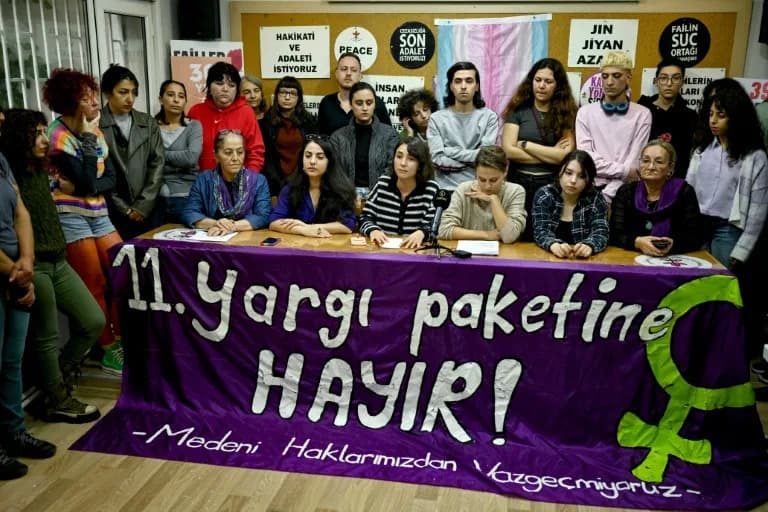
Eleven leaders of the Genc LGBTI+ association went on trial in Izmir on charges of "obscenity" and "violating the protection of the family," punishable by up to three years in prison and suspension of civil rights. Their lawyer, Kerem Dikmen — who is also on trial — called the case an attack on freedom of expression and an effort to exclude LGBT+ people from public life. Campaigners have appealed a December ruling that ordered the group's dissolution; the next hearing is set for October 14. A controversial penal-code amendment targeting LGBT conduct was withdrawn last November, while Pride marches have been largely banned since 2015.
Turkey Puts 11 Genc LGBTI+ Leaders on Trial in Izmir Over 'Obscenity' Charges
Turkish President Recep Tayyip Erdogan has targeted the LGBT community, blaming it for a declining birth rate (Yasin AKGUL)(Yasin AKGUL/AFP/AFP)
Eleven leaders of the Genc LGBTI+ association appeared in court in Izmir on Wednesday, charged with "obscenity" and "violating the protection of the family," their lawyer told AFP. Authorities say the defendants breached a constitutional provision protecting family values and posted images on social media showing same-sex couples kissing — material officials have labelled "obscene."
If convicted, each defendant faces up to three years in prison and the possible suspension of civil rights. The case has drawn criticism from human rights groups and LGBT advocates who say it forms part of a wider pattern of exclusion and pressure against sexual minorities in Turkey.
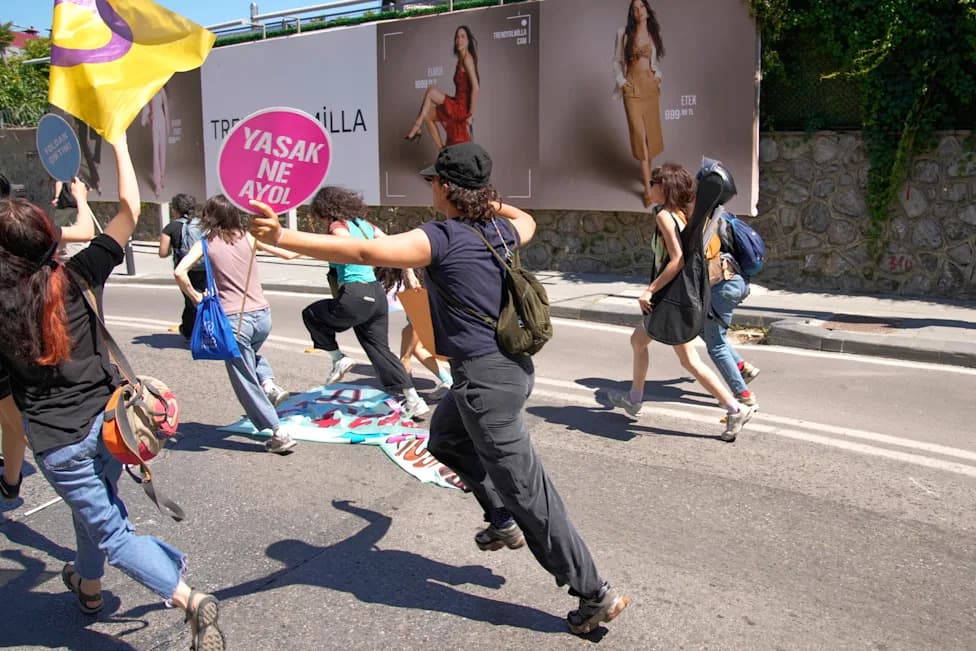
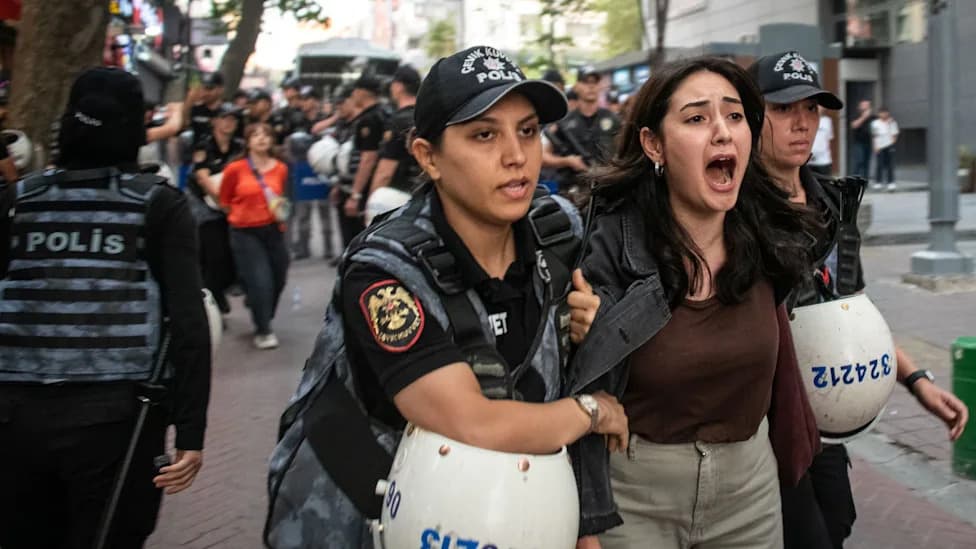
Homosexuality is not illegal in Turkey, but the LGBT community has frequently been targeted by senior officials, including President Recep Tayyip Erdogan, who has linked LGBT visibility to concerns about the country’s falling birth rate. Since 2015, annual Pride marches have been largely banned or broken up by authorities.
"This trial arises from a policy of excluding LGBT+ people from the public sphere," said Kerem Dikmen, the association's lawyer. "It is an attack on freedom of expression and freedom of association." Dikmen is himself facing trial as a member of the group's supervisory board.
Campaigners have appealed a December court ruling that ordered the association dissolved on the same grounds. The next hearing in the case is scheduled for October 14.
Separately, a proposed amendment to Turkey's penal code that would have allowed prosecutions of lesbian, gay, bisexual and transgender people for behaviour deemed "contrary to biological sex and general morality" was withdrawn last November — a measure critics said would have further restricted LGBT rights.
Observers say the trial and the earlier dissolution ruling send a chilling message to civil-society groups and may deter public advocacy for LGBT rights in Turkey.
Help us improve.