Colin McInnes (University of Glasgow) presents a physics-based analysis suggesting certain alien megastructures could be passively stable. A stellar engine that concentrates mass in a supporting ring can avoid instability, and a Dyson bubble made of vast numbers of tiny reflectors can form a self-equilibrating cloud. These long-lived constructs could produce technosignatures—such as an infrared excess—useful for SETI searches.
New Study Finds Alien Megastructures Could Be Passively Stable
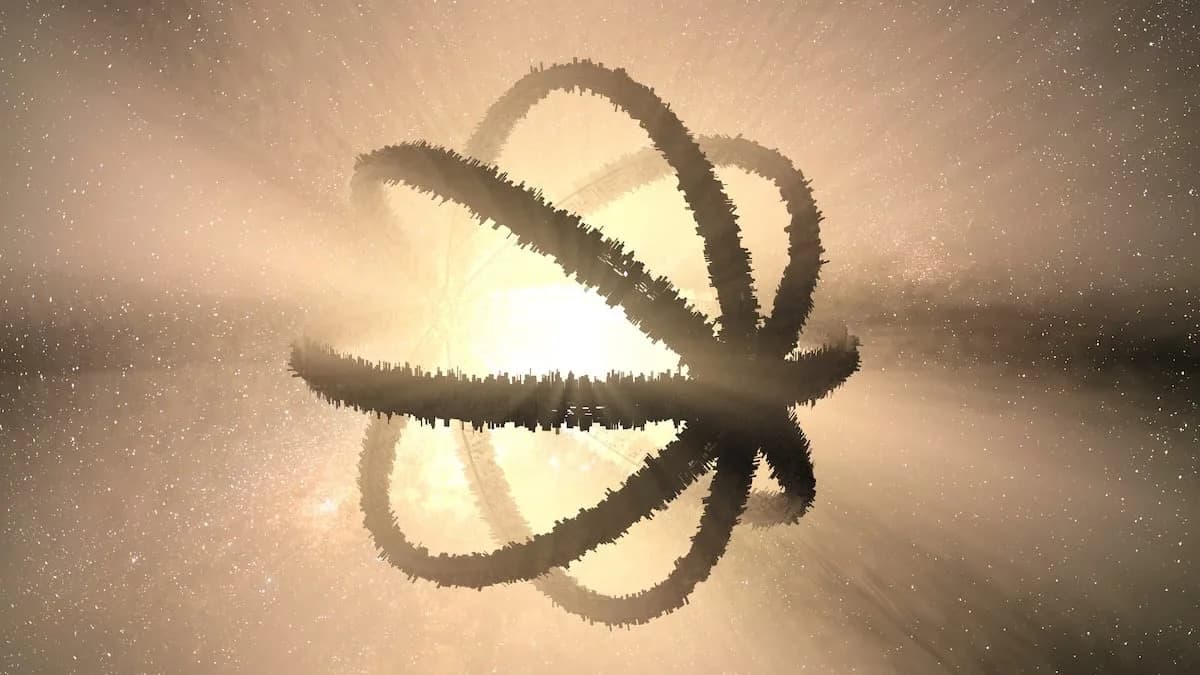
(cokada/iStock/Getty Images)
Alien megastructures designed to harvest stellar energy or to move stars across space may be physically feasible and could remain stable for extremely long timescales, according to a new analysis by Colin McInnes of the University of Glasgow.
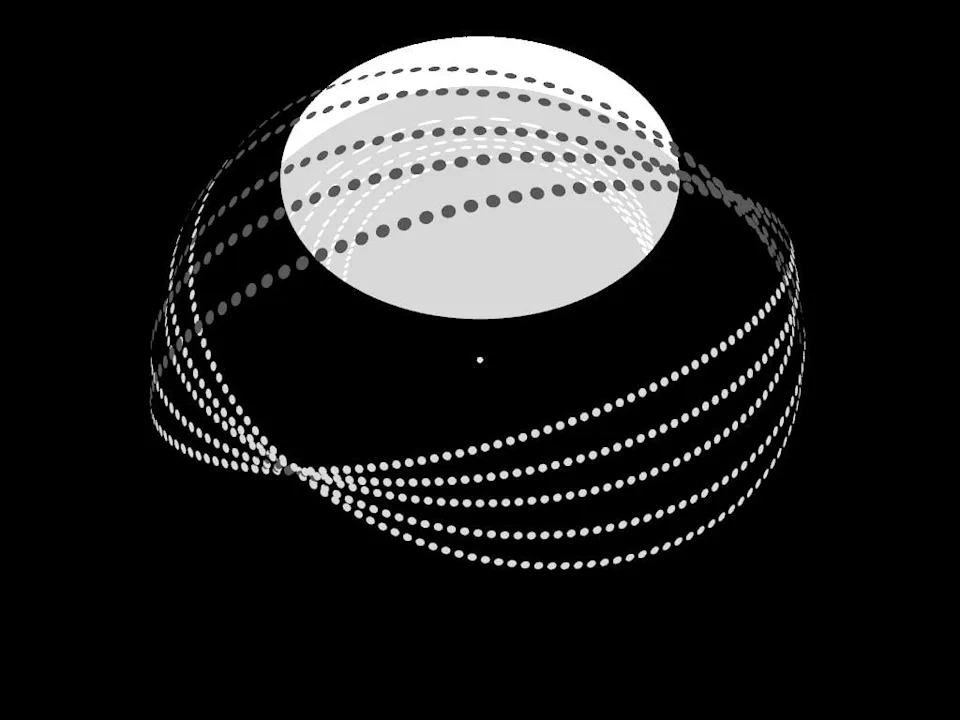
One possible interpretation of a stellar engine around a Sun-like star, to scale, featuring rings of Dyson swarms and a Shkadov thruster, which uses a star's own radiation to shift its orbit. (Vedexent/Wikimedia Commons/CC BY-SA 3.0)
What the Study Shows
McInnes modeled ultra-large constructs—such as stellar engines and Dyson bubbles—treating them as three-dimensional bodies with real spatial extent rather than idealized point masses. That change in modeling reveals that some simple, uniform designs are inherently unstable, but alternative configurations could achieve passive stability without continuous active control.
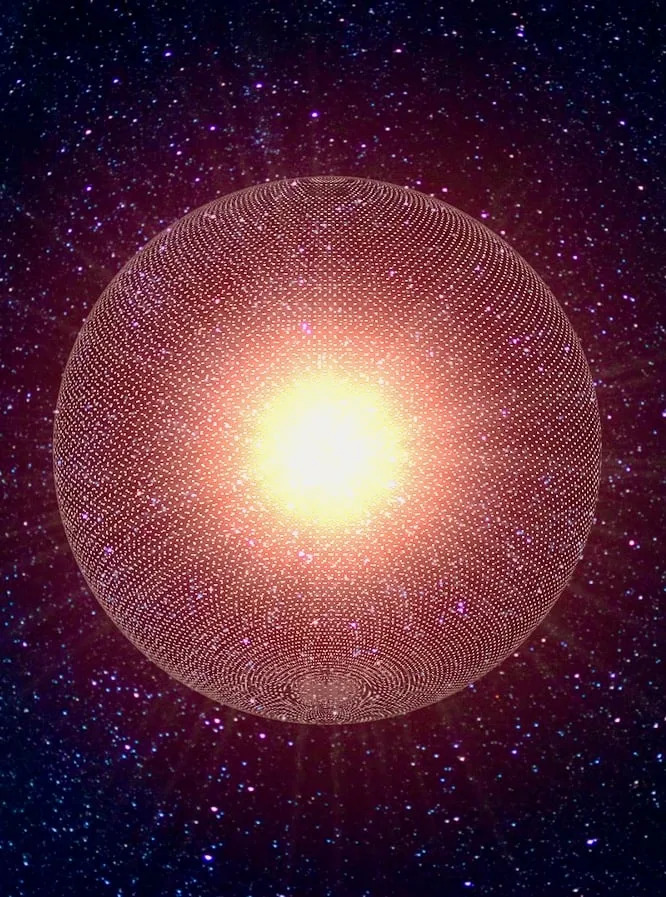
A depiction of a Dyson swarm, or bubble, around a star. (Archibald Tuttle/Wikimedia Commons/CC BY-SA 3.0)
Stellar Engines: Rings Over Plates
Stellar engines are envisioned as vast, reflective structures gravitationally coupled to a host star and propelled by stellar radiation pressure. McInnes' analysis suggests that a flat disc with a uniform mass distribution tends to be unstable. However, if most of the structure's mass is concentrated in a supporting ring—imagine a tambourine rather than a solid plate—the system can be passively stable and avoid catastrophic drift into the star.

Subscribe to ScienceAlert's free fact-checked newsletter
Dyson Bubbles: Clouds of Tiny Reflectors
A Dyson bubble—loosely defined as a dense swarm of reflectors around a star—can in principle provide vastly more usable energy than a single planet. A solid, uniform shell is likely unstable, but a cloud made of an immense number of very low-mass reflectors can balance radiation forces and gravity if deployed at the right density and distribution. Such a tenuous but extensive swarm could be self-equilibrating and long-lived.
"A stellar engine can in principle be stabilized using a ring configuration while a Dyson bubble can in principle be stabilized if a vast number of reflectors are deployed in a dense cloud," McInnes writes.
Why This Matters For SETI
Passively stable megastructures could survive long after their builders, potentially appearing as relic artifacts. Because McInnes' results are grounded in physics, they help identify observable signatures to seek. In particular, such structures would likely produce an infrared excess—more infrared emission than expected for a star of a given type—or other unusual features in a star's spectrum that could flag a target for follow-up observations.
Publication and Implications
The research appears in the Monthly Notices of the Royal Astronomical Society. While the ideas remain speculative, they provide concrete, physics-based guidance for what technosignatures might look like and how future surveys might prioritize targets in the search for extraterrestrial intelligence.
Help us improve.