
Aid groups say the Middle East war has fractured global supply chains for food, medicine and other humanitarian supplies, forcing longer, costlier routes and delaying deliveries. Tens of thousands of tons of food are stuck in transit and critical medical shipments are stranded in regional hubs. Organizations warn reroutes add roughly 10–25% in costs and days to delivery, and that continued conflict through June could push 45 million more people into acute hunger.
Aid Groups Warn Middle East War Is Severely Disrupting Global Food and Medicine Deliveries
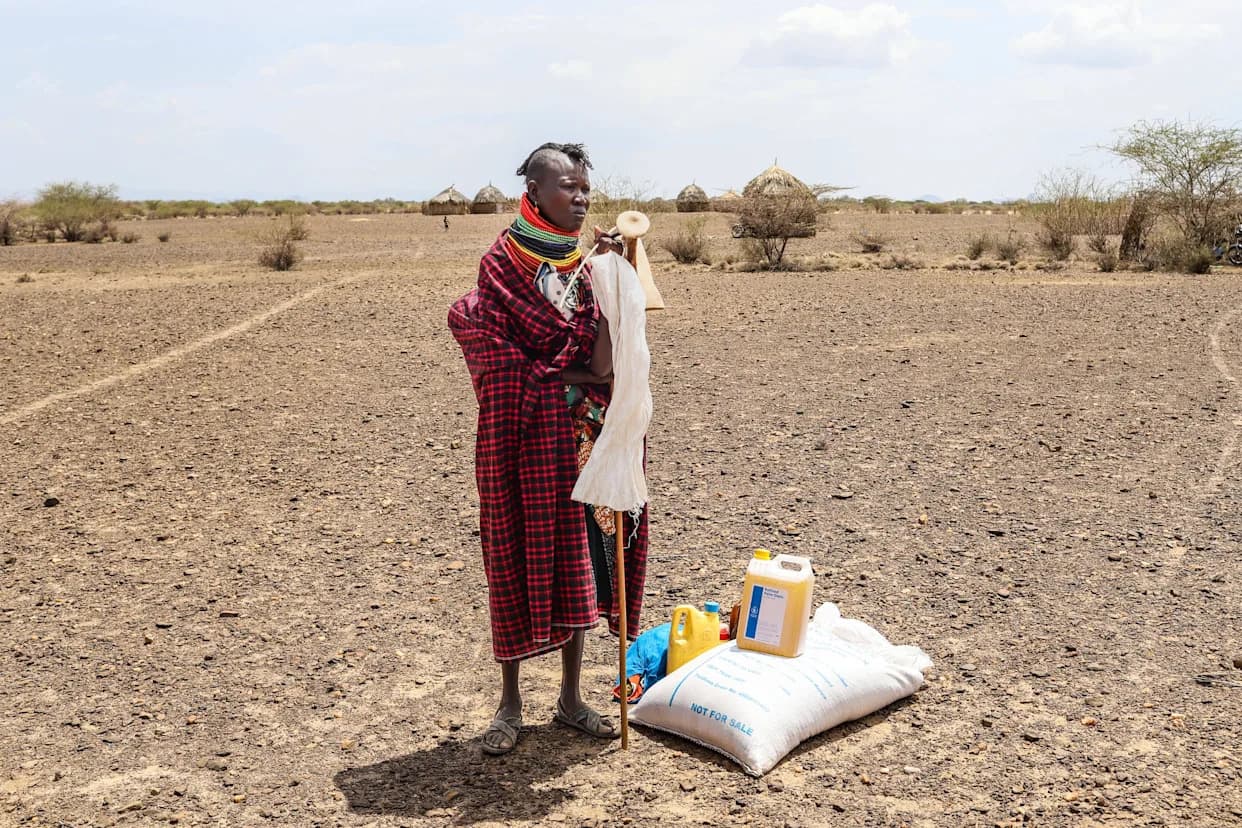
FILE - A woman stands beside her food ration after distribution of aid, in Nalemkais Village, Turkana County, Kenya, Feb. 8, 2026. (AP Photo/Patrick Ngugi, File)(ASSOCIATED PRESS)
Humanitarian organizations warn that the war in the Middle East has severely disrupted global deliveries of food, medicine and other lifesaving supplies, and that prolonged fighting will deepen the crisis for millions of vulnerable people.
Supply Chains Fractured, Costs Soar
The conflict has interrupted critical shipping lanes and impacted major regional hubs, forcing aid groups to reroute shipments by longer, slower and more expensive paths. Key corridors such as the Strait of Hormuz have been effectively closed, while operations from logistics centers in Dubai, Doha and Abu Dhabi have been disrupted. Rising fuel and insurance costs mean each dollar now purchases fewer supplies.
Delays and stranded cargo: The World Food Program reports tens of thousands of metric tons of food are heavily delayed in transit. The International Rescue Committee says $130,000 worth of pharmaceuticals bound for Sudan are stranded in Dubai and nearly 670 boxes of therapeutic food for severely malnourished children in Somalia remain stuck in India. The U.N. Population Fund has delayed equipment shipments to 16 countries.
Reroutes Add Time and Expense
Organizations have adopted alternative logistics strategies — sailing around Africa instead of using the Suez Canal and Strait of Hormuz, or combining air, land and sea legs. Those detours add weeks to delivery schedules and increase costs. UNICEF reports that sending vaccines to Iran now involves flying to Turkey and trucking across the border, raising costs by roughly 20% and adding about 10 days to deliveries.
Save the Children says shipments normally sent by ocean freight from Dubai to Port Sudan are now trucked through Saudi Arabia and barged across the Red Sea, adding roughly 10 days and around 25% in additional transport costs. Those increases come at a time when more than 19 million people in Sudan face acute food insecurity and more than 90 primary health-care facilities risk medicine shortages.
"The war on Iran and disruption to the Strait of Hormuz risk pushing humanitarian operations beyond their limits," said Madiha Raza, associate director for public affairs and communications for Africa at the International Rescue Committee. "Even when the fighting stops, the shock to global supply chains could continue to delay lifesaving aid for months."
Local Impacts and Rising Hunger Risks
Higher transport and fuel costs are also limiting people's access to care inside affected countries. Doctors Without Borders reports that rising fuel prices across Somalia have increased transport and food costs and hindered access to services. In Nigeria, aid groups say fuel costs have surged by about 50%, forcing clinics to scale back mobile teams and struggle to power generators.
The World Food Program warns that if the conflict continues through June, an additional 45 million people could become acutely hungry on top of nearly 320 million already facing hunger worldwide. About 30% of the world's fertilizer transits the Strait of Hormuz; with planting seasons approaching in East Africa and South Asia, farmers in low‑income countries face significant risk. Sudan imports more than half its fertilizer from the Gulf, and Kenya about 40%.
Calls For Funding And Policy Action
The U.N. secretary-general has established a task force to facilitate fertilizer trade modeled on the Black Sea Grain Initiative, but aid groups say it will not be sufficient on its own. Humanitarian organizations urge governments to provide additional funding to help cover sharply higher transport costs and to prioritize civilian relief alongside security efforts.
Analysts note a slower international funding response compared with previous crises such as Ukraine, suggesting governments are facing tough choices between defense spending and humanitarian aid. "It's not a capacity issue, it's a policy decision," said Sam Vigersky of the Council on Foreign Relations.
The U.S. State Department says it is releasing an additional $50 million in emergency assistance to Lebanon and is coordinating with the U.N. and partners to address urgent needs.
Bottom line: The war's ripple effects — higher prices, longer delivery times and stranded cargo — are already constraining lifesaving aid. Without stepped‑up funding and diplomatic action to reopen logistics routes, millions more people risk falling deeper into hunger and deprivation.
Help us improve.





















