The Royal Society of Chemistry published a study showing nitrile and latex gloves can shed stearate particles that mimic microplastics and contaminate sensitive tests. University of Michigan researchers recorded roughly 2,000 false positives per mm² and readings thousands of times above expected levels. The team recommends cleanroom gloves, stricter protocols, and analytic methods to separate glove-derived contaminants from real microplastics.
Routine Lab Gloves Are Contaminating Microplastics Tests, Study Finds
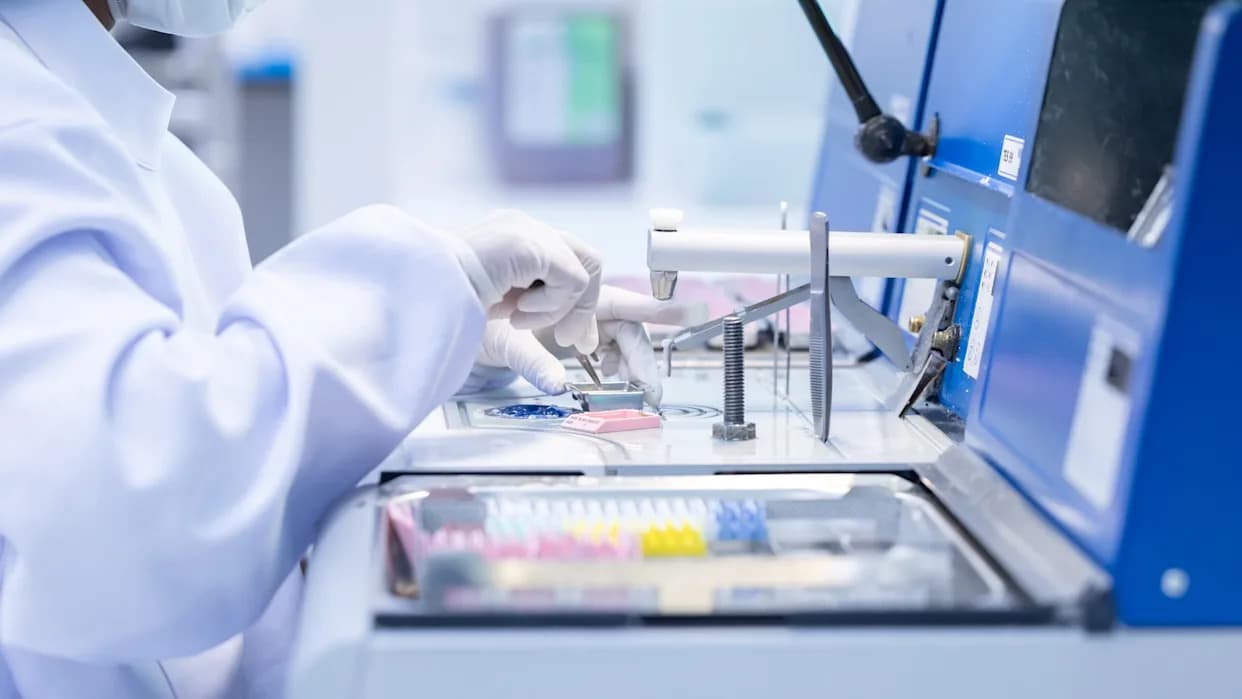
Photo Credit: iStock
A new study published by the Royal Society of Chemistry shows that a commonplace laboratory item — nitrile and latex gloves — can introduce contaminants that mimic microplastics and skew sensitive measurements.
What the researchers discovered
Scientists at the University of Michigan found that many gloves shed tiny particles of stearates (lubricant additives used in glove manufacture). These stearate particles can produce signals in common analytical tests that closely resemble true microplastics, producing false positives and inflating particle counts.
"It led to a wild goose chase of trying to figure out where this contamination could possibly have come from, because we just knew this number was far too high to be correct," said researcher Madeline Clough. "Throughout the process of figuring it out — was it a plastic squirt bottle, was it particles in the atmosphere of the lab where I was preparing the substrates — we finally traced it down to gloves."
In controlled experiments the gloves produced roughly 2,000 false positives per square millimetre, and at one stage the team measured microplastic levels thousands of times higher than expected.
Why this matters
Microplastics — tiny fragments resulting from the breakdown of larger plastic items — are now detected in oceans, drinking water and even human tissues. Accurate measurements are essential to assess environmental impacts, human health risks and to design effective mitigation strategies. If laboratory contamination is not identified and controlled, it can lead to overestimates or misleading results.
"We may be overestimating microplastics, but there should be none," said senior author Anne McNeil. "There's still a lot out there, and that's the problem."
Practical fixes and next steps
The research team identified several ways to reduce or correct for this contamination: switching to cleanroom-grade gloves that release far fewer particles, adopting stricter handling protocols in ultrapure workflows, and using analytical methods to distinguish stearate contaminants from genuine plastic particles. The paper also outlines approaches researchers can use to re-evaluate previously affected datasets and recover true microplastic counts.
From a broader perspective, the finding does not reduce the scale of plastic pollution; rather it helps improve the accuracy of how we measure it. For consumers, reducing single-use plastics and improving recycling and reuse remain important ways to limit the generation of microplastics.
Help us improve.