Iran says Iraqi ships will be allowed to transit the Strait of Hormuz, citing respect for Iraqi sovereignty and exempting Iraq from the restrictions. Transit activity rose to 53 last week from 36 but remains over 90% below normal levels. The disruption has pushed Brent crude above $109 a barrel and helped drive Iraq’s oil output down to about 1.2 million b/d from 4.3 million b/d.
Iran Allows Iraqi Ships Through Strait of Hormuz as Transits Rise and Energy Prices Climb
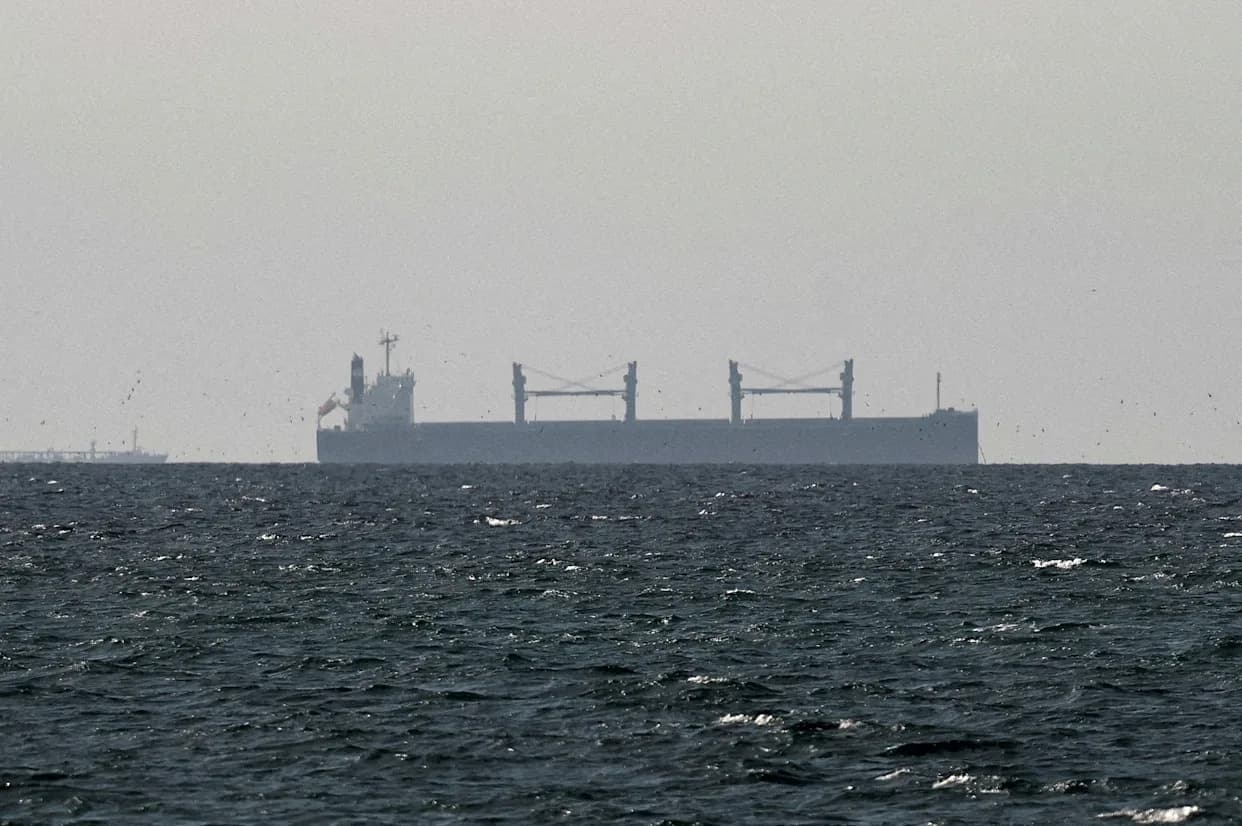
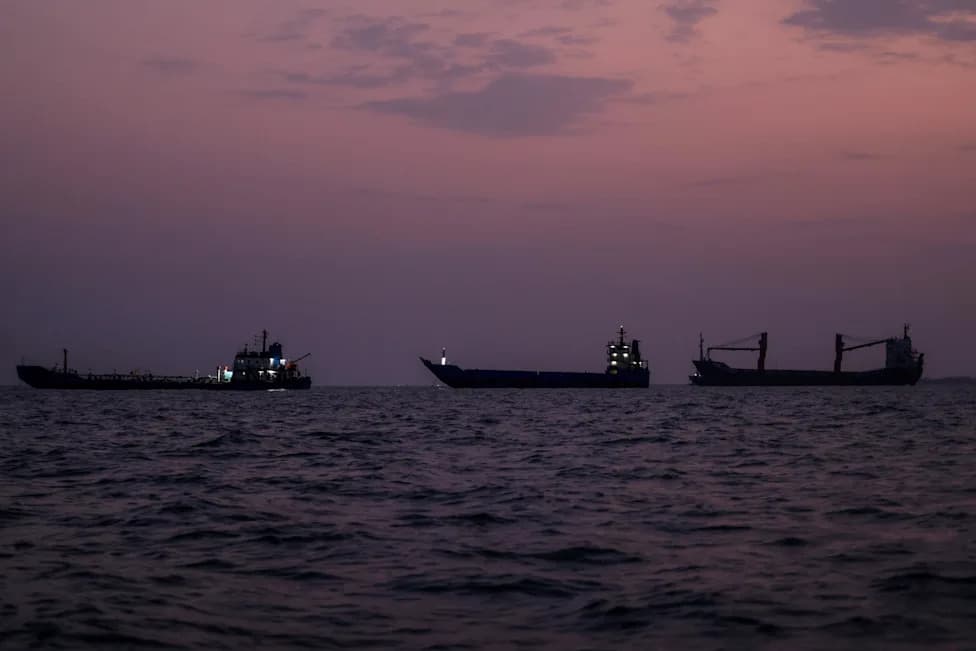
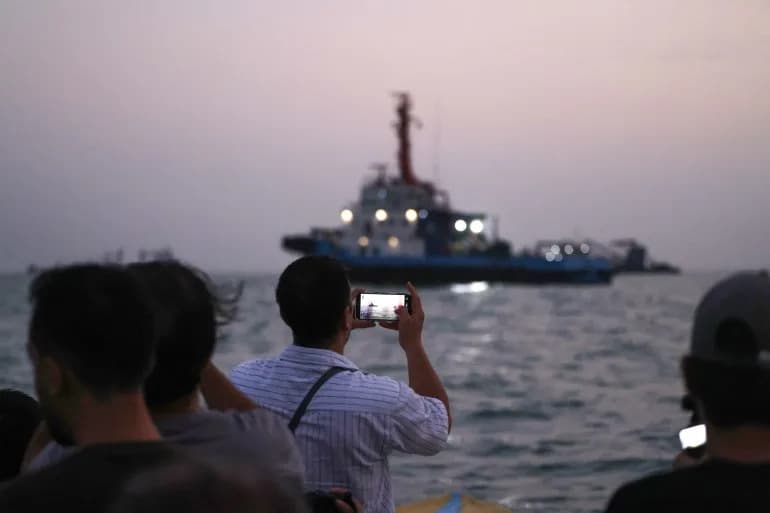
A cargo ship in the Gulf, near the Strait of Hormuz, as seen from northern Ras al-Khaimah in the United Arab Emirates, on March 11, 2026 [Reuters]
Iran has announced that Iraqi vessels will be permitted to transit the Strait of Hormuz, a move Tehran framed as respect for Iraqi sovereignty amid a wider disruption of the vital shipping corridor.
The Khatam al-Anbiya Central Headquarters said on Saturday that Iraq will be exempt from restrictions in the strait and that controls will apply only to 'enemy countries.' The statement, carried by the semi-official Tasnim news agency, praised Iraq's sovereignty and its stance toward the United States.
'We hold profound respect for Iraq’s national sovereignty,' the military command said. 'You are a nation that bears the scars of American occupation, and your struggle against the US is worthy of praise and admiration.'
The announcement came as US President Donald Trump renewed demands that Tehran reach a deal or relinquish control of the waterway, warning in a social media post that 'all hell' would erupt within 48 hours if Iran did not comply. Iran's Khatam al-Anbiya rejected the demand, calling the threat 'helpless, nervous, unbalanced and stupid.'
Transit Trends And Shipping Impact
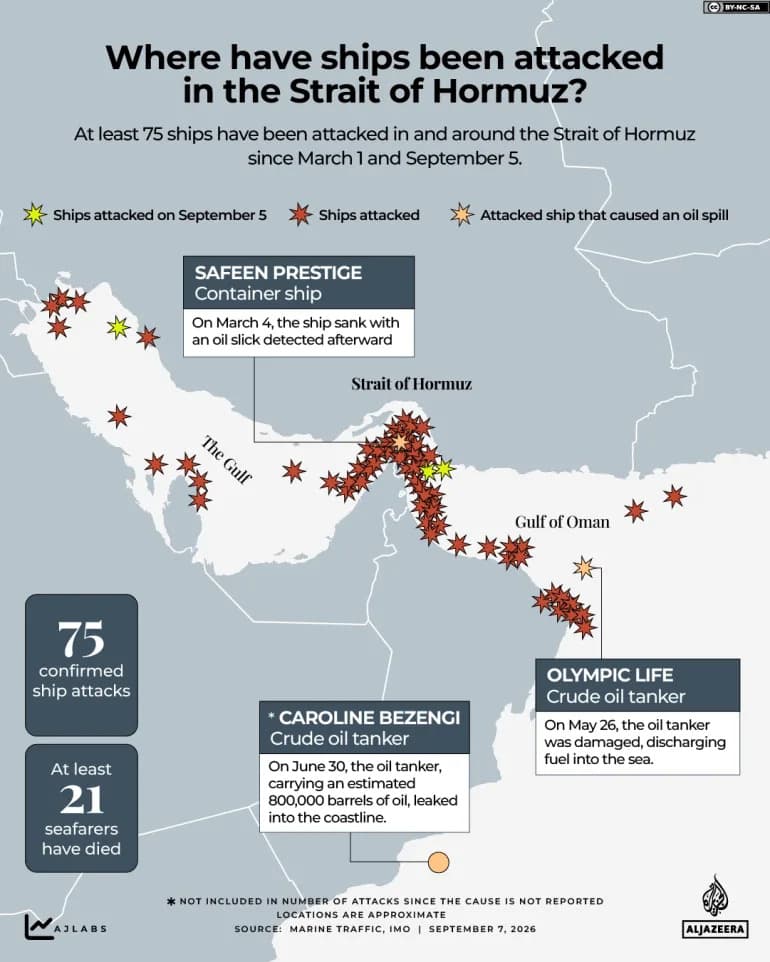
Iran has effectively restricted traffic through the strait since late February, and although maritime movements have in recent weeks inched higher under a de facto toll system, volumes remain far below normal. Ship-tracking data show transits are still down more than 90% compared with typical levels.
According to Lloyd’s List Intelligence, there were 53 transits through the strait last week — the most since the recent hostilities began — up from 36 the previous week. On Friday, a French container ship and a Japanese-owned tanker were reported crossing the waterway, the first apparent transits linked to those countries since the conflict started.
Wider Economic Consequences
The near-halt in shipping through the Strait of Hormuz has disrupted global energy markets, pushed fuel prices higher and prompted governments to adopt emergency energy conservation measures. Brent crude, the international benchmark, has traded above $109 a barrel in recent days, with many analysts warning prices could rise further if the channel is not reopened.
Iraq’s oil sector has been hit particularly hard. The Iraqi Ministry of Oil said last month that production had fallen to about 1.2 million barrels per day from roughly 4.3 million barrels per day, citing reduced export capacity amid the effective halt of shipments through the strait. According to the US Energy Information Administration, Iraq was the world’s sixth-largest oil producer in 2023, accounting for about 4% of global supply.
What to watch next: whether other countries secure exemptions, whether transit numbers continue to climb, and whether diplomatic or military developments reopen the strait and stabilize energy markets.
Help us improve.