The latest U.S. intelligence assessments conclude Iran is unlikely to loosen its hold on the Strait of Hormuz soon because that control is Tehran’s most powerful leverage. Iran has used attacks, mines and demands for passage fees since Feb. 28 to choke commercial traffic, sending oil prices higher and creating fuel shortages. Analysts warn a military effort to reopen the strait would be risky given narrow shipping lanes and Iran’s ability to strike from inland; Tehran may also press for long-term security guarantees or reconstruction funds in any settlement.
U.S. Intelligence: Iran Unlikely To Relinquish Control Of Strait Of Hormuz Soon
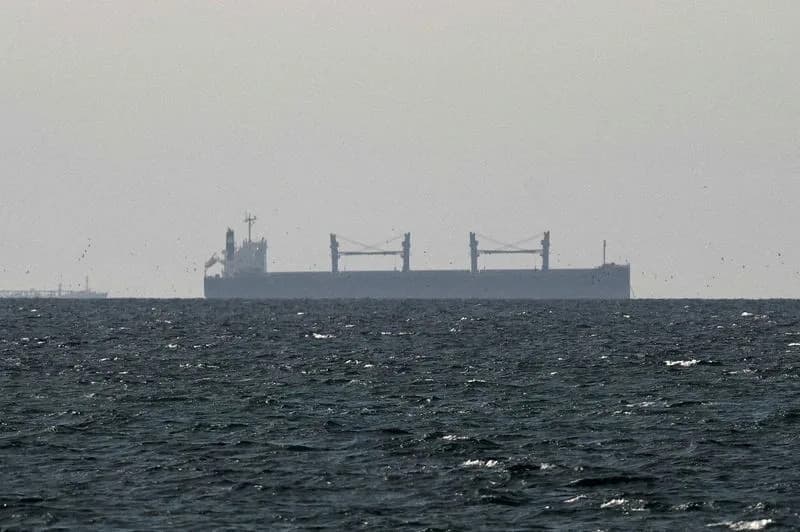
FILE PHOTO: A cargo ship in the Gulf, near the Strait of Hormuz, as seen from northern Ras al-Khaimah, near the border with Oman’s Musandam governance, amid the U.S.-Israeli conflict with Iran, in United Arab Emirates, March 11, 2026. REUTERS/Stringer/File Photo
U.S. intelligence assessments warn that Iran is unlikely to reopen the Strait of Hormuz in the near term because control of the vital shipping lane is Tehran’s most effective leverage over the United States, according to three people familiar with the reports.
Why Iran Values the Strait
The Strait of Hormuz carries roughly one-fifth of global oil shipments. Intelligence analysts say Tehran's ability to disrupt passage gives it a potent tool to influence global energy markets and to pressure the U.S. and its partners over a conflict that began on February 28.
How Iran Is Disrupting Shipping
Since hostilities began, Iran's Islamic Revolutionary Guard Corps (IRGC) has used a range of tactics that make commercial transit hazardous and often uninsurable: attacks on civilian vessels, the laying or release of mines, and demands for passage fees. These actions have helped push oil prices to multi-year highs and contributed to fuel shortages in countries dependent on Gulf exports.
"In the attempt to try to prevent Iran from developing a weapon of mass destruction, the U.S. handed Iran a weapon of mass disruption," said Ali Vaez, director of the Iran Project at the International Crisis Group.
Risks Of a Military Effort To Reopen The Strait
Experts caution that a military campaign to restore traffic carries substantial risks. The strait narrows to about 21 miles (33 km) at its tightest point, and the established shipping lanes are only around 2 miles (3 km) wide in each direction, creating concentrated corridors that are highly vulnerable to attack.
Even if U.S. forces seized Iran's southern coast or nearby islands, the IRGC could continue to strike with drones and missiles launched from deep inside Iran, sustaining disruption. "All it takes to disrupt traffic and deter vessels from passing through is one or two drones," Vaez said.
Political And Economic Implications
President Donald Trump has publicly downplayed the difficulty of reopening the strait and suggested U.S. forces could be ordered to do so; he also posted on social media about reopening the passage. A White House official told reporters the president is "confident that the strait will be open very soon" but noted that other countries have large stakes in preventing ongoing disruption.
Rising energy costs risk fuelling inflation in the United States and presenting a political liability ahead of congressional elections, while Iran may seek to turn its leverage into long-term political and financial gains.
Former CIA Director Bill Burns warned that Tehran is likely to seek "long-term deterrence and security guarantees" and could demand material benefits — such as passage fees to help fund post-conflict reconstruction — as part of any negotiated settlement.
What Comes Next
Intelligence assessments indicate Iran is unlikely to surrender its leverage over the strait soon. Negotiations over reopening and security guarantees are likely to be difficult, with high strategic and economic stakes for regional states, NATO partners and the United States.
Reporting by Reuters journalists; editing and consolidation for clarity and flow.
Help us improve.