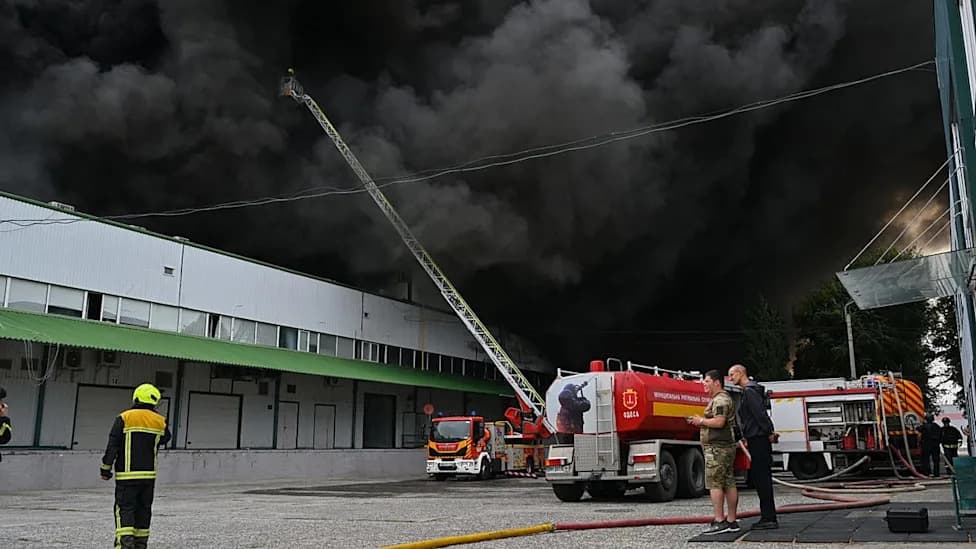
Ukraine has stepped up drone strikes on Russian oil refineries and export terminals as Moscow benefits from higher crude prices and partial sanctions relief. Kyiv says it carried out 10 major attacks this month on facilities including Yaroslavl, Ust-Luga, Primorsk and a Rosneft refinery in Saratov, though independent confirmation of damage is limited. Russian authorities are reportedly considering reintroducing a gasoline export ban from April 1 amid disruption and higher domestic prices. President Zelensky says the strikes are retaliation for Russian attacks on Ukrainian power infrastructure.
Ukraine Escalates Drone Strikes on Russian Oil Infrastructure as Kremlin Benefits from Soaring Prices
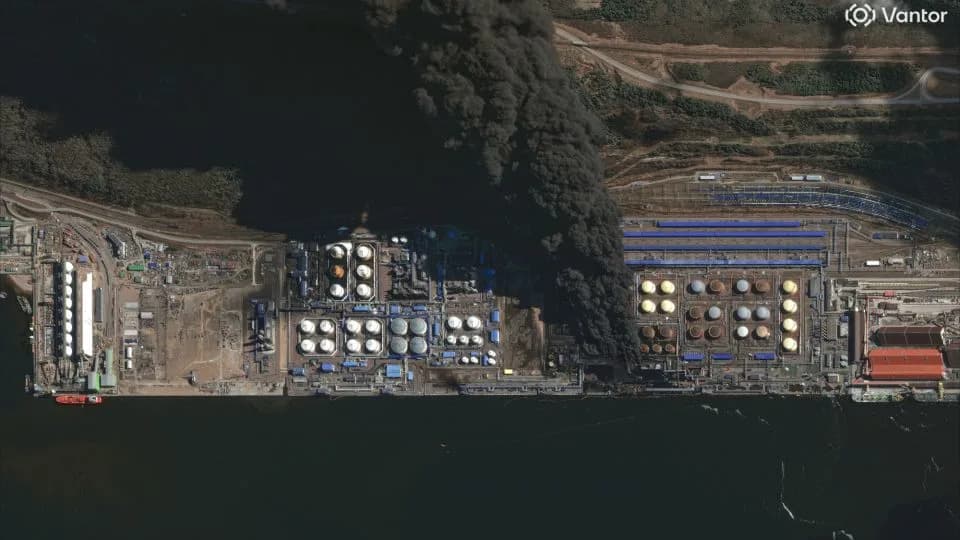
Vantor collected new satellite imagery on March 27, 2026 of a large fire at the Ust-Luga oil terminal complex in northern Russia. - Satellite image ©2026 Vantor
The Ukrainian military has intensified a campaign targeting Russia’s energy infrastructure, striking several refineries and export terminals as Moscow benefits from rising crude prices and partial sanctions relief.
Recent Strikes and Targets
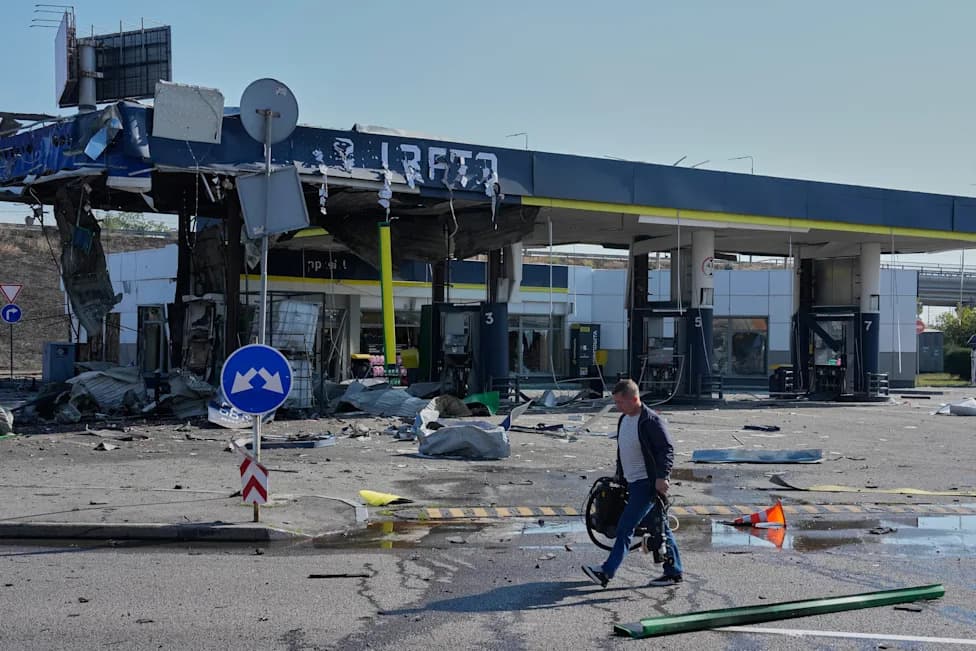
Over the past week, Ukrainian drones reportedly struck major facilities including a large refinery in Yaroslavl, the Ust-Luga and Primorsk ports on the Baltic coast, and a Rosneft-operated refinery in Saratov. Ukrainian officials say they carried out 10 major attacks this month, some deep inside Russian territory, though independent verification of the full extent of the damage remains limited.
Damage, Response and Local Impact
Ukraine’s Security Service said strikes on Ust-Luga damaged oil-loading stands and a tank farm, and geolocated footage showed large fires at the port. Russia’s emergency ministry warned nearby St. Petersburg residents about air pollution after the attacks.
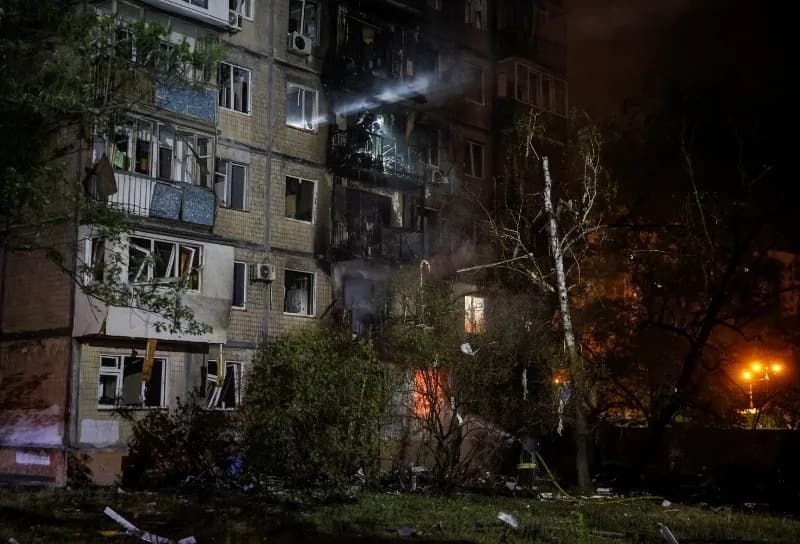
Mikhail Evraev, governor of Yaroslavl, confirmed damage to several residential buildings and a commercial facility, while saying authorities had neutralized more than 30 drones in that incident. Kyiv has claimed the Ust-Luga terminal lost roughly 60% of its capabilities after strikes; Moscow disputes some of those assessments.
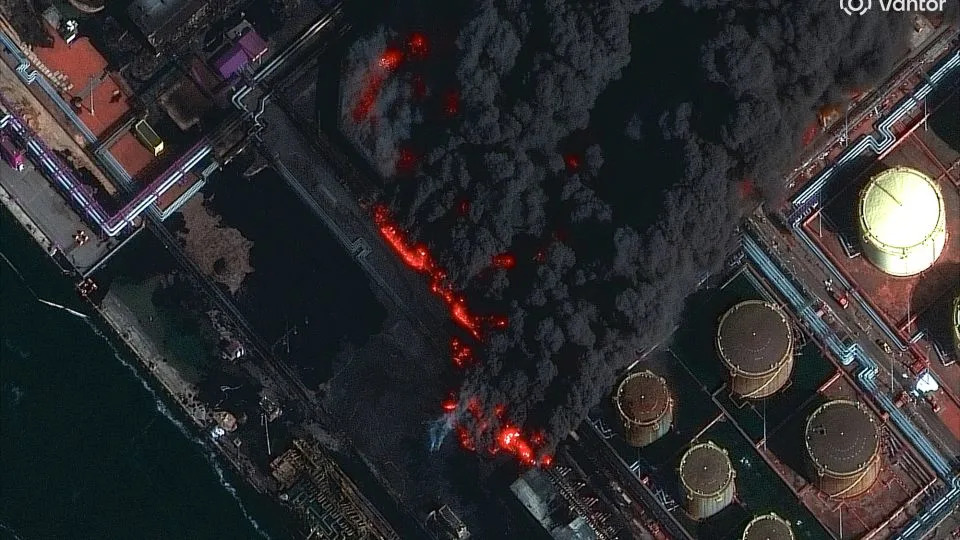
Satellite imagery of a large fire at the Ust-Luga oil terminal complex in northern Russia on March 27, 2026. The imagery was collected by several of Vantor’s satellites and that provides different perspectives of the fires. - Satellite image ©2026 Vantor
Context: Oil Markets and Sanctions
Analysts say the conflict in the Middle East has pushed global crude prices higher and, combined with partial easing of U.S. sanctions — including a temporary suspension covering Russian crude already at sea — has buoyed Russia’s oil revenues. Russia’s state budget remains heavily dependent on oil proceeds, which analysts estimate account for about one-third of revenue and have reportedly increased in recent weeks.
"We responded to the strike on our energy infrastructure. We responded with a powerful strike, reducing the capabilities of Ust-Luga," President Volodymyr Zelensky told journalists, adding that "40 percent of their capabilities remained at that facility" after the strikes. He said Ukraine’s long-range drones have become more effective.
Political and Economic Fallout
In response to reported disruptions and higher domestic prices, Russian officials are reportedly considering reintroducing a gasoline export ban from April 1, according to state news agency TASS. The measure was imposed last September and later lifted in January. Russian outlets cite both export-driven supply pressures and operational disruptions — including recent fires and unscheduled refinery maintenance — as reasons for the potential move.
Zelensky framed the strikes as retaliation for Russian attacks on Ukrainian power infrastructure that caused widespread electricity outages over the winter, warning that Ukraine would cease such operations if Russia stops targeting civilian energy systems.
For more reporting from CNN and other outlets, readers should consult original coverage and official statements for updated verification of damage and claims from both sides.
Help us improve.