
Summary: EU officials say they would welcome the defeat of Hungary’s Viktor Orbán in the April 12 election after he blocked major measures, including a 90 billion euro loan to Ukraine. Opinion polls indicate Orbán’s Fidesz could be beaten by Peter Magyar’s centre-right Tisza party, which promises to re-engage with Brussels and unlock roughly 17 billion euros in frozen EU funds. Diplomats caution, however, that Magyar is likely to be cautious on migration and EU enlargement, so changes may be more tonal than substantive.
EU Hopes Hungarian Vote Will End Orban’s Vetoes — But Major Shifts Are Unlikely
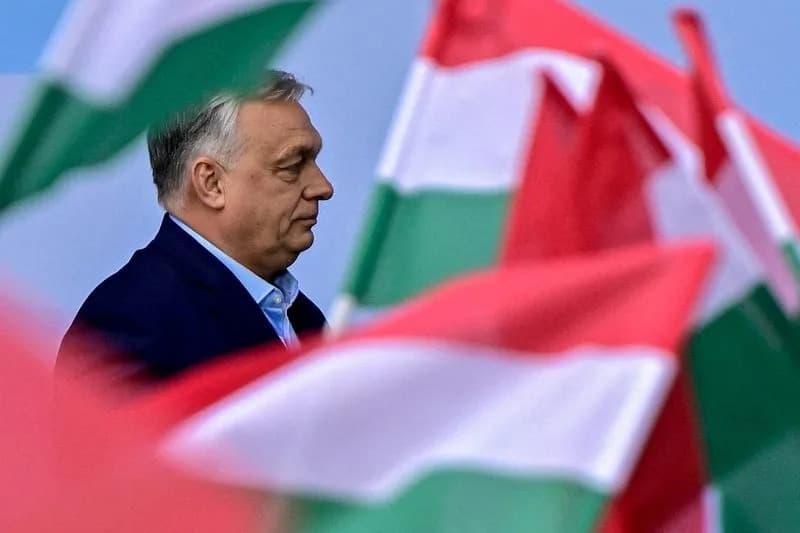
FILE PHOTO: Hungarian Prime Minister Viktor Orban attends the first so-called "Patriots' Grand Assembly" of nationalist groups from Europe, in Budapest, Hungary, March 23, 2026. REUTERS/Marton Monus/File Photo
BRUSSELS/BUDAPEST, March 27 (Reuters) — Europe is watching Hungary’s April 12 election closely as many EU leaders hope a defeat for Prime Minister Viktor Orbán will end Budapest’s recent blockades of key European policies, most notably a 90 billion euro loan package for Ukraine. But diplomats warn that even a new government led by Peter Magyar may deliver more of a tonal shift than a full policy reversal.
What’s At Stake
Orbán’s nationalist Fidesz party has governed Hungary since 2010. His government’s willingness to veto EU measures — and his perceived closeness to Russian President Vladimir Putin, alongside an affinity with U.S. President Donald Trump — has repeatedly strained relations with other EU capitals. The recent veto of the 90 billion euro loan to Ukraine prompted sharp criticism across the bloc.
How EU Leaders View a Possible Change
Multiple EU diplomats and former officials told Reuters they would welcome an end to Hungary’s use of vetoes on issues ranging from Ukraine assistance and sanctions on Russia to measures addressing violence by Israeli settlers. Some officials even suggested moves to sideline Budapest if Orbán remains in office.
"This was the last straw that broke the camel's back. On our side, the hope to talk reason into Orbán is gone," said one EU diplomat.
Former Latvian Prime Minister Krisjanis Karins warned that continued obstruction by Hungary would force a change in how EU institutions operate: "If Orbán stays, we will have to change how we work." German Chancellor Friedrich Merz called Orbán’s veto an act of "gross disloyalty" that harmed the EU's reputation and ability to act.
Who Is Peter Magyar — And What Might Change?
Opinion polls suggest Peter Magyar’s centre-right Tisza party is in a position to challenge Fidesz. Magyar, a former diplomat and sharp negotiator in Brussels, has said he wants to anchor Hungary firmly in the EU and NATO and to unlock roughly 17 billion euros in EU funds that have been frozen over rule-of-law concerns.
Nonetheless, several EU officials caution Magyar is likely to remain skeptical on migration policy and the pace of EU enlargement, including Ukraine’s ambitions. As one diplomat put it, the difference may be "more in tone of voice than substance." Analysts expect a more constructive relationship with Brussels but not a wholesale reversal of Orbán-era positions.
Outlook
If Orbán loses, the EU could see quicker agreement on security and aid matters, and a path to unfreezing EU funds. If he wins and continues to wield veto power, some governments have already discussed ways to minimize Hungary’s disruptive leverage. Either outcome is likely to reshape how the EU builds consensus on sensitive foreign and security policy issues.
Full reporting by Lili Bayer, Krisztina Than and Anita Komuves; writing by Lili Bayer and Andrew Gray; editing by Gareth Jones.
Help us improve.





















