
Israeli analysts say they were left surprised and unsettled after US President Donald Trump suggested talks with Iran to wind down the war could continue, while Tehran denied negotiations and Washington threatened strikes on Iranian energy infrastructure. Critics in Israel argue the country was not consulted and that Prime Minister Benjamin Netanyahu’s diplomatic standing may be weakened. Other analysts counter that Israel has nonetheless dealt significant blows to Iran’s military capacity and secured lasting US commitment to limiting Tehran’s capabilities.
US Says Talks With Iran Could Continue — Israeli Analysts Say Israel Was Sidestepped
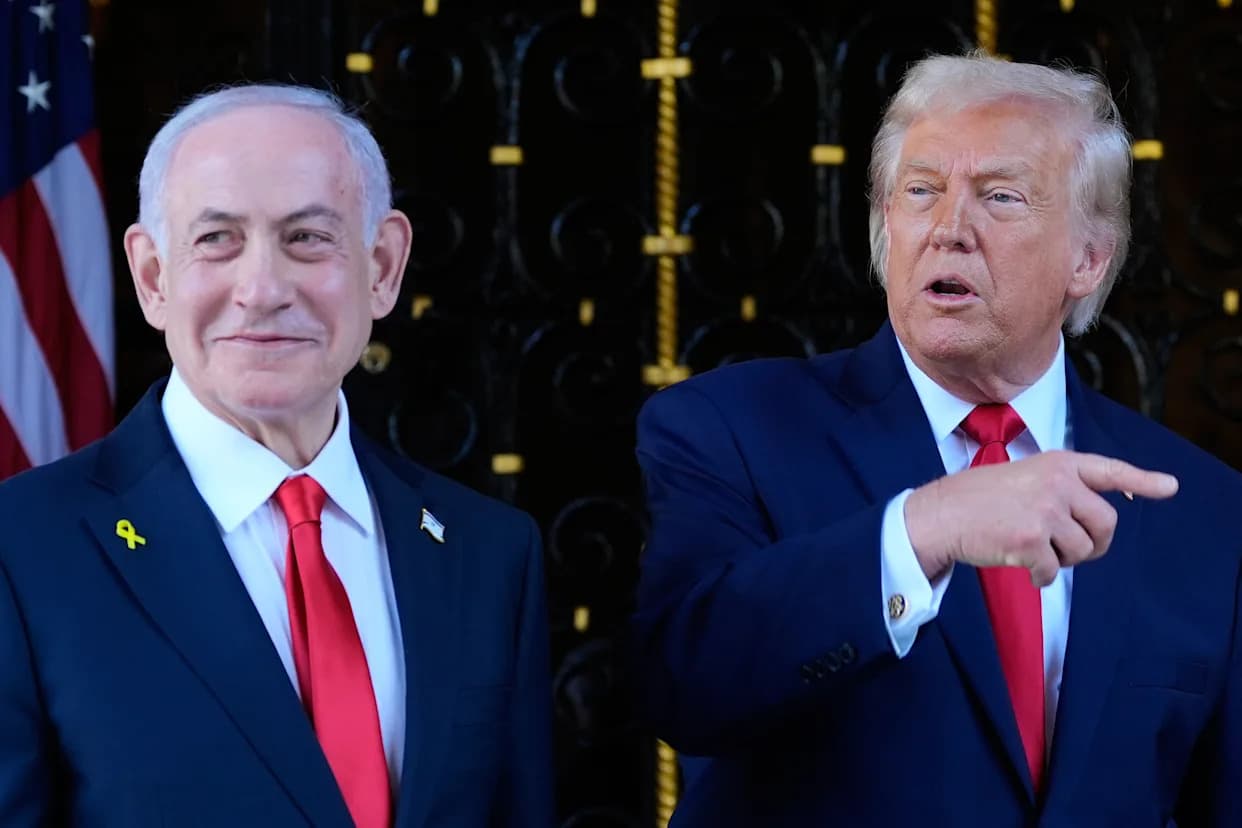
US President Donald Trump speaks to reporters as he greets Israeli Prime Minister Benjamin Netanyahu at his Mar-a-Lago club, on December 29, 2025, in Palm Beach, Florida [Alex Brandon/AP Photo]
Israeli analysts report growing disappointment and confusion after US President Donald Trump said talks with Iran aimed at winding down the war could continue — comments that came as Tehran denied negotiations and Washington threatened strikes on Iranian energy infrastructure.
Political Fallout in Israel
Throughout the conflict, Israeli leaders have presented themselves as a leading force against Iran. Prime Minister Benjamin Netanyahu has repeatedly said he persuaded the US to treat Iran as an existential threat and to deepen Washington's involvement. In a video statement after Mr Trump’s remarks, Netanyahu argued that it might be possible to convert "the mighty achievements obtained by [the Israeli military] and the US military to realise the goals of the war in an agreement … that will safeguard our vital interests."
In parallel, we continue to attack, both in Iran and Lebanon. We are methodically dismantling the missile programme and the nuclear programme, and continue to hit Hezbollah hard.
Public Reaction And Strategic Questions
Many Israelis are unsettled because the war was initially framed as likely to overthrow Iran's government — an outcome that has not materialised. Recent deadly Iranian strikes on Israeli territory have reinforced public anxiety, and talk of a negotiated end to the conflict has deepened frustration among those who expected a decisive military outcome.
Voices From The Establishment
Former Israeli ambassador Alon Pinkas told Al Jazeera that if Mr Trump pressed for talks over Mr Netanyahu's objections, it could mean the US president now realises that the Israeli leader overstated how quickly and completely regime change in Tehran would be achieved.
Political scientist Ori Goldberg said Israel appeared not to have been consulted about the reported negotiations, undercutting Netanyahu’s narrative of having secured US entrenchment in the campaign. "Is it a defeat for Netanyahu? Hell, yes!" Goldberg said, adding that Israel's diplomatic credibility may have been damaged even if it retains military leverage in the region.
Other analysts, including Nimrod Flashenberg speaking from Berlin, argued that while Israel may not be a diplomatic partner in ending the war, it has achieved significant operational aims. If the goal was to degrade Iran's military capabilities, they say, Israel has contributed to that outcome and helped secure long‑term US commitment to keeping Tehran weakened.
What This Means Going Forward
The episode highlights the asymmetric nature of the Israel–US relationship and the unpredictability of US policy under Mr Trump. For Israeli political leaders, the immediate consequence is political strain at home and questions about their ability to shape diplomatic outcomes — even as military operations and strategic competition continue across the region.
Help us improve.





















