
The article explains that the distinctive 'spicy,' 'woody' and 'sweet' smells of Egyptian mummies come from both the original embalming balms and long‑term chemical changes. Wayne Zhao and colleagues analyzed volatile organic compounds in tiny tissue and bandage samples, finding evidence of pine resins, plant oils, animal fats, beeswax and other unguents across dynastic periods. Processes such as hydrolysis and oxidation transformed many original ingredients into new odor‑producing molecules, giving each mummy a unique olfactory signature.
Why Do Mummies Smell 'Spicy' or 'Woody'? Ancient Balms and Millennia of Chemistry
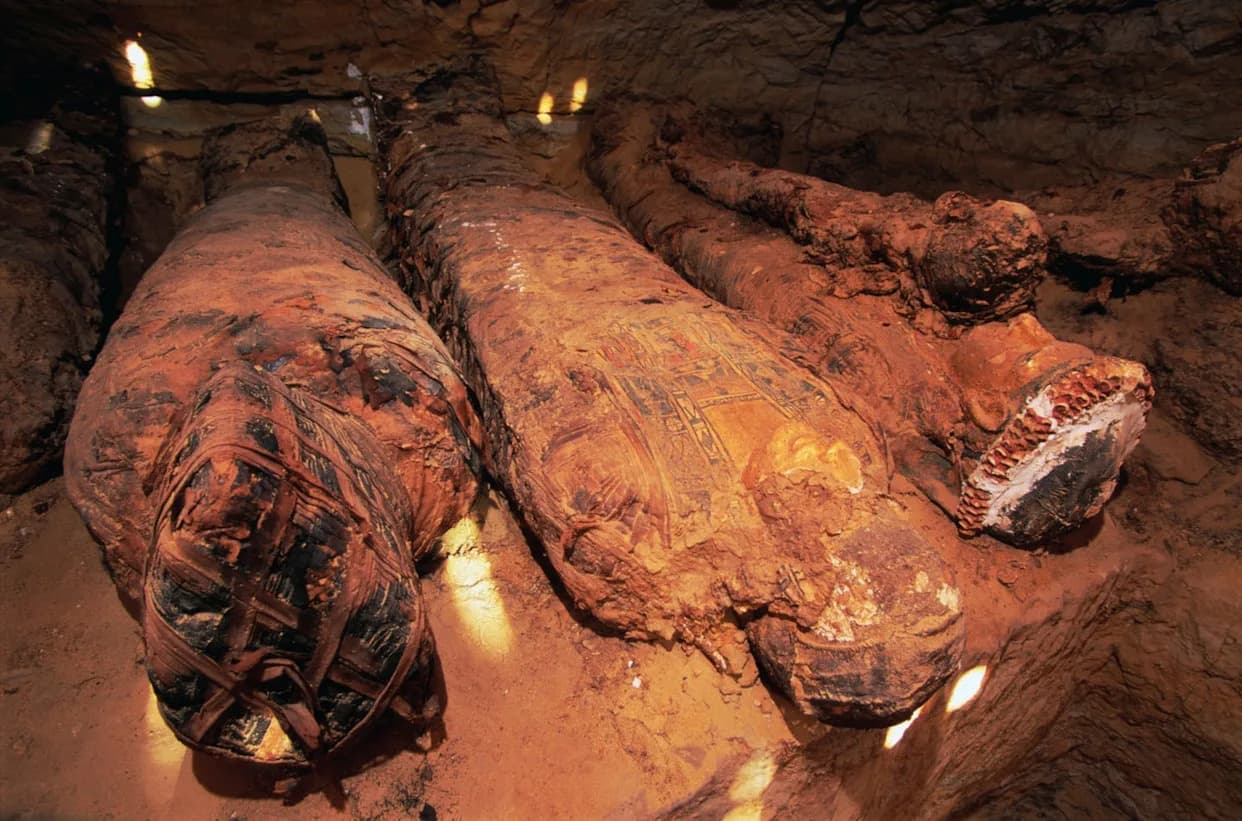
Smells Are Unlocking Secrets of Ancient MummiesRon Watts - Getty Images
Ancient Egyptian mummies often retain distinctive aromas — described as spicy, woody or sweet — that are the product of both the original embalming materials and chemical changes that unfolded over thousands of years. Modern chemical analyses of tiny tissue and bandage fragments are beginning to decode those olfactory signatures, revealing how embalming recipes evolved and how long‑term degradation reshaped their scents.
What Researchers Found
Organic geochemist Wayne Zhao of the University of Bristol and his colleagues analyzed volatile organic compounds (VOCs) in minute samples from mummies and resin‑soaked wrappings spanning multiple dynastic periods. VOCs include resins, plant oils, animal fats, beeswax and bitumen — carbon‑based substances that evaporate readily at low temperatures and persist as trace residues in museum specimens.
The team identified chemical markers consistent with materials used by ancient embalmers: diterpenoids and aromatic acids linked to pine resins, fatty acids and acyl lipids from plant and animal fats, and compounds suggestive of beeswax and other unguents. These materials are familiar to modern perfumers as well — resins and ambers provide base notes while spices like cinnamon add spicy top and middle notes — but the researchers emphasize that the present smells are not simple carryovers of the original perfumes.
Chemistry Over Millennia
Many modern impressions of mummy scents arise from degradative reactions that occurred during long burial and storage. Processes such as hydrolysis (breakdown by water) and oxidation (reactions with oxygen) transform original molecules into new odor‑producing compounds. For example, plant phenols — which can smell tarry and sickly sweet — likely derive from the breakdown of tannins in woody plant oils.
Samples from Old Kingdom bandages (roughly 5,000 years old) revealed pine resins, plant oils and animal fats, while residues from a New Kingdom embalmer's workshop showed fatty acids, aldehydes and hydrocarbons consistent with beeswax and other fats. Over time, unsaturated fatty acids can migrate from the body into surrounding wrappings unless dehydration with natron was fully effective; even then, slow seepage and chemical alteration are likely over millennia.
'She was wrapped with spices — possibly myrrh and frankincense… and the embalmers never used exactly the same combination twice. In fact, almost every mummy has a unique scent.'
That observation comes from Egyptologist Rosalie David in her book Conversations With Mummies, prompted by the distinctive aroma of the 25th Dynasty temple chantress Asru (around 700 B.C.E.). Asru offers a rare sensory window into mummification practices approximately 2,700 years ago, while older and younger specimens show how recipes and techniques changed over time.
Why This Matters
By reconstructing the chemical composition of embalming agents and the pathways by which they degraded, researchers can better understand regional ingredients, evolving embalming protocols, trade in aromatic materials, and the practical goals of ancient embalmers — from masking decay to deterring pests and protecting the body for the afterlife. Each mummy's unique olfactory signature adds a new dimension to archaeological and museum studies, linking chemistry, material culture and ritual practice.
Bottom line: Mummy scents are the combined result of deliberate embalming recipes and slow chemical transformations, and modern VOC analysis is unlocking those layered histories.
Help us improve.





















