Rising fertiliser and fuel costs — driven by geopolitical tensions and higher gas prices — are squeezing UK farmers as spring planting begins. Synthetic nitrogen, vital for many arable crops, has jumped by about 50% for some products, while fuel and falling milk prices are further compressing margins. Experts warn the UK is vulnerable because around 60% of fertiliser is imported and a third of seaborne trade passes through the Strait of Hormuz. Prolonged disruption could reduce production and push food prices higher.
UK Farmers Warn: Surging Fertiliser and Fuel Costs Threaten National Food Security
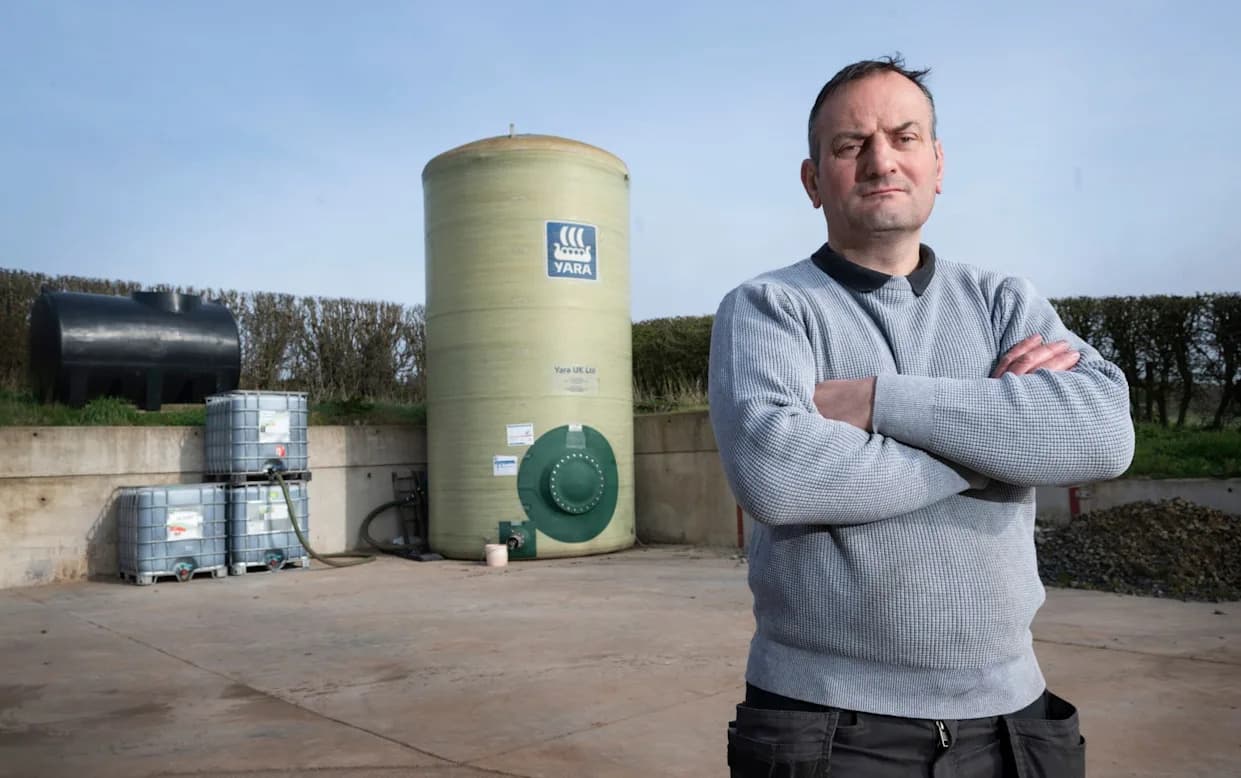
Managing his precious fertiliser supplies ‘feels like gambling on a grand scale’, says Andrew Williamson, photographed for The Telegraph on his farm in Bridgnorth, Shropshire - David Rose For the Telegraph
British farmers are facing escalating costs as geopolitical tensions and higher energy prices push fertiliser and fuel bills sharply upward just as spring planting begins. Some fertilisers have risen by around 50% in recent months, leaving many producers with tens of thousands of pounds of unplanned expenses and forcing urgent decisions about what to plant, how much to spend and whether to keep livestock.
A major pressure point is synthetic nitrogen fertiliser: the UK uses roughly one million tonnes a year on crops such as barley, grass and especially potatoes. Arable farms without livestock rely on synthetic inputs because they lack access to organic manures.
Global supply lines are fragile. About one third of seaborne fertiliser trade passes through the busy Strait of Hormuz, and any prolonged disruption there would hit production at major fertiliser plants concentrated in the Gulf. Rising natural gas prices — both a feedstock and an energy source for fertiliser manufacture — are also pushing production costs higher and amplifying the strain on farmers.
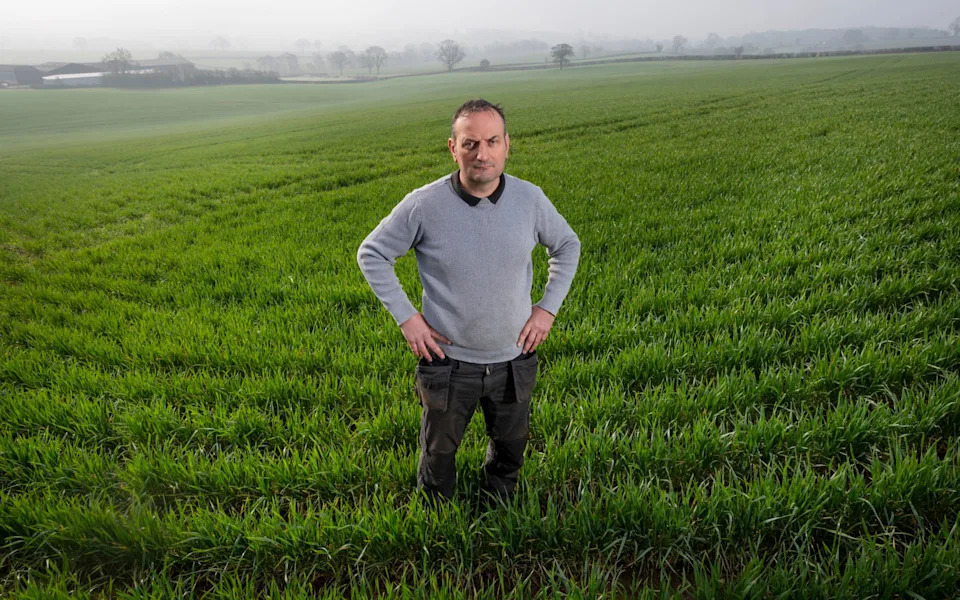
High fertiliser costs combined with low crop prices ‘puts a huge pressure on already tight margins’, says Williamson - David Rose For the Telegraph
How Farmers Are Responding
Margins were already tight and dairy producers face additional pressure from falling milk prices, which have dropped over the past six months. For many farmers, every input decision now carries heightened risk: when to buy fertiliser, how much to apply, whether to store or use stocks now, and which fields to prioritise.
“It feels like gambling on a grand scale,” says Andrew Williamson, who runs a 900-acre arable farm in Bridgnorth, Shropshire. "About 70–80% of the fertiliser required for this year’s crop was purchased last May or June. It is now 50% more expensive than it was back then, and that rise happened within a 10-day period."
Williamson warns that while crop prices for wheat and other grains have risen only modestly — roughly 5% — input costs have surged, squeezing margins further after several poor national harvests.
Fifth-generation arable farmer Olly Harrison, who farms about 1,500 acres near Liverpool, says volatility in fuel and fertiliser has forced him to make daily, field-by-field decisions. "Fuel is so volatile you can’t even lock in a price until delivery day," he says. He is selectively applying fertiliser to fields with the best prospects and considering non-farming income streams to reduce risk.

Farmer Olly Harrison says that, with diesel costs so high, running a tractor is now ‘an expensive hobby’ - Andy Kelvin/Kelvinmedia
Expert View and Wider Risks
Stephen Ramsden, former senior lecturer in agricultural management at the University of Nottingham and chairman of the Agricultural Economics Society, highlights the close link between fertiliser and energy markets. "Fertiliser prices closely track energy markets — the increase is largely driven by higher gas prices and wider geopolitical risk," he says. He adds that the current spike has not yet reached the extreme peaks seen during the Russia-Ukraine crisis, but uncertainty is a major challenge.
Ramsden notes the problem is currently one of affordability rather than a widespread physical shortage, though the UK remains vulnerable because around 60% of fertiliser is imported. Many farmers have already bought inputs for this season, so the immediate hit to production may be limited; however, prolonged disruption and rising energy costs will ripple through the supply chain and are likely to raise food prices over time.
Abi Reader, president of the National Farmers' Union Cymru and a dairy and arable farmer in Glamorgan, warns that farming is inherently forward-looking: fields planted now feed consumers months ahead and livestock born today may not reach market for 12–24 months. "We cannot simply turn the food-production taps down without delayed consequences," she says.
What Farmers Want
Farmers are calling for clearer, faster government support and better market monitoring to guard against profiteering. They want existing farm-support budgets distributed promptly and fairly, and long-term policies that recognise food production as part of national resilience. Without timely measures that reflect current inflationary pressure, some worry production could contract to levels that are difficult to reverse.
Key facts: some fertilisers are ~50% more expensive than months earlier; the UK uses ~1 million tonnes of synthetic nitrogen annually; roughly one third of seaborne fertiliser trade passes through the Strait of Hormuz; about 60% of fertiliser used in the UK is imported; milk prices have fallen in the past six months; fuel costs have risen roughly 50%.
Help us improve.