Summary: An F‑35 made an emergency landing in the Middle East after reports—cited by US media and echoed by Iranian state outlets—said the jet was struck by Iranian air defences. CENTCOM says the pilot is stable and the event is under investigation. If verified, an F‑35 being hit would be significant because it would show stealth aircraft can be vulnerable in dense air‑defence environments. Independent confirmation is still lacking.
Has Iran Struck an 'Unkillable' F-35? What We Know About the Emergency Landing
Interactive_F35_ Jet F-35 Nov18_2025
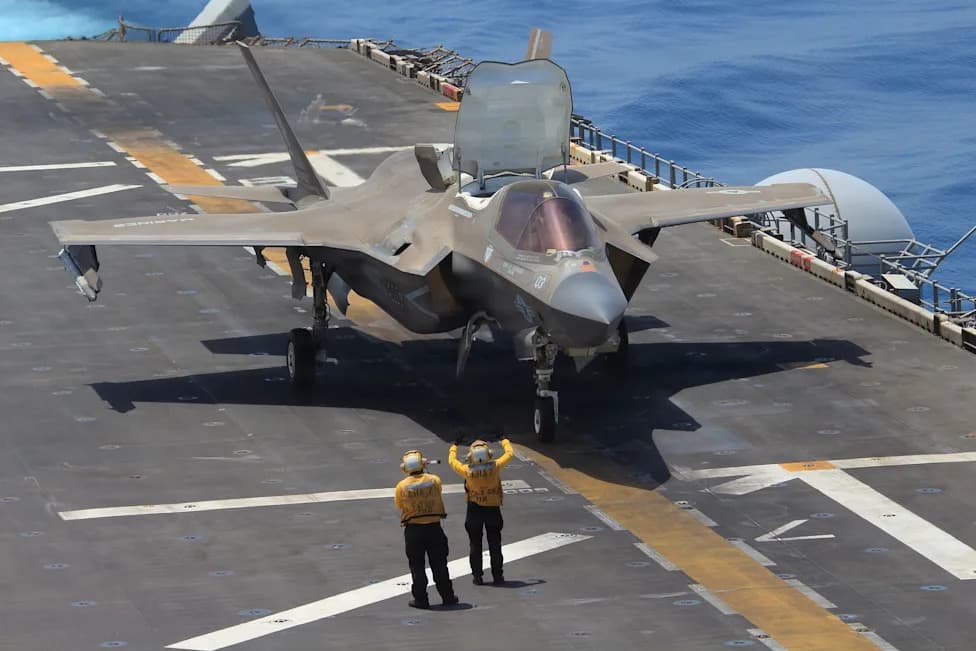
A United States F-35 fighter made an emergency landing at a Middle Eastern airbase last week amid the widening US‑Israeli campaign involving Iran. Two US media sources, citing people familiar with the matter, reported the jet was struck by Iranian fire as it returned from a combat mission. Iranian state outlets including the semi‑official Tasnim news agency also published claims and released footage purporting to show Iran’s air‑defence systems engaging a US F‑35.
What Happened
When the F‑35 touched down in an emergency on Thursday, Captain Tim Hawkins, a spokesperson for US Central Command (CENTCOM), said the aircraft landed safely and the pilot was in stable condition. "This incident is under investigation," Hawkins added, without giving further details about the cause of the landing or the base involved.
A report by Air & Space Forces Magazine quoted unnamed sources saying the pilot suffered shrapnel wounds and that the jet had been hit by ground fire. Iran’s Islamic Revolutionary Guard Corps (IRGC) issued a statement claiming it had targeted a US aircraft; Tasnim released military footage that it said showed Iranian air‑defence systems striking an F‑35.
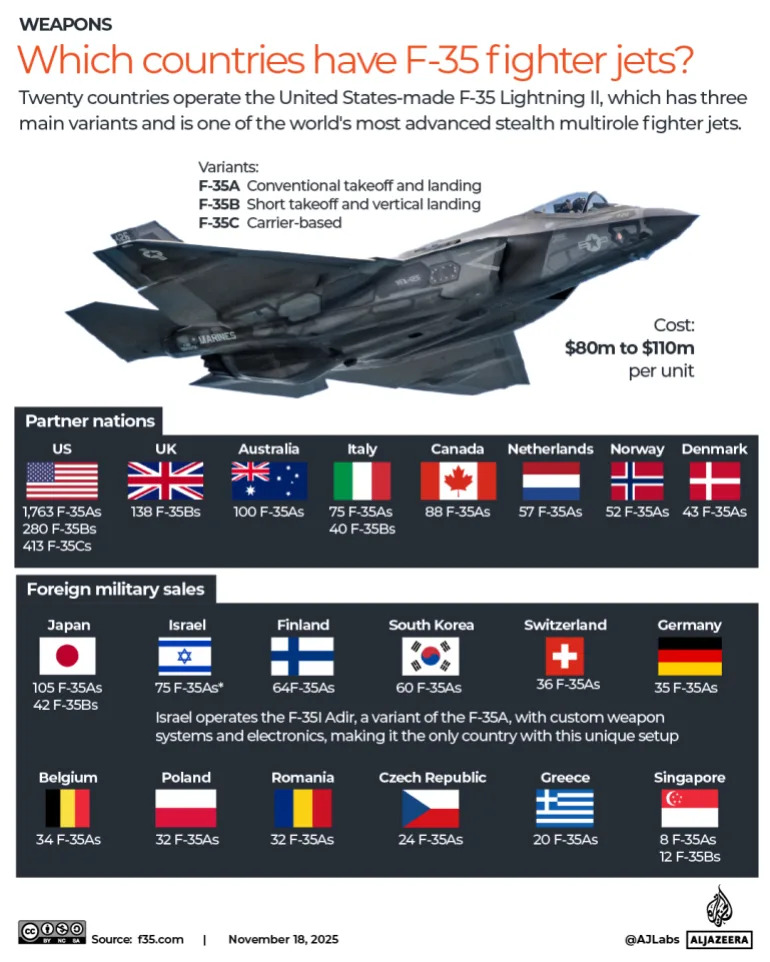
INTERACTIVE F35 F-35 Israel which countries have them jet-1763462527
What the F-35 Is
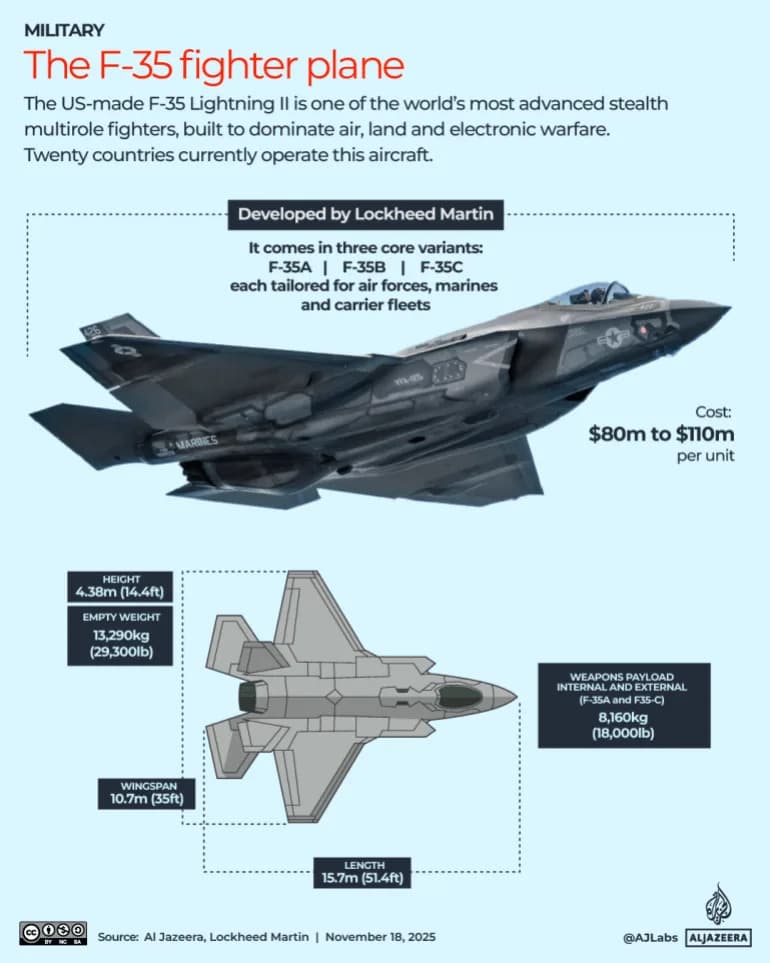
The F‑35 Lightning II family, built by Lockheed Martin, is described by its manufacturer as among the most advanced fighter aircraft in the world. Its reputation rests on stealth shaping, advanced sensor fusion and high‑speed onboard computing that together reduce detectability and give pilots a 360‑degree view of the battlespace.
John Phillips, a British safety, security and risk adviser and former military chief instructor, told Al Jazeera: "The key thing with F‑35 is the radar suites. There isn’t a standard radar suite, and they vary by nation." He added that different partners may receive varying configurations to limit reverse engineering risks.
Variants And Unknowns
The F‑35 family includes three main variants: the F‑35A (conventional takeoff and landing), the F‑35B (short takeoff/vertical landing) and the F‑35C (carrier‑capable). All carry weapons internally to preserve stealth. Iran has not specified which variant it claims to have struck, and US officials have not publicly confirmed that an F‑35 was hit by Iranian fire.
Why It Matters
If confirmed, a successful Iranian strike on an F‑35 would be notable because it would demonstrate that even modern stealth fighters can be vulnerable in a dense, adaptive air‑defence environment. Experts stress, however, that such a claim requires independent verification.
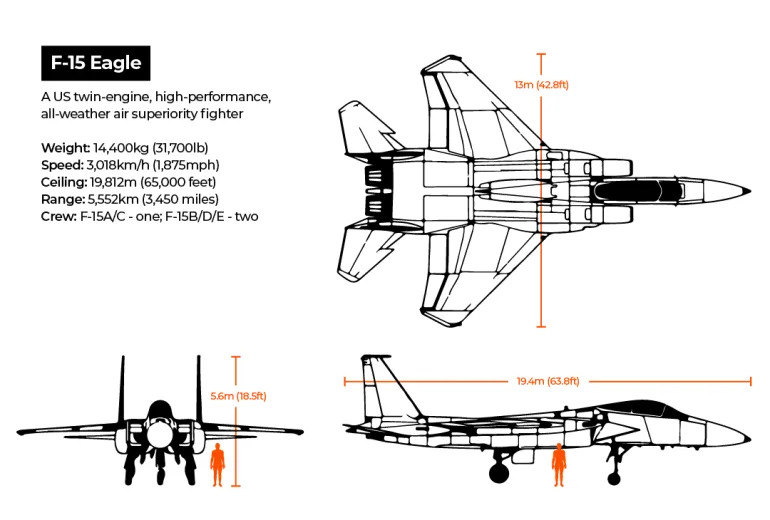
INTERACTIVE - F-15
Ali Vaez, director of the Iran Project at the International Crisis Group, told Al Jazeera: "This would be significant—not because it means stealth is becoming obsolete but because it would show that even an F‑35 is not invulnerable in a dense, adaptive air‑defence environment." He also cautioned there is no publicly available, conclusive evidence that a basic surface‑to‑air missile system achieved this on its own.
Context: Other Aircraft Losses And Damage
The alleged strike comes amid other reported losses and damage in the broader confrontation. Since strikes escalated on February 28, the US has reportedly lost 12 MQ‑9 Reaper drones—remotely piloted aircraft used for intelligence, surveillance and strike missions—according to US Air Force information. US officials also reported that five KC‑135 tanker aircraft were damaged during an Iranian missile strike on a base in Saudi Arabia on March 14; those claims have not been independently verified.
On March 1, three US F‑15E Strike Eagles were downed in a friendly‑fire incident involving a Kuwaiti F/A‑18; all six aircrew ejected and were recovered. Iran separately said it intercepted an F‑15 near Hormuz Island, a claim denied by US authorities. CENTCOM posted on X that no US fighter aircraft have been shot down by Iran and that US forces have flown more than 8,000 combat sorties during Operation Epic Fury.
Casualties And Verification
At least 13 US service members have been reported killed in operations linked to the campaign against Iran, with roughly 200 wounded. Iranian domestic authorities report at least 1,444 deaths and 18,551 injuries inside Iran since the conflict began. Investigations are ongoing and many of the claims—from both sides—remain unverified in independent public sources.
Bottom Line: Multiple sources claim an F‑35 was struck and made an emergency landing, Iran has released footage and the US says the incident is under investigation and the pilot is stable. Independent verification is lacking, and analysts caution against drawing broad conclusions until more evidence is available.
Help us improve.