
Mohammad Baqer Qalibaf has emerged as a central power broker in Tehran as strikes and losses thin Iran's senior leadership. Reports say he has carried out negotiations with the United States, underscoring his expanded mediating role. A former IRGC commander, police chief and 12-year mayor of Tehran, Qalibaf combines hardline rhetoric with a pragmatic, modernizing reputation that has made him a key connector across Iran's political, security and clerical elites.
Qalibaf Emerges As Tehran's Key Power Broker As Strikes Erode Iran's Leadership
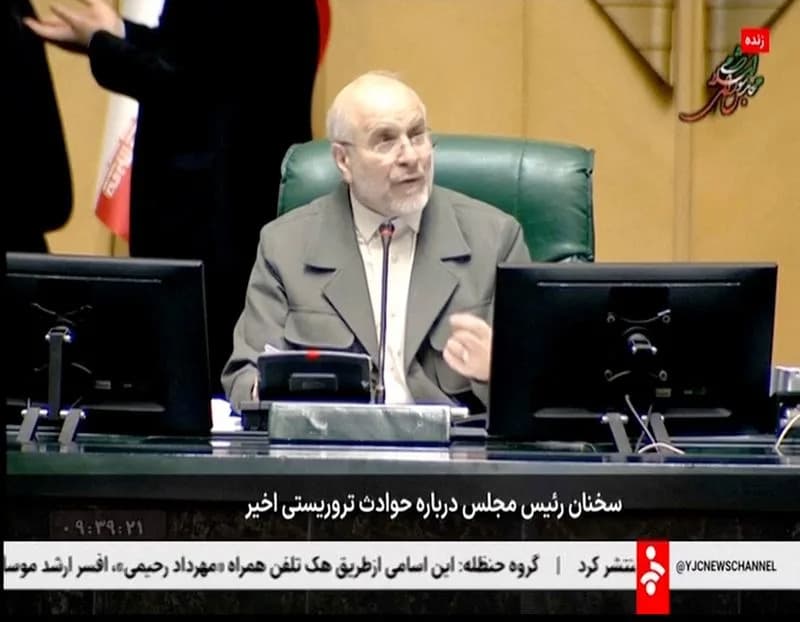
FILE PHOTO: Iran's Parliament Speaker, Mohammad Baqer Qalibaf speaks in parliament about Iran's response to possible U.S. attacks, in Tehran, Iran January 11, 2026, in this screengrab obtained from a video. IRINN/via Reuters TV/Handout via REUTERS/File Photo
Iran's parliament speaker, Mohammad Baqer Qalibaf, has taken on an increasingly central role in Tehran as targeted strikes and political losses thin the country's senior leadership, positioning him as a crucial intermediary at a tense moment.
An Israeli official and another source familiar with the matter said Qalibaf has been conducting negotiations with the United States on Iran's behalf as the confrontation has escalated, a sign of his expanding influence amid a period of strategic uncertainty.
Why Qalibaf Matters
With many prominent figures sidelined or removed, the former Revolutionary Guards commander, longtime Tehran mayor and ex-national police chief now sits at the intersection of Iran's political, security and clerical networks. His post as speaker of parliament gives him one of the country's most visible national roles at a time when coordination between factions is especially important.
Hardline Rhetoric, Pragmatic Image
Qalibaf is widely regarded as a staunch defender of the Islamic Republic's theocratic system and has publicly vowed retaliation in response to attacks that have provoked the current escalation. In televised remarks aimed at U.S. and Israeli leaders, he warned of severe reprisals, saying they would be "begging" after suffering "such devastating blows."
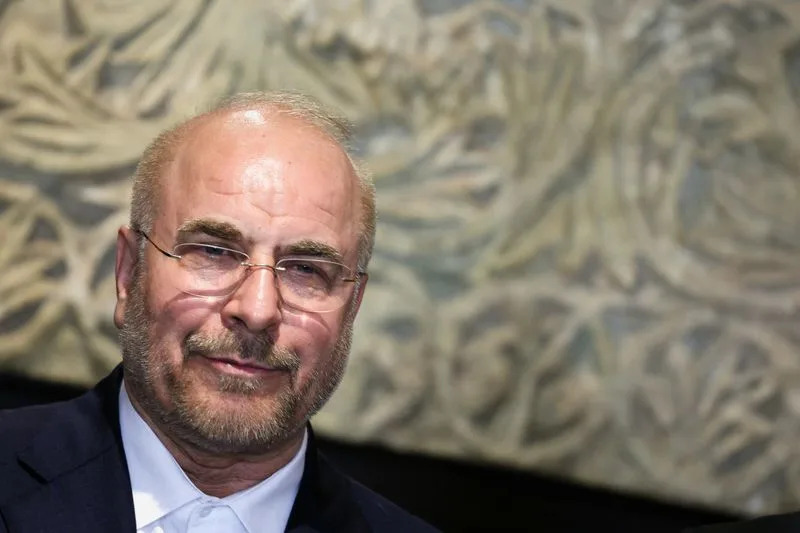
FILE PHOTO: Iranian Parliament Speaker Mohammad Baqer Qalibaf looks on after a press conference with Lebanese Parliament Speaker Nabih Berri, in Beirut, Lebanon, October 12, 2024. REUTERS/Amr Abdallah Dalsh/File Photo
"I say to these two dirty criminals and their agents: you have stepped on our red line and you have to pay for it," he declared in the broadcast.
At the same time, Qalibaf has cultivated an image as a pragmatic modernizer: during his 2005 presidential campaign he highlighted professional credentials — including his status as a qualified pilot — and, as mayor of Tehran, emphasized urban projects and a more disciplined public service image. That dual profile helps explain why some see him as a plausible channel for discreet talks even while he maintains a hardline public posture. Iran's Fars news agency, however, has reported there were no communications with the United States.
Career and Controversies
Born in Torqabeh in 1961, Qalibaf joined the Revolutionary Guards during the Iran–Iraq war, rose rapidly through the ranks and later led the Guards' air unit. His career has been marked by periods of both military and civic responsibility: he served as national police chief, became Tehran mayor for 12 years, and returned to national politics as a parliamentarian and speaker in 2020.
Qalibaf's record includes involvement in security actions against protesters and students, including a 1999 crackdown on university demonstrators and a 2002 episode when police forces used live fire against demonstrators. He has repeatedly sought the presidency—contesting elections in 2005, 2013 and 2024 and withdrawing in 2017 to avoid splitting the conservative vote.
As Tehran navigates the current confrontation, Qalibaf's combination of security credentials, administrative experience and ties to the country's ruling networks make him a pivotal figure in coordinating Iran's political and security response.
Reporting by Parisa Hafezi, Michael Georgy and Angus McDowall; Editing by Timothy Heritage.
Help us improve.





















