The Trump administration has enacted a series of policies that reduce protections for refugees, TPS holders, DACA recipients, asylum seekers, humanitarian parolees and visa holders. Refugee admissions were cut to a 2026 cap of 7,500, travel bans affect people from 39 countries, and advocates warn roughly 100,000 refugees could face detention. TPS terminations threaten about one million people, DACA recipients remain under heightened scrutiny, and parole pauses plus CBP One terminations have left over 1.5 million in limbo.
How the Trump Administration Is Eroding Protections for Legal Immigrants
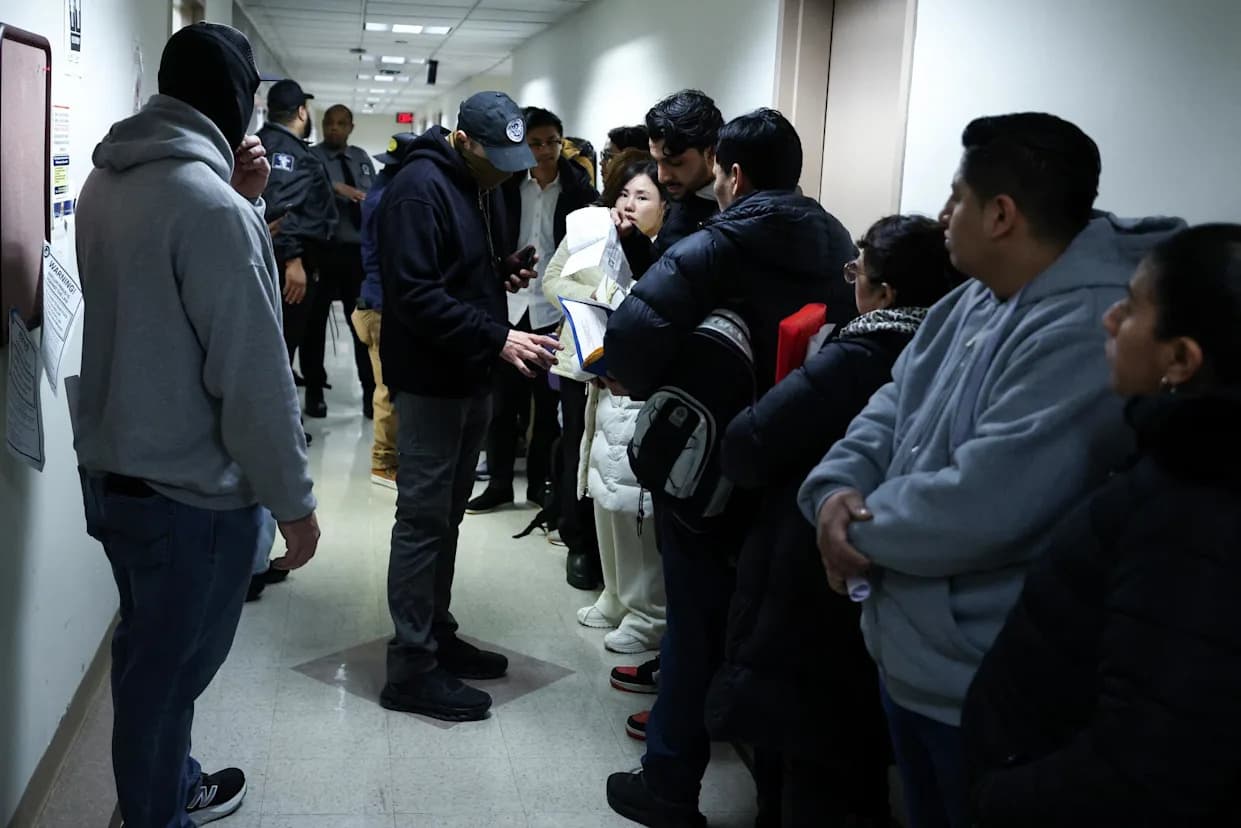
Masked federal agents check people's documents as they wait for hearings at the New York Federal Plaza immigration court in New York City on 5 March 2026.Photograph: Charly Triballeau/AFP/Getty Images(Photograph: Charly Triballeau/AFP/Getty Images)
The Trump administration's hardline immigration agenda has expanded beyond targeting people who violate immigration law to systematically undermining the status and protections of many immigrants who entered or reside in the United States legally. Over the past year, a series of policy changes—many under active legal challenge—has left large numbers suddenly undocumented or facing imminent deportation.
“They are looking for every way to make the undocumented population as enormous as possible,” said Ghita Schwarz, Litigation Director at the International Refugee Assistance Project (IRAP). “It’s the great de-legalization campaign, rendering vulnerable to detention and removal millions of people who were not here unlawfully.”
Refugees
Historically, refugees fleeing war or persecution were vetted abroad, admitted through the federal refugee resettlement program, and eligible to apply for a green card after one year. On the first day of his second administration, President Trump signed an executive order pausing the refugee program—what critics call a refugee ban—leaving thousands stranded abroad and many resettled refugees without expected support. The administration then issued travel bans affecting people from 39 countries and extended related restrictions to refugees.
Officials also paused green-card processing for some refugees and ordered a broad review of people admitted under the previous administration. For 2026, the administration set a refugee admissions cap at 7,500—down sharply from the 2024 cap of 100,000—and indicated a preference for admitting a large share of white South African applicants. Advocates warn an estimated 100,000 refugees who have not yet received green cards could be at risk of arrest or indefinite detention.
Temporary Protected Status (TPS)
Temporary Protected Status provides nationals of designated countries the right to live and work in the U.S. when their home countries are unsafe. The administration has moved to terminate TPS designations that cover roughly 1 million people from countries including Afghanistan, Cameroon, Ethiopia, Haiti, Honduras, Myanmar, Nepal, Nicaragua, Somalia, South Sudan, Syria, Venezuela and Yemen. Multiple lawsuits contest these terminations; outcomes so far have been mixed.
DACA Recipients
The Deferred Action for Childhood Arrivals (DACA) program shields recipients—often called Dreamers—from deportation while allowing work authorization. USCIS reports about 533,000 active DACA recipients. Increased enforcement and litigation have put many Dreamers at greater risk: reports indicate hundreds were arrested last year and dozens were removed or returned to their countries of origin.
Asylum and Expedited Removals
The administration has sharply restricted access to asylum for new arrivals and expanded tools to expedite removals for those with pending claims. DHS has relied increasingly on "pretermission," a process that allows an immigration judge to remove an asylum seeker to a third country quickly and without a full hearing. The administration has also secured "third-country" agreements with more than 20 nations to accept certain deportees—some partner countries do not guarantee protection from onward removal to the countries the people originally fled. Advocates and courts are challenging these measures.
Victim Visas and Humanitarian Parole
Immigrants who cooperate with law enforcement after suffering serious crimes may qualify for U and T visas that can lead to work authorization and permanent residence. The administration's policies now permit arrest, detention and deportation of some U and T visa applicants—an approach challenged in federal court.
Several humanitarian parole programs were paused or re-vetted, affecting programs for Ukrainians, Afghans, Cubans, Haitians, Nicaraguans and Venezuelans. A court ordered the Ukrainian parole program to resume in June, but other programs remain paused. Nearly 1 million people admitted under the Biden-era CBP One parole process have had that status terminated, and USCIS re-vetting of parole programs has left more than 1.5 million people in limbo.
Student And Work Visas, Workplace Enforcement
The administration has targeted holders of valid student and work visas in selected cases and used rare authorities to detain certain high-profile student activists. In a major workplace enforcement action, ICE agents arrested 475 workers at a Hyundai plant in Georgia—one of the largest workplace raids in ICE history.
Regulatory changes have also made certain work-authorizations more expensive: the administration proposed a $100,000 fee for some H-1B applicants, raising concerns about access for high-skilled international workers.
What This Means
Taken together, these policies amount to a broad shift that civil-society groups and immigration lawyers describe as "de-legalization": stripping lawful protections from refugees, TPS holders, DACA recipients, parolees, asylum seekers and visa holders, and exposing potentially millions to detention and removal. Many measures remain the subject of litigation, and outcomes will determine whether some protections are restored or further eroded.
Help us improve.