Nowruz celebrations in Iraqi Kurdistan were quieter than usual as Iranian Kurdish refugees and activists observed the holiday amid regional conflict and security concerns. Despite smaller crowds, families in Erbil, Sulaimaniyah and Akreh lit bonfires and set out the Haft-Sin. Attacks on Iranian Kurdish opposition groups and a sensitive 40-day mourning period further dampened festivities, yet many attendees expressed enduring hope and a desire to return home next year.
Nowruz Amid Conflict: Iranian Kurds in Iraqi Kurdistan Long To Return Home
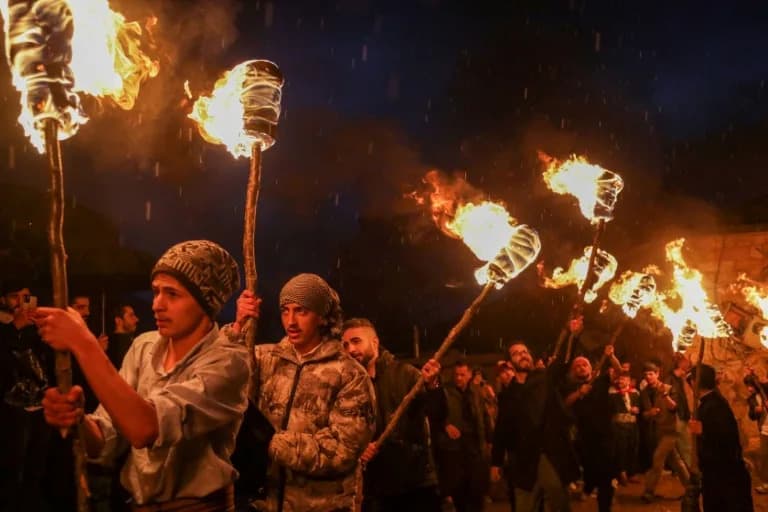
Iraqi Kurds march with torches during a procession to celebrate in the town of Akre (Safin HAMID)(Safin HAMID/AFP/AFP)
In Iraq's northern Kurdistan, small fires burned and women in traditional dress twirled in a restrained Nowruz dance as noticeably smaller crowds marked the Persian New Year. The celebration this year was guarded by an atmosphere of anxiety and longing, shaped by a recent regional conflict and security concerns.
Among those attending were Iranian Kurdish activists Sirwa Mustafazada and Kwestan Aminpana, both of whom fled Iran in 2018. After weeks of fighting they expressed the same wish: "Next year we will be back." "We have lived all this time with this hope," said Mustafazada, 32, who left Mahabad in western Iran.
Nowruz, which coincides with the March equinox, is celebrated by Kurdish communities across Iraq, Syria, Turkey and Iran and is typically marked by weeks of preparation and family gatherings. This year the festival was subdued after a conflict that began on February 28 cast a shadow over the holiday.
Security concerns tempered festivities across the autonomous Kurdistan region, but people still gathered and small bonfires were lit in Erbil, Sulaimaniyah and Akreh. In Sulaimaniyah, the crowd flinched when fireworks erupted — an unnerving echo of recent blasts that have accompanied drone strikes and other attacks in the region.
Attacks attributed to Iran and its proxies have repeatedly targeted armed elements of the Iranian Kurdish opposition, groups that have long operated in exile from Iraqi Kurdistan. "The regime is doing everything it can to save its own skin," Mustafazada said. "But it has no outside support, and nobody wants it anymore inside."
Rebirth and Resilience
"Nowruz is a symbol of rebirth, resilience, connection with nature and joy," said Saad Qazi, a former Kurdish fighter from Mahabad. "It's important to preserve our traditions and identity so we can answer our children when they ask, 'Who are we?'"
In Qazi's living room in Erbil, the traditional seven items of the Haft-Sin were arranged on a coffee table while a candle burned beside them. Qazi's wife, Parang Jahani, carefully placed wheat germ, a sweet pudding, jujube berries, sumac, garlic, vinegar and apple — items whose Farsi names begin with the letter "S." The display will remain for the 13-day festival as a pledge of strength, vitality and hope.
Reflecting the mood, many of those gathered said they hoped to return home next year. "Next year, maybe, we'll be back. In any case, we have more hope than last year," one attendee said.
Correction: An earlier draft of this story contained an inaccurate claim about the status of Iran's supreme leader. That information has been corrected.
Help us improve.