
The decades-old Wow! radio signal—detected in 1977 and long considered a candidate technosignature—may be explained by natural astrophysics. Researchers analyzing Arecibo data found weaker, similar narrowband emissions near the 1420 MHz hydrogen line during observations in Feb–May 2020. They propose that rare, intense transients (e.g., magnetar flares or soft gamma repeaters) can trigger stimulated emission from cold hydrogen clouds, producing short-lived maser-like radio bursts. This hypothesis explains the signal’s narrowband nature, 72‑second duration, and singular detection, and calls for follow-up verification.
Have Scientists Finally Solved the 50‑Year Mystery of the “Wow!” Radio Signal?
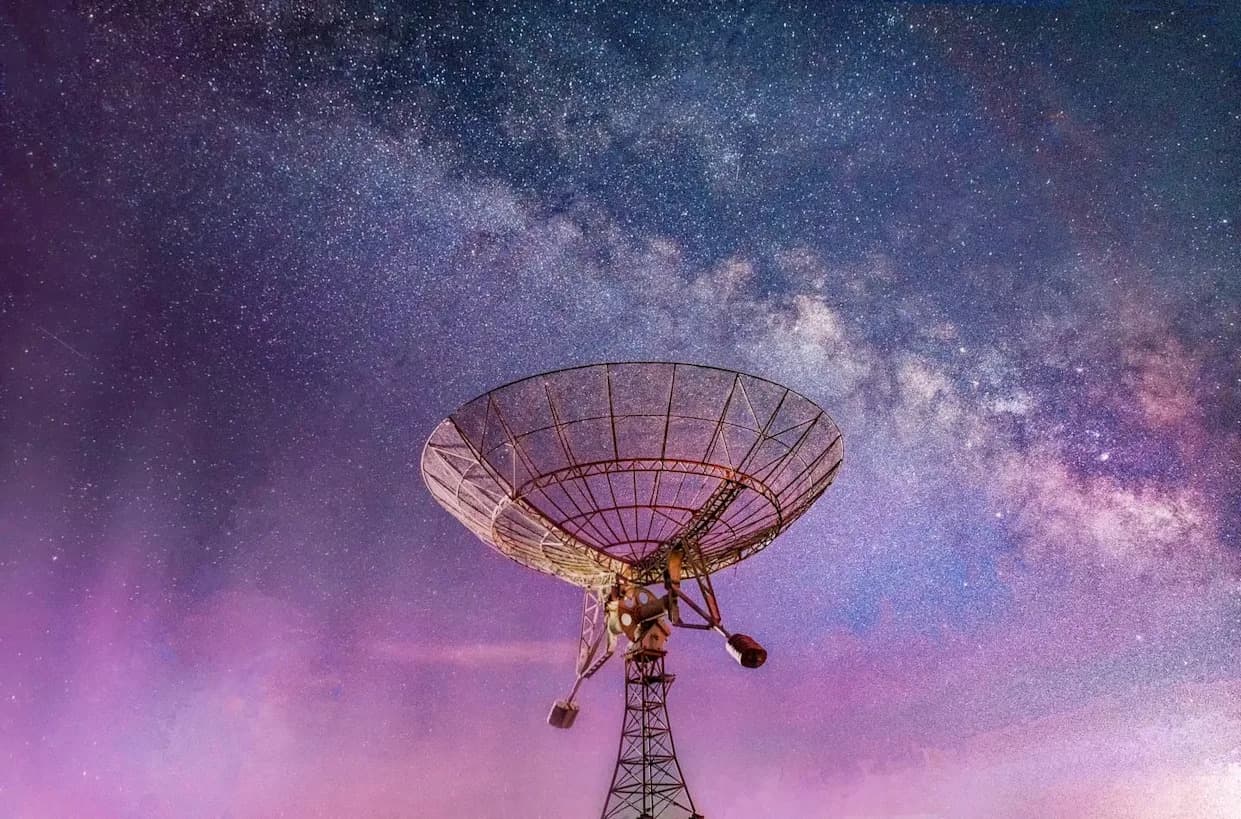
Wow! Scientists May Have Cracked a Space Mystery.ShaoChen Yang - Getty Images
The origin of the iconic “Wow!” radio signal—one of astronomy’s longest-standing mysteries—may finally have a plausible explanation. First recorded in 1977 by Jerry Ehman using Ohio State University’s Big Ear radio telescope, the signal lasted 72 seconds and peaked about 30–31 times above background noise. It appeared only once and was never repeated, leaving generations of astronomers puzzled.
New Look at Old Data
A team working as part of the Arecibo Wow! project studied archival observations from the now-collapsed Arecibo Observatory and conducted follow-up measurements between February and May 2020. Lead author Abel Méndez and colleagues report detecting several narrowband signals near the hydrogen emission line (around 1420 MHz) that behave similarly to the original Wow! signal, although they were much weaker.
The Proposed Explanation
The researchers propose a straightforward astrophysical mechanism: stimulated emission from cold hydrogen clouds triggered by an intense, short-lived radiation burst—examples include magnetar flares or soft gamma repeater (SGR) events. In this scenario, a transient high-energy flash strikes a hydrogen cloud, briefly turning it into a bright, narrowband radio source (an astronomical maser flare).
"Our latest observations made between February and May 2020 have revealed similar narrowband signals near the hydrogen line, though less intense than the original Wow! Signal," Méndez and the team write, arguing that these findings are consistent with a stimulated-emission origin.
Why This Fits The Facts
- Rarity: Magnetar flares and similar transients are uncommon and require specific geometry and timing, matching the Wow! signal’s one-off appearance.
- Narrowband Signature: Stimulated emission at the hydrogen line naturally explains the signal’s tight frequency width.
- Apparent Strength: A particularly large or well-aligned flare could produce the unusually strong 1977 event, while weaker episodes would have gone undetected by the Big Ear telescope but are visible with modern instruments.
Implications and Next Steps
If validated, this hypothesis solves several puzzling features of the Wow! signal and identifies a new class of false positives to consider in searches for technosignatures. The authors emphasize that follow-up observations and independent analyses are necessary to confirm this model and to better characterize how often hydrogen-line maser flares occur.
Nearly 50 years after Jerry Ehman scrawled "Wow!" beside the printout, the famous signal may be moving from the realm of the unexplained toward an ordinary—if rare—natural astrophysical phenomenon.
Help us improve.





















