
Key Points: US-Israel strikes on Iran have killed over 1,400 people and displaced an estimated 3.2 million inside Iran, raising alarms about a potential cross-border refugee crisis. Neighbors from Turkey to Pakistan face political, economic and security limits that constrain their ability to absorb large influxes. Turkey, Iraq and Pakistan are most exposed; Turkey has reinforced its border and drawn up contingency plans. Analysts warn that a Syria-scale displacement from Iran would overwhelm regional and international response capacities.
Neighbors Brace As US-Israel Strikes On Iran Threaten A Wide-Scale Refugee Crisis
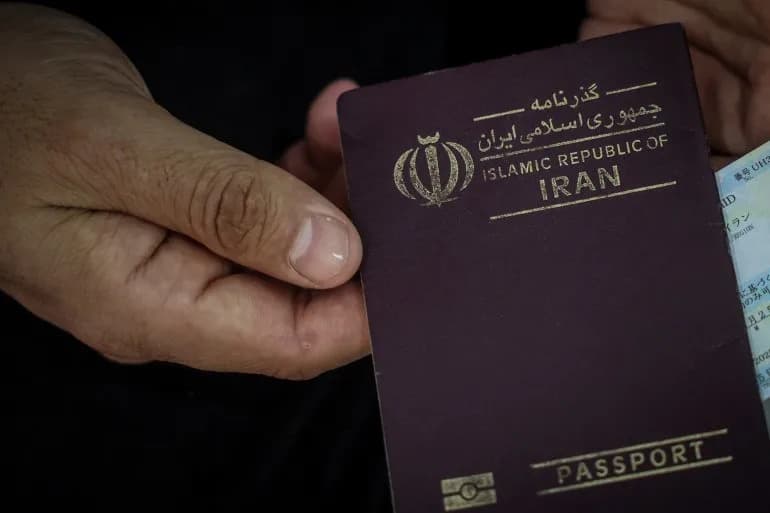
Hamid Shirmohammadzadeh, 35, who arrived in Turkiye from Iran, shows his passport while staying at a hotel in Van province, Turkiye, March 5, 2026 [Dilara Senkaya/Reuters]
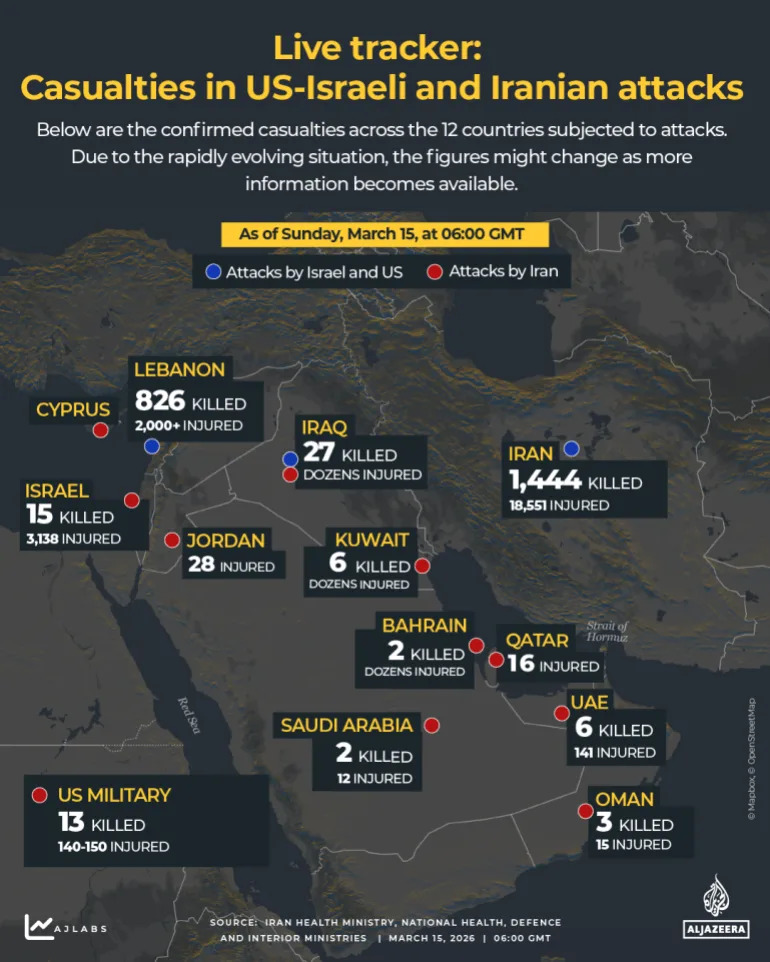
Islamabad, Pakistan — The conflict launched by the United States and Israel against Iran has already killed more than 1,400 people, triggered retaliatory strikes across the region and pushed global oil prices above $100 a barrel. Eighteen days into the fighting, humanitarian agencies and Iran’s neighbors are increasingly alarmed that internal displacement could spill over into a major cross-border refugee emergency.
Scope Of Displacement
The UN Refugee Agency (UNHCR) estimates roughly 3.2 million people have been displaced inside Iran since strikes began on February 28. Iran’s Red Crescent reports damage to more than 10,000 civilian sites, including 65 schools and 32 medical facilities, while commercial flights have been suspended and airspace closed — severely limiting safe exit routes for many residents.
Where People Might Move
Iran shares land borders with seven countries: Afghanistan, Armenia, Azerbaijan, Iraq, Pakistan, Turkey (Türkiye) and Turkmenistan. Iraq has the longest frontier at nearly 1,600 km (994 miles), and Turkey shares about 530 km (329 miles) with Iran. Analysts warn that strikes concentrated on Tehran and western and southwestern provinces are already driving internal displacement toward border provinces adjacent to Turkmenistan, Afghanistan and Pakistan — creating conditions that could lead to cross-border flows.
“Infrastructure destruction does not produce gradual, manageable flows. It produces sudden, massive displacement, driven by the collapse of basic urban services,” said Eldaniz Gusseinov, head of research at Nightingale International.
Neighboring States' Preparedness
Only Turkey, Iraq and Pakistan have recent large-scale refugee-hosting experience. Turkey, which already hosts the world’s largest refugee population (including about 3.6 million Syrians), has reinforced its Iran border with 380 km of concrete wall, 203 optical towers and 43 observation posts, and outlined three contingency plans: intercept migration within Iran, create buffer zones, or allow controlled entry as a last resort. Turkish officials say there has been no mass migration to date.
Iraq: Border, Politics And Security
Iraq faces a particularly complex role: it is both a likely destination for some refugees and a theatre for military spillover. US forces have targeted armed groups operating from Iraqi territory, and Iran and allied militias have struck or attempted to strike US positions inside Iraq. Several crossings on the Iranian side have reportedly closed, though Iraqi crossings remain technically open; the Iraqi government, with UNHCR monitoring, would lead any emergency response.
(Al Jazeera)
South Caucasus, Central Asia And The East
Armenia, Azerbaijan and Georgia are balancing relations with Washington and Tehran while preparing for possible movement. Azerbaijan has tightened routine border traffic, and Armenia’s short 44 km frontier with Iran remains open. To the east, Pakistan and Afghanistan — already strained by recent mass returns and deportations of Afghans — would be especially vulnerable to additional refugee inflows.
Pakistan And Afghanistan Dynamics
Since October 2023, an estimated 5.4 million Afghans have returned to Afghanistan from Iran and Pakistan, many involuntarily. Between 2023 and 2025 large repatriation campaigns pushed millions back. In 2026 so far, more than 232,500 Afghans have returned, including over 146,000 from Pakistan and about 86,000 from Iran. Any escalation in Iran could accelerate returns and create secondary displacement, straining already fragile communities.
Worst-Case Scenario And Humanitarian Concerns
Analysts point to scale as the primary worry: Iran’s population is roughly 90 million. By comparison, Syria’s pre-war population was ~21 million, and that conflict produced more than 13 million displaced people. A proportional Syria-style displacement from Iran would be unprecedented — potentially tens of millions of internally displaced people and millions of international refugees — far beyond the current capacity of regional governments and international aid agencies.
Compounding the challenge, Iran itself hosts about 3.7 million refugees (mostly Afghans). Large outward flows would therefore create a dual crisis: new refugee movements out of Iran and the secondary displacement or forced returns of refugees who were already in Iran.
What To Watch
- Damage to urban services in Tehran or other major cities that could trigger sudden mass departures.
- Border closures or openings and the ability of neighbors to coordinate humanitarian responses.
- Escalation of military actions inside neighboring countries that could convert displacement into protracted regional instability.
The situation remains fluid. Humanitarian agencies are urging preparedness and coordinated planning to mitigate a crisis that could rapidly outpace regional capacities if key urban infrastructure collapses or attacks expand.
Help us improve.





















