
US citizens across the Middle East say they were left without a clear US evacuation plan after the US‑Israel strike on Iran, reporting unanswered embassy calls, full voicemail boxes and delayed guidance. The State Department says its task force provided assistance to about 32,000 Americans and organised nearly 50 flights, but many evacuees relied on foreign consulates or personal contacts. Witnesses report chaotic sheltering, fear during travel and lasting mental strain on families with young children.
“We Felt Abandoned”: US Citizens in Middle East Say No Evacuation Backup After Strike on Iran
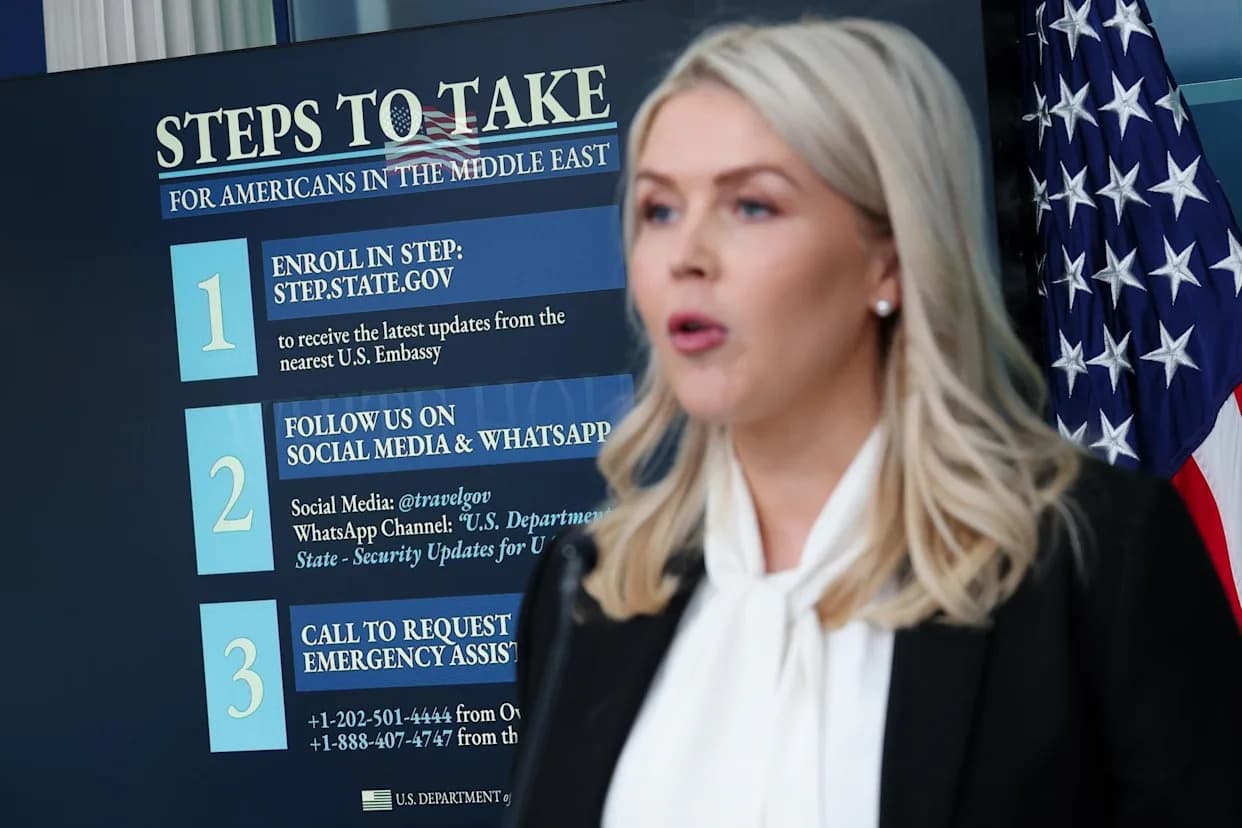
White House press secretary Karoline Leavitt displays steps for US citizens in the Middle East to take after US strikes on Iran on 4 March.Photograph: Kevin Dietsch/Getty Images(Photograph: Kevin Dietsch/Getty Images)
US citizens across the Middle East say they were left scrambling after the US‑Israel strike on Iran, criticizing the Trump administration and the State Department for slow, confusing or unavailable evacuation support. While State Department officials say a task force provided guidance to roughly 32,000 Americans and organised nearly 50 flights, several evacuees describe unanswered embassy calls, full voicemail boxes and reliance on foreign consulates or personal contacts to escape the region.
State Department Response
A State Department official said: “Through the department’s Task Force, we have directly provided security guidance and travel assistance to about 32,000 impacted Americans. Most Americans who have requested assistance have declined seats when offered, opting to remain in country or take commercial flight options.” Officials also say nearly 50 evacuation flights have been organised since the conflict began.
Dylan, 31 — Bahrain
Dylan, an American teacher in Bahrain, says he felt “angry” at the US government’s lack of on‑the‑ground support. On 28 February, after explosions and smoke at the naval base in Juffair, he sheltered at his school and tried repeatedly to reach the embassy and the State Department. He says his calls went unanswered or reached full voicemail boxes.
“After I saw the smoke, it was like I was staring into the face of death, and I knew I needed to do something immediately.”
Help came only after his parents in the US contacted an aide to a congressman. Dylan also credits the UK consulate for practical advice. Fearful for his safety, he crossed the causeway into Saudi Arabia, obtained a visa on arrival, endured a 20‑hour bus ride to Jeddah and eventually flew to Lisbon on 8 March. He says he may return to Bahrain if the conflict ends, but for now he feels let down by US authorities.
Ashley — Abu Dhabi (US Citizen, Resident of France)
Ashley, who was holidaying in Abu Dhabi with her partner and their five‑year‑old, says the State Department’s public messaging did not match the reality on the ground. After a 2 March memo urging Americans to “depart now,” commercial flights were rapidly disappearing and airport operations were disrupted by intercepted missiles.
“It’s just a shame that you can’t even count on your own government. If you can’t get people out, that’s OK, but communicate.”
She completed a State Department assistance form and, days later, received contact about flights. Ultimately she secured a commercial flight to Portugal on 6 March, describing terror during takeoff as missiles were intercepted nearby and severe anxiety from turbulence during the route out of the region.
Aaliya* — Abu Dhabi
Aaliya and her husband, both US citizens living in Abu Dhabi with two young children, say they were “betrayed and embarrassed” after a perceived lack of coherent assistance. She had encouraged family to vote for a candidate she believed would avoid war; the unfolding events left her disillusioned.
“There wasn’t a coherent plan on how to help US citizens. We were an afterthought.”
Offered a flight to Athens by the State Department, she instead purchased a direct commercial flight from Dubai to the US. Although she feels physically safe in the UAE, frequent missile alerts have taken a psychological toll on her children and she no longer trusts what the US will do next. Aaliya said returning to Virginia will be a sombre experience rather than a joyful reunion.
Common Themes
Across accounts: delayed or unclear government communication, difficulty reaching embassy staff, and evacuees relying on foreign consulates or personal networks. Many interviewees called for clearer contingency planning, faster evacuation options for civilians, and improved two‑way communication from US authorities during crises.
*Name changed to protect identity.
Help us improve.





















