
Exiled Iranian Kurds who fled violent crackdowns describe witnessing "hell" on the streets of Iran and now watch the war from Iraqi Kurdistan as American and Israeli strikes add to regional instability. Protesters such as Farhad Sheikhi and Aresto Pasbar fled arrests, torture or life-changing injuries and fear returning home. Some exiles have joined Kurdish rebel groups, while families left inside Iran struggle under an internet blackout and worsening conditions. Survivors and relatives demand justice — and, for some, revenge.
Exiled Iranian Kurds Say They Saw 'Hell' at Home — Now Watch War and Strikes from Afar
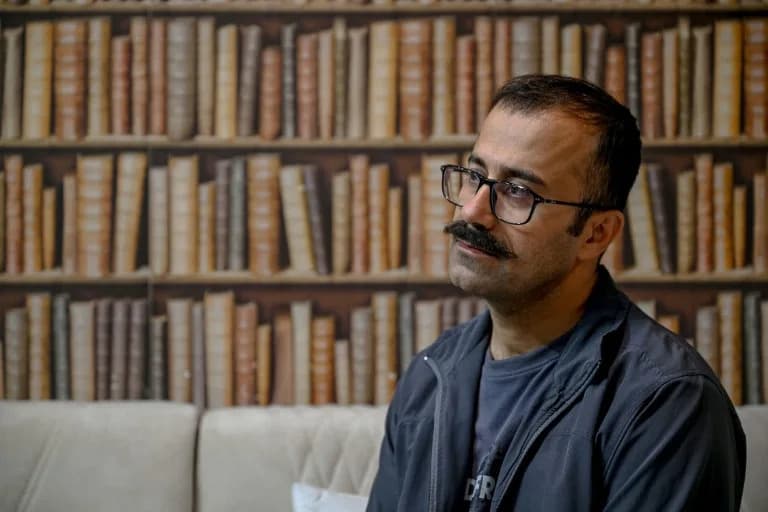
Farhad Sheikhi, an Iranian Kurd fled to Iraq after a deadly crackdown on protesters in January (Ozan KOSE)(Ozan KOSE/AFP/AFP)
Farhad Sheikhi, a 34-year-old Iranian Kurd now living in Sulaimaniyah in Iraqi Kurdistan, chokes back tears as he recalls the crack of gunfire and protesters collapsing under a storm of bullets. He showed AFP photographs of bodies strewn on bloodied streets and said simply: "I literally saw hell." Today, his deepest fear is for relatives who remain in Iran, where a countrywide internet blackout has left families cut off and desperate for information.
Sheikhi relies on a friend who occasionally manages to get online. "He calls my father and tells me how they are. That is the only way I get news of them," he said. Having fled after the January crackdown, Sheikhi no longer views return as safe. His remaining hope is to travel to Germany to complete his law studies.
From Protester to Exile
Sheikhi was no stranger to dissent. He joined the huge 2022 demonstrations sparked by the death in custody of Mahsa Amini, and says he was jailed three times and tortured — suffering hearing loss as a result. He returned to the streets again in December and January before fleeing to Iraqi Kurdistan over fears of arrest and further abuse.
Aresto Pasbar: From Surgery To The Front
Aresto Pasbar, 38, was wounded by shotgun pellets during the 2022 protests and lost sight in his left eye. "I have undergone five surgeries," he told AFP in Sulaimaniyah. Fearing for his life, he fled to Turkey, attempted to reach Europe by boat and was intercepted at sea; a Munich-based human rights group later helped him gain asylum in Germany in 2023.
When the recent crackdown intensified and war erupted, Pasbar said he could not stay in relative safety. He returned to Iraqi Kurdistan to join Iranian Kurdish rebel ranks that have increasingly been targeted by cross-border strikes from Iran. Now wearing coarse grey traditional Kurdish fatigues, he says he understands he may never see his wife and two daughters again. "Even if I die, please stand for your rights. Stand for who you are," he told his family before leaving.
Grief, Revenge And a Longing For Justice
Amina Kadri's family also paid a devastating toll. Her husband Ikbal fled Iran in 2005 to avoid political persecution and sought refuge in Iraqi Kurdistan. Fifteen years later, Kadri says Ikbal — then 57 and a member of an exiled Iranian Kurdish armed group — was shot dead near the Iraqi-Iranian border; witnesses said attackers fled toward Iran on a motorcycle. Kadri accuses Iranian agents of responsibility.
Fifty-three days after her husband's killing, Kadri's eldest son — who had stayed in Iran — was executed at age 30 for murder in a sentence she says was a set-up. Speaking from a border town that Kurdistan's security forces would not allow AFP reporters to enter, she said: "I no longer care about what happens to me. My life is no more valuable than my son's or my husband's." Now 61, she said she wants to see the Islamic Republic toppled so she can have "revenge for the blood of all those who have been executed."
Human Cost And Broader Context
As the conflict enters its third week, exiles describe people inside Iran growing more cautious while coping with deteriorating living conditions. Many are still mourning after a government crackdown that rights groups say killed thousands. From Iraqi Kurdistan, exiles watch as American and Israeli strikes add a new layer of danger to an already volatile situation.
"They are also still mourning the heavy price they have already paid," Sheikhi said, referring to the earlier protests and the continuing crackdown.
The stories of Sheikhi, Pasbar and Kadri highlight a spectrum of outcomes for those who resisted: imprisonment and torture, crippling injury, exile and asylum, armed resistance, and enduring grief. For many, the immediate priorities are safety for family members left behind, reliable information amid the communications blackout, and justice for lives lost or shattered by violence.
Help us improve.





















