A humpback whale song recorded in March 1949 off Bermuda has been identified as the oldest known recording of its kind. Preserved on a Gray Audograph plastic disc, the audio captures both the whale and the much quieter ocean soundscape of the late 1940s. Scientists say the recording provides a rare baseline to assess how rising human-made noise has altered whale communication and behavior. The find, uncovered during archival digitization at Woods Hole, predates Roger Payne’s discovery of whale song by nearly 20 years.
Oldest Known Humpback Recording Unearthed — A Quieter 1940s Ocean Captured on Disc
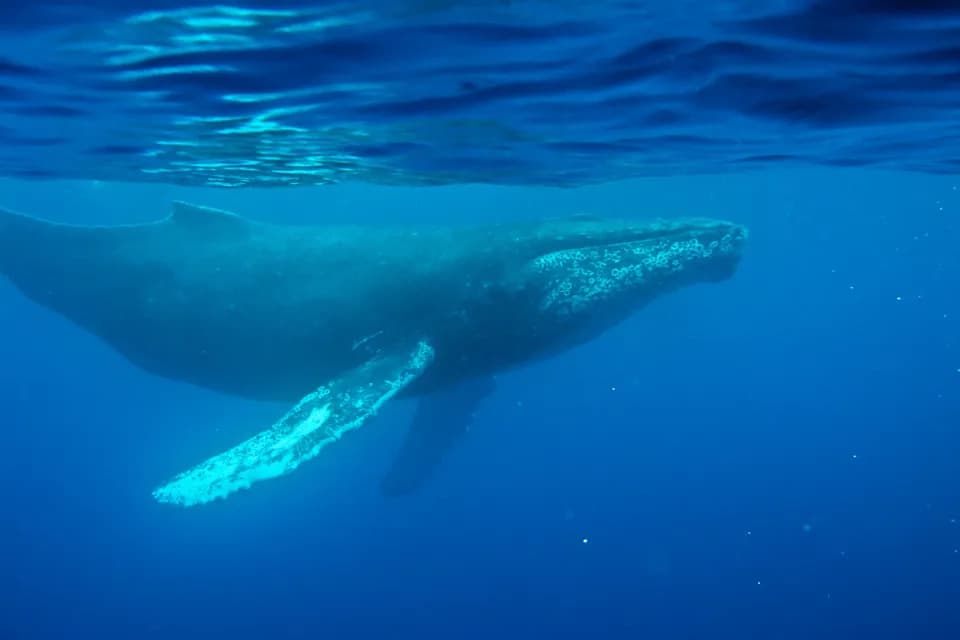
This photo provided by the Woods Hole Oceanographic Institution shows a whale on Feb. 24, 2009, near Maui, Hawaii. (Aran T. Mooney/Woods Hole Oceanographic Institution via AP)(ASSOCIATED PRESS)
PORTLAND, Maine (AP) — A haunting humpback whale song recovered from decades-old audio equipment may be the earliest recording of its kind and offers scientists a rare acoustic snapshot of a much quieter 1940s ocean.
The vocalization, identified as coming from a humpback whale, was recorded in March 1949 near Bermuda by researchers from the Woods Hole Oceanographic Institution in Falmouth, Massachusetts. The sound was preserved on a well-kept Gray Audograph plastic disc — a dictation medium that, unlike many magnetic tapes of the era, has survived in good condition.
Why This Recording Matters
Researchers say the recording is significant not only because of the whale song itself but because it preserves the broader ocean soundscape of the late 1940s. Peter Tyack, a marine bioacoustician and emeritus research scholar at Woods Hole, notes that the ocean then was far quieter than it is today, providing a baseline that modern recordings cannot reproduce.
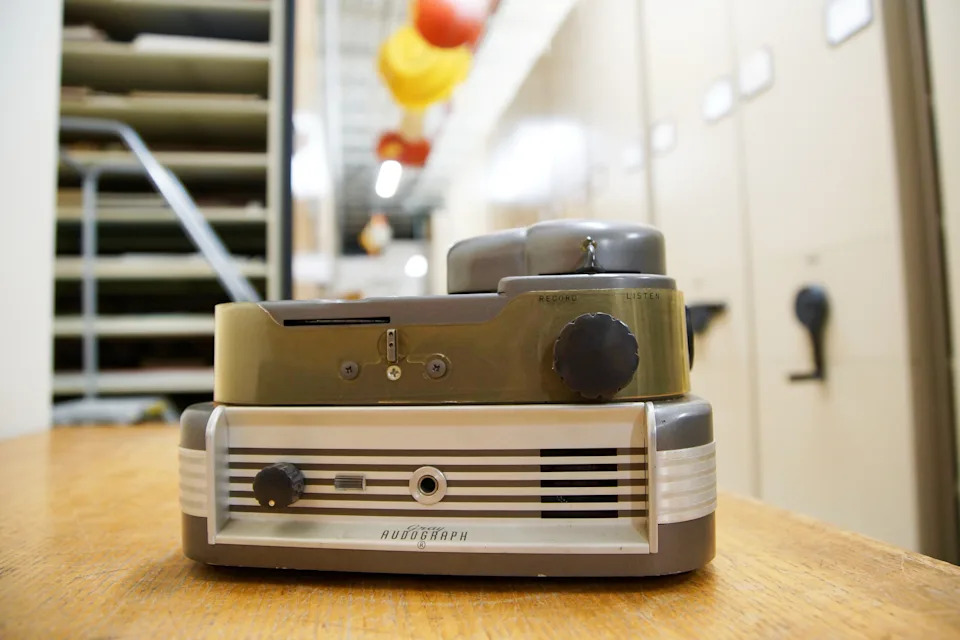
This photo provided by the Woods Hole Oceanographic Institution shows a Gray Audograph, a device used to record sound, on Feb. 4, 2026, in Woods Hole, Mass. (Rachel Mann/Woods Hole Oceanographic Institution via AP)(ASSOCIATED PRESS)
“The recovered recordings not only allow us to follow whale sounds, but they also tell us what the ocean soundscape was like in the late 1940s,” Tyack said.
That historical baseline can help scientists evaluate how increasing human-made noise — for example, from commercial shipping and naval activity — has affected whale communication and behavior. Research from the National Oceanic and Atmospheric Administration (NOAA) shows whales can change their calling patterns in response to environmental noise.
From Sonar Tests to Scientific Treasure
The audio was captured while Woods Hole researchers were conducting sonar tests and acoustic experiments in collaboration with the U.S. Office of Naval Research. At the time, the team did not know they were recording whale song, but they archived the sounds. Decades later, while digitizing archival recordings, Woods Hole staffer Ashley Jester found the Audograph disc and identified the humpback vocalization.
Although the underwater recording gear used in 1949 would be considered rudimentary today, it was advanced for its time. The survival of the audio on plastic disc — rather than magnetic tape, which often degrades — makes this find especially valuable for long-term study.
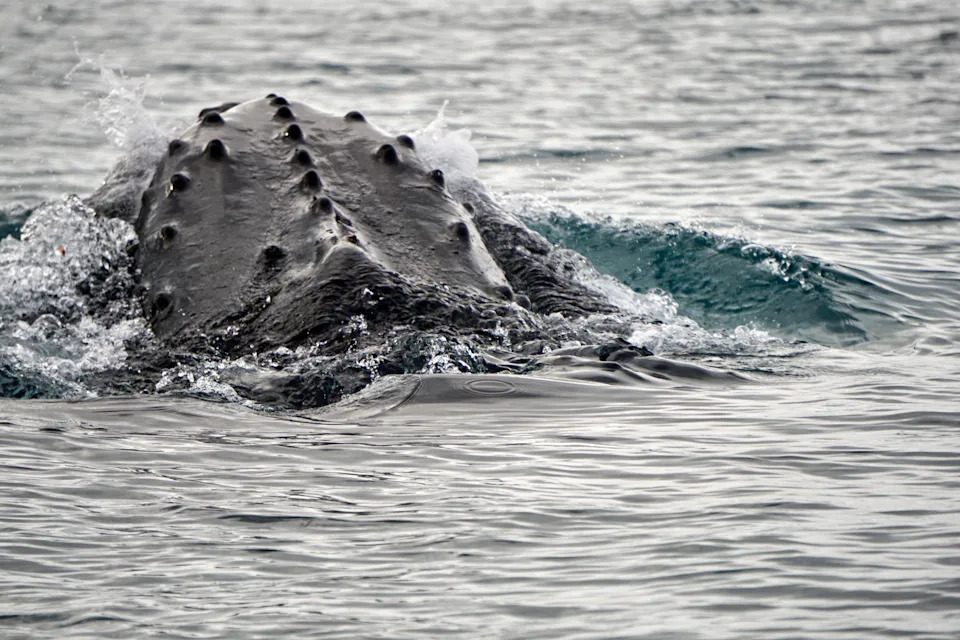
This photo provided by the Woods Hole Oceanographic Institution shows a whale off the West Antarctica Peninsula on Jan. 4, 2017. (Tyler Rohr/Woods Hole Oceanographic Institution via AP)(ASSOCIATED PRESS)
Whales rely on sound for essential life functions: locating food, navigating long distances, coordinating with others and socializing. Humpbacks, which can exceed 55,000 pounds (about 25,000 kilograms), are renowned for complex, often songlike vocalizations described as ethereal or mournful.
Hansen Johnson, a research scientist at the Anderson Cabot Center for Ocean Life at the New England Aquarium, called the discovery both scientifically useful and emotionally powerful: “It’s beautiful to listen to and inspires people to care about the ocean and its inhabitants.”
This 1949 recording predates Roger Payne’s widely known identification of whale song by nearly two decades and provides a rare window into how the acoustic world of whales has changed as human activity in the oceans has increased.
Help us improve.