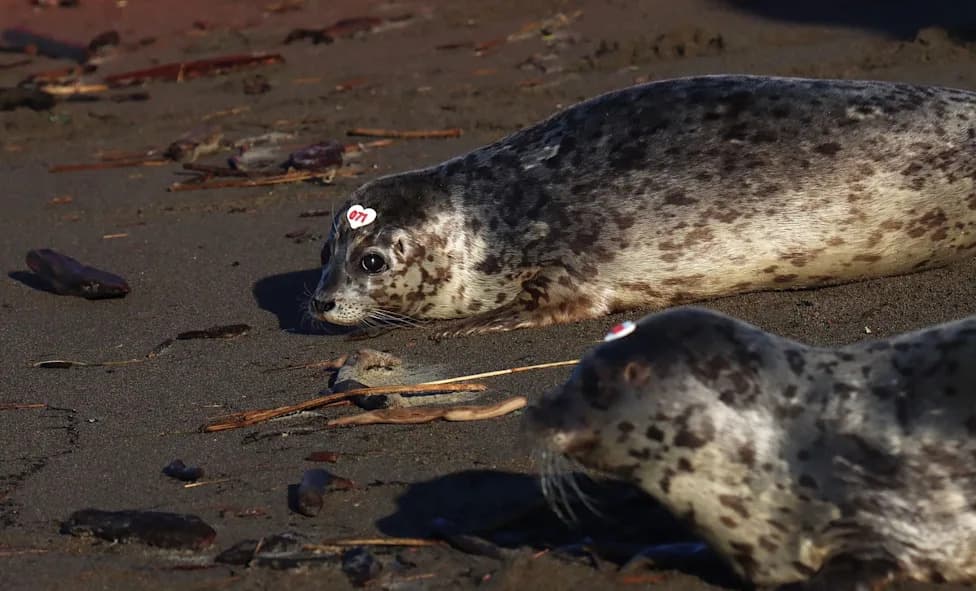
Hoover, an orphaned harbor seal rescued in 1971 by Maine fisherman George Swallow, was later transferred to the New England Aquarium. Years after his rescue, researchers recorded Hoover producing speechlike sounds resembling short English phrases and even aspects of Swallow's Maine accent. Those vocalizations appeared after Hoover reached sexual maturity and were used during breeding season, prompting suggestions they may have served as mating signals. Hoover died in 1985 at age 14, and his case remains an important study in vocal learning and the evolution of communication.
The Seal That 'Talked': How a Maine Fisherman's Rescue Led to Accent Mimicry
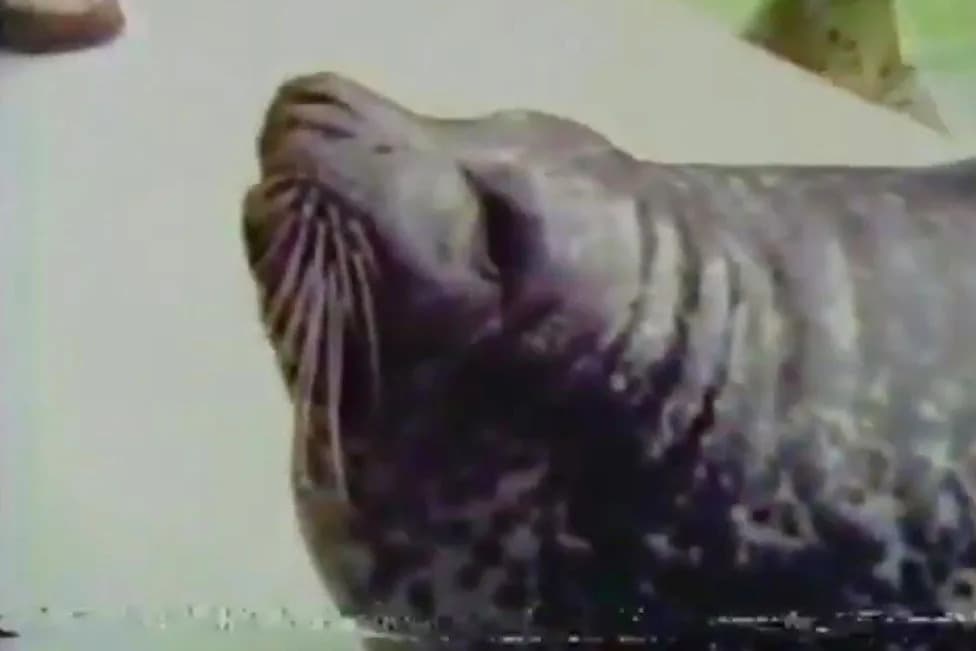
Photo Credit: YouTube
In 1971, Maine fisherman George Swallow found a motherless harbor seal pup near Bethel Point and brought him home. He named the pup Hoover, bottle-fed him during the critical early weeks and spoke to him constantly while nursing him back to health.
By 1976 Hoover had grown too large to live safely in Swallow's home, and the fisherman transferred him to the New England Aquarium in Boston. For several years Hoover behaved like a typical harbor seal, but then researchers began to notice something extraordinary: Hoover started producing unmistakably humanlike vocalizations.
Acoustic analyses of those sounds found vowel and consonant patterns that are uncommon for harbor seals. Listeners and specialists reported that some of Hoover's calls resembled short English phrases such as 'Hello there', 'Come over here' and 'Get out of here', and that aspects of the pronunciation suggested he was imitating Swallow's rough Maine accent.
Timing and Possible Purpose
Unlike many examples of vocal learning in birds, Hoover's speechlike sounds did not appear while he was a human-reared pup. Researchers began noticing the Englishlike vocalizations only after Hoover reached sexual maturity, and observers reported that he often used those sounds during the breeding season. That timing led scientists to propose that the phrases may have functioned as mating signals—an unusual use of learned vocal patterns rather than conversational speech.
What Scientists Learned
Hoover's case became one of the best-known examples of vocal mimicry in a marine mammal. Scientists have long documented vocal learning in some birds and certain cetaceans, but Hoover's apparent imitation of human speech—and of a specific regional accent—provided a rare opportunity to study how early social experience and exposure to sounds might shape vocal output later in life.
Dr. Tecumseh Fitch, a language-evolution specialist at the University of Vienna, noted that Hoover's delayed emergence of speechlike sounds is reminiscent of bird song learning, where juveniles memorize patterns early but often do not reproduce them until adulthood.
Legacy
Hoover died in 1985 at age 14, but his unusual vocal behavior continues to interest researchers studying vocal learning and the evolution of speech. Cases like Hoover's help scientists compare mammalian flexibility with better-known models, such as songbirds, and inform studies into how social environment and development influence communication. Related research explores other examples of learned or complex vocal behavior in animals, including vocal patterns in whales and learned calls in birds.
Help us improve.