Summary: Iranian Foreign Minister Abbas Araghchi told "Face the Nation" on March 15 that Tehran has not asked for a cease-fire and will continue to defend itself, accusing the U.S. of choosing to wage an unlawful war. He said Iran is not ready to resume talks with Washington now, but previously offered to down-blend about 440 kg of 60% enriched uranium as part of negotiations. Araghchi insisted Iran targets U.S. military assets, blamed Gulf states for hosting strikes from their territory, and said some foreign vessels have been allowed safe passage under military supervision.
Iran's FM on 'Face the Nation': No Cease-Fire, Nuclear Offer, and Strait of Hormuz Assurances
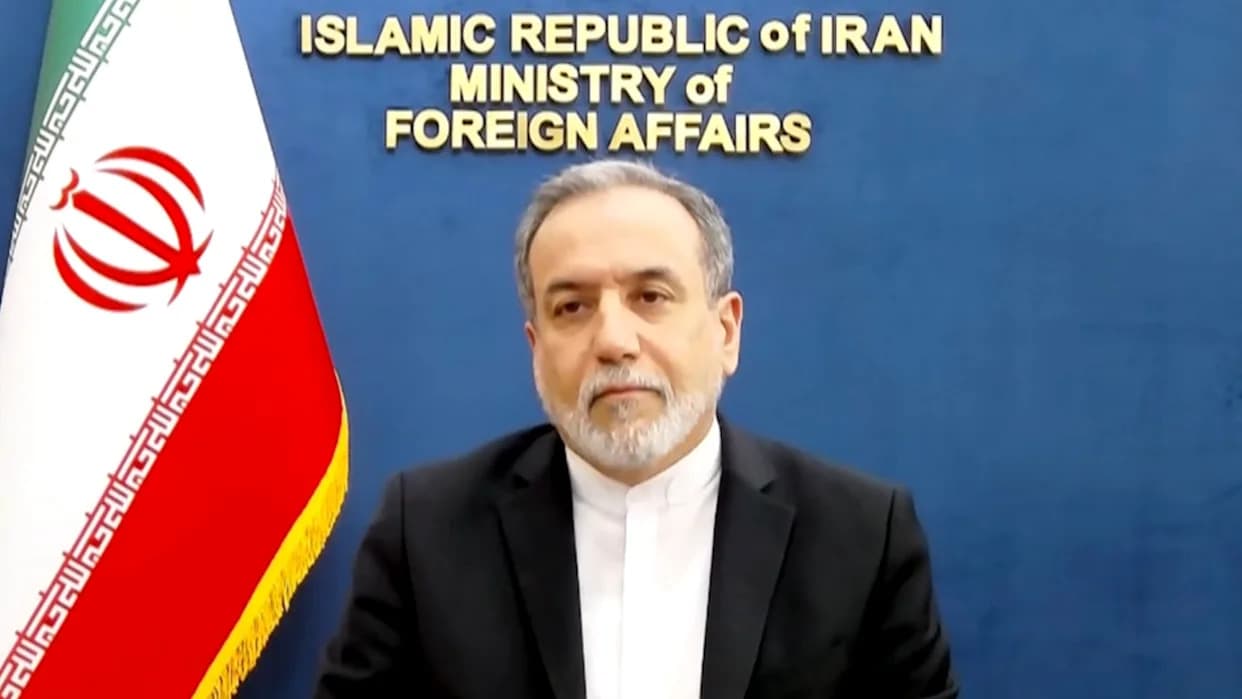
The following is an edited and paraphrased transcript of Iranian Foreign Minister Abbas Araghchi's interview with Margaret Brennan on "Face the Nation" (March 15, 2026).
Margaret Brennan: Charlie D'Agata reporting from Tel Aviv. We turn now to Iran's foreign minister, Abbas Araghchi. Good evening.
Abbas Araghchi: Good evening. Thank you for inviting me back.
On Cease-Fire and Negotiations
Brennan: Has Iran requested a cease-fire?
Araghchi: No. We have not asked for a cease-fire, nor have we sought negotiations. We will defend ourselves for as long as necessary. We see this as an unlawful war of choice by the United States and President Trump, and we will continue to protect our people.
"People are being killed because, as he put it, he is doing this for amusement," Araghchi said, referring to comments he attributes to President Trump. He also accused U.S. defense leadership of using rhetoric that amounts to a war crime.
Why Iran Is Not Returning to Talks Now
Brennan: Given the stakes, shouldn't Iran pursue negotiations, directly or through intermediaries?
Araghchi: We do not view this as a war of survival. Iran is stable and resilient. We previously engaged in diplomacy with U.S. interlocutors and were subsequently attacked again. Given that experience, we currently see no reason to resume talks with the United States.
Strikes, Targets and Gulf Neighbors
Brennan: Iran has launched drones and missiles into neighboring countries that host U.S. forces. How can you restore trade and relations after such strikes?
Araghchi: Many Gulf states have allowed U.S. forces to operate from their territory to strike Iran. We are targeting American installations and assets. We cannot ignore the fact that some attacks against Iran have been launched from neighboring soils.
Araghchi cited recent incidents — including HIMARS artillery strikes he says originated from the UAE's territory and U.S. aircraft operating from Kuwait — to explain Tehran's response. He denied that Iran deliberately targets civilian infrastructure, saying its strikes are directed at U.S. military assets.
The Strait Of Hormuz And Commercial Shipping
Brennan: You have said the Strait of Hormuz is closed to Israel and the U.S. Are you open to resuming safe passage for commercial vessels?
Araghchi: We are open to discussions with countries seeking safe passage. Our military will determine transit arrangements. Several countries have approached Iran, and Tehran says it has already allowed some groups of foreign vessels to pass under military supervision.
Nuclear Material And Facilities
Brennan: Iran has declared roughly 440 kilograms of nuclear material. Where is it now and who controls it?
Araghchi: The International Atomic Energy Agency (IAEA) has verified and reported the amounts. Iran's nuclear facilities were struck and much of the material is, in his words, "under rubble." He said retrieval would be possible under IAEA supervision if Iran decides to pursue that option; for now, there is no active program to recover it.
Araghchi also reiterated that, two days before the U.S. strikes, Iran had offered to down-blend about 440 kg of 60% enriched uranium as part of a negotiating package relayed to U.S. officials — a concession intended to demonstrate that Tehran does not seek nuclear weapons. At present, he said, there are no active negotiations and nothing is "on the table."
Detainees And Internet Access
Brennan: Are the Americans reportedly held in Evin Prison safe?
Araghchi: He said they should be safe so long as prisons are not attacked.
Brennan: You appear on Zoom while many Iranians lack open internet access. Why is that?
Araghchi: As Iran's international voice I must reach global audiences. He described temporary internet restrictions as security measures taken while the country is under attack to protect citizens.
Brennan: Thank you for your time.
Note: This is an edited and paraphrased transcript intended to improve clarity and readability while preserving the minister's reported statements.
Help us improve.