
The second week of the US‑Israel campaign against Iran featured a string of mixed and at times contradictory public statements from President Trump and senior Pentagon officials about how long the fighting would last. Officials alternated between describing strikes as decisive and insisting the operation would not be protracted. Confirmed casualties include 13 US service members, hundreds of civilians in Iran and Lebanon, and about a dozen civilians in Israel.
Week Two Timeline: Conflicting U.S. Statements on the Iran Campaign
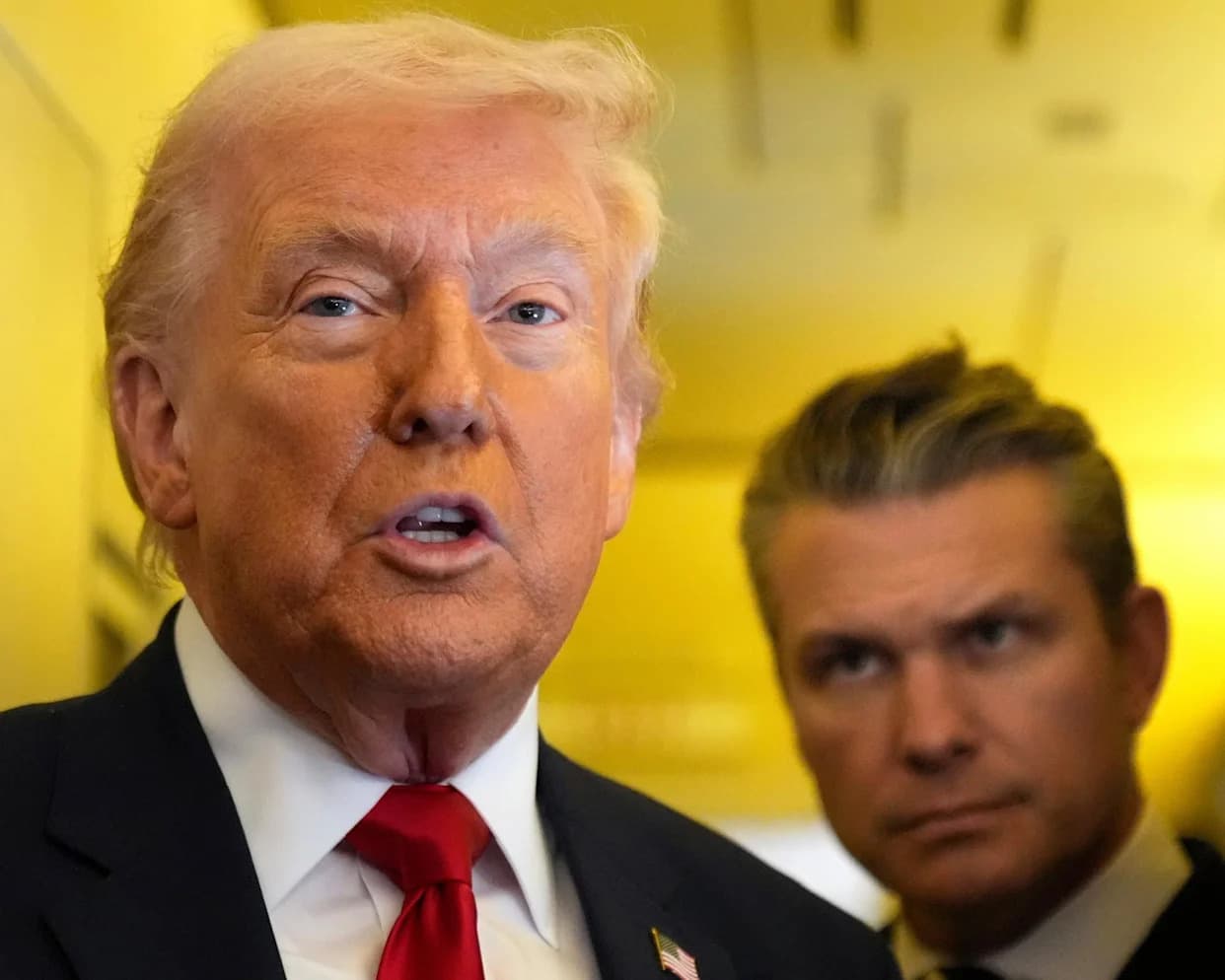
Donald Trump and Pete Hegseth speaking to reporters aboard Air Force One on 7 March.Photograph: Mark Schiefelbein/AP(Photograph: Mark Schiefelbein/AP)
In the second week of the US‑Israel campaign against Iran, senior US officials offered increasingly inconsistent and sometimes contradictory public statements about the expected duration and progress of the fighting. The clashes have claimed the lives of 13 American service members, hundreds of civilians in Iran and Lebanon, and roughly a dozen civilians in Israel. Below is a day‑by‑day timeline of key remarks from the White House and Pentagon during the seven days that followed the first week.
7 March
Speaking to reporters aboard Air Force One, President Trump called Operation Epic Fury a “minor excursion,” saying it would make the world safer. At the same time he said he was seeking “unconditional surrender” from Iran and described victory as coming “when they cry uncle, or when they can’t fight any longer.”
9 March
In a phone interview with CBS News, Trump described the US‑Israeli campaign as “very complete, pretty much,” asserting that Iran had “no navy, no communications, no air force” and claiming Iranian drones were “being blown up all over the place.” After his remarks, oil prices — which had recently reached a four‑year high — began to ease.
10 March
Pentagon spokesman Pete Hegseth called it the “most intense day of strikes inside Iran” while reiterating that the operation would not be indefinite. He emphasized that the campaign was “not endless” and “not protracted,” and warned against mission creep.
11 March
In a brief interview with Axios, Trump said the campaign would end “soon,” claiming there was “practically nothing left to target.” He told supporters at a rally in northern Kentucky, “we won,” a remark he later softened by saying the United States still had “to win this thing.” Officials nevertheless continued strikes after his comments.
12 March
At a White House event marking Women’s History Month, Trump offered a more measured assessment, saying the situation was “moving along very rapidly” and that the Iranian regime was “paying a big price right now.”
13 March
At a Pentagon briefing, Hegseth said Iran’s military capabilities had been significantly degraded and claimed the regime “does not have the ability to build any more weapons.” He added that Iran’s leadership appeared “desperate and hiding,” and referenced reports that Mojtaba Khamenei may have been seriously injured in a recent strike that also killed members of his family. Hegseth reiterated that the campaign did not aim for long occupation or nation‑building.
13 March (later)
Later the same day, speaking to Fox News, Trump sought to calm concerns about the economy — particularly volatile oil prices — saying recovery would be quick once the fighting ends. Asked when the conflict would conclude, he replied it would be decided by him: “When I feel it in my bones.”
What This Shows
The past week’s remarks highlight a pattern of mixed messaging from the US administration: officials alternated between describing strikes as decisive and insisting the campaign will not be prolonged. Such inconsistent public statements can complicate domestic and international understanding of US objectives and timelines.
Help us improve.





















