Johns Hopkins researchers used a gas gun to expose a controlled monolayer of Deinococcus radiodurans to pressures up to 2.4 GPa, simulating the mechanical shock of asteroid ejection. Surprisingly high survival rates were observed — roughly 95–97% in initial trials and about 60% at the apparatus limit — and surviving cells entered repair mode and recovered within hours. Modeling showed rapid depressurization caused the greatest damage. The results strengthen the plausibility of lithopanspermia and raise planetary protection considerations for destinations such as Mars and Phobos.
Microbe Survives Rock‑Shattering Pressure — New Experiment Strengthens Case For Lithopanspermia
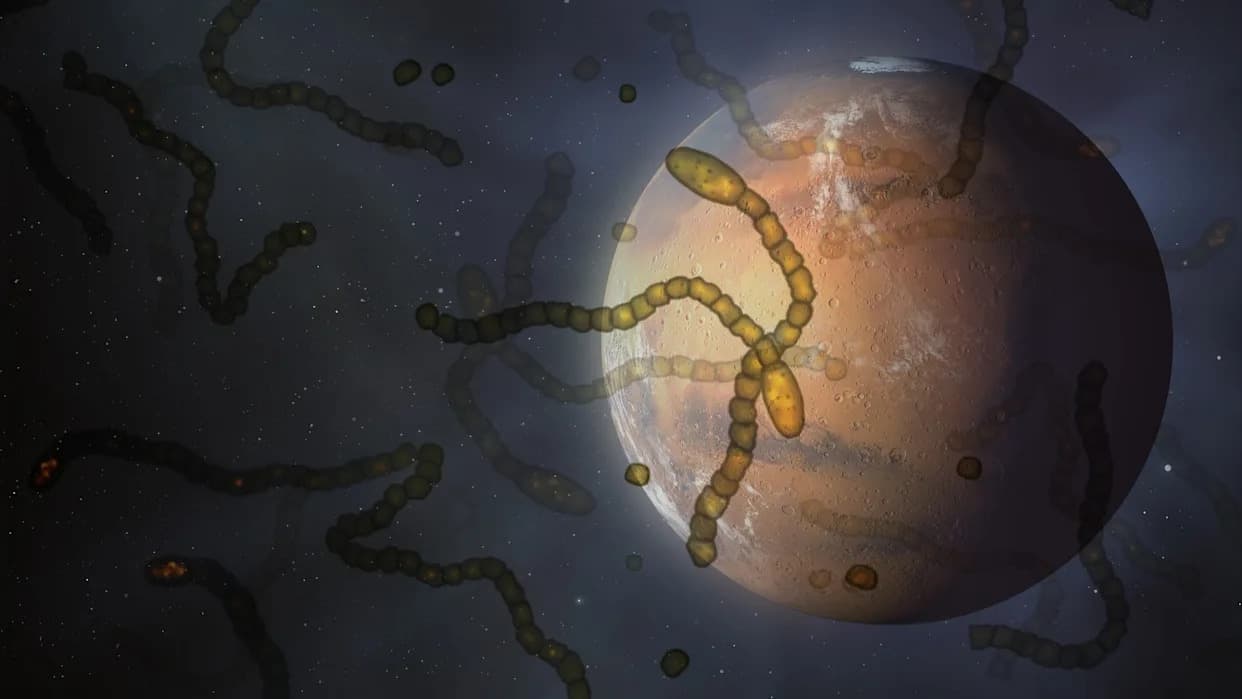
Lithopanspermia is the idea that that alien life might be able to migrate between worlds sealed inside rocks knocked loose by asteroids or comets. - Mark Garlick / Science Photo Library / Getty Images illustration
Researchers at Johns Hopkins University report that the hardy bacterium Deinococcus radiodurans survived mechanical shocks with pressures high enough to pulverize rock, strengthening the possibility that life could endure the violent launch phase of asteroid‑driven interplanetary transfer.
In carefully controlled experiments, doctoral student Lily Zhao used a room‑scale gas gun to slam a steel plate into a thin, uniform monolayer of bacteria sandwiched between ultra‑flat steel plates. The impacts produced pressures up to about 2.4 gigapascals (GPa) — tens of thousands of times Earth’s sea‑level atmospheric pressure — intended to simulate the extreme compression experienced during ejection from a planetary surface.
Methods And Precision
The team aimed to remove a common uncertainty in earlier impact‑survival tests by fixing cell position. Zhao grew bacteria in liquid culture, filtered them to create a uniform layer on a membrane, and placed that membrane between polished steel plates. Machining and polishing the plates to the required flatness took weeks; each shot produced only microseconds of physical data but required many hours of setup and days or weeks of biological follow‑up.
Findings
Contrary to expectations of near‑total sterilization, many cells survived. Initial runs reported survival rates around 95–97%; even at the highest pressures the apparatus could reach before hardware failure, survival remained near 60%. Detailed modeling and post‑shot analyses indicated that the greatest harm came not from compression itself but from rapid depressurization: sudden unloading damaged some cell membranes and exposed DNA and proteins to stress.
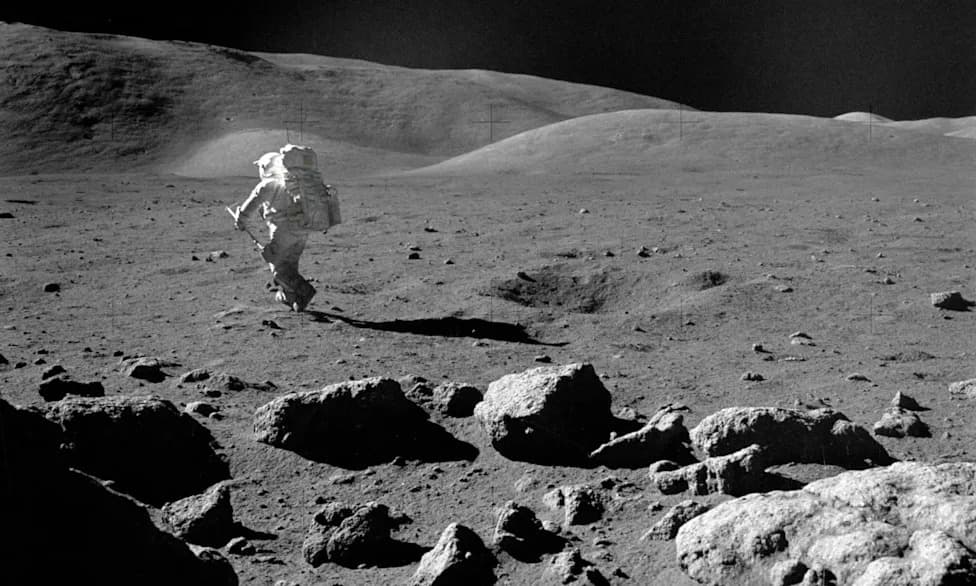
NASA's Perseverance rover on Mars captures an eclipse of Phobos crossing in front of the sun.
"I really didn't know what to expect," Zhao said. After culturing post‑shock samples alongside controls, she found most cells recovered and resumed normal activity within hours.
Biological Response
Surviving cells often entered a repair state, temporarily suspending growth and division while mending membranes and nucleic acids. Within a few hours many regained typical morphology and activity. The results highlight the remarkable mechanical resilience of single cells and the robustness of repair mechanisms in extremophiles like D. radiodurans.
Implications
Published in PNAS Nexus and funded in part by NASA, the study addresses a key step in the lithopanspermia hypothesis — whether life can survive being blasted off a planet. While surviving ejection is only one challenge (others include long‑term vacuum and radiation exposure, desiccation, and heating on re‑entry), the new data make interplanetary transfer of microbes somewhat more plausible than previously thought.
The results also bear on planetary protection: if robust microbes can survive impact ejection, agencies may need to reassess cleanliness rules for missions to fragile bodies such as Mars and Phobos to avoid forward contamination or confusion between terrestrial and indigenous biosignatures.
As K.T. Ramesh, the project’s faculty adviser, noted, the findings shifted his view from thinking interplanetary transfer was "extraordinarily unlikely" to acknowledging it as plausible. The work also suggests fresh impact craters — with fractures that could channel water — might be promising search sites for life.
Funding and publication: NASA; published in PNAS Nexus. The experiment used Deinococcus radiodurans, an extremophile known for resistance to radiation, desiccation and other stresses. At least ~400 meteorites on Earth are known to have originated on Mars, underscoring natural cross‑planet transfer of material even if biological transfer remains unproven.
Help us improve.