After two weeks of intense fighting that began on February 28, Iran and the United States exchanged stark threats over oil infrastructure, with Washington warning it could target Kharg Island and Iran promising retaliation against U.S.-linked energy sites. The crisis has driven crude prices up more than 40% and prompted reports of heavy casualties and mass displacement inside Iran, though some figures remain unverified. Regional missile and drone interceptions, a reported drone strike on the U.S. embassy in Baghdad, and the deployment of additional U.S. forces have broadened the conflict's regional and economic risks.
Oil Under Fire: Iran and U.S. Exchange Threats Over Kharg Island as Conflict Sends Prices Surging
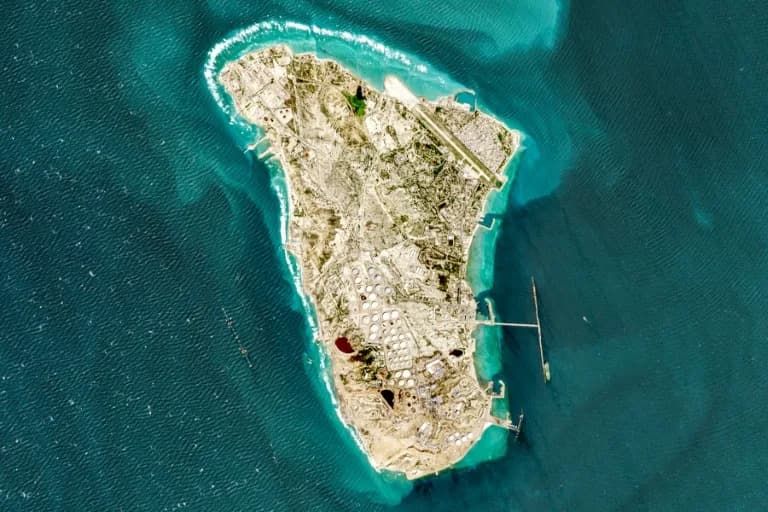
Iran's Kharg Island, which hosts the country’s main crude export terminal and is responsible for the overwhelming majority of its oil shipments to the world, about 30 kilometres south of the mainland (-)(-/EUROPEAN SPACE AGENCY/AFP)
Iran and the United States escalated a week-long series of threats on Saturday after Washington signaled it might target Iran's largest oil export hub on Kharg Island. The exchange has intensified concerns about global energy supplies as crude prices have jumped sharply since the fighting began on February 28.
Rising Rhetoric and Military Threats
U.S. President Donald Trump said he had for now held back from striking Kharg Island but warned he could "wipe out" the oil terminal if Iran or others interfered with shipping in the Strait of Hormuz. In response, Iran's armed forces vowed that oil and energy infrastructure linked to U.S. interests would be "immediately destroyed and turned into a pile of ashes" if the United States struck Iranian oil facilities, state-aligned media reported.
Human Cost and Verification
Iranian authorities say waves of drone, missile and aerial strikes have killed more than 1,200 people inside Iran and displaced millions regionally; the UN refugee agency has estimated up to 3.2 million internally displaced in Iran. These casualty and displacement figures are reported by local and international agencies but have not been independently verified.
Military Operations and Regional Fallout
According to Pentagon and allied statements cited by media, U.S. and Israeli forces have struck thousands of targets inside Iran in recent weeks. Israeli authorities say roughly 7,600 of those strikes targeted Iran's missile capabilities. The Pentagon has also reportedly sent additional forces to the region, including the Japan-based amphibious assault ship USS Tripoli with an embarked Marine contingent, according to U.S. media reports.
Across the Gulf, Qatar and Saudi Arabia reported intercepting missiles and drones, and NATO forces were reported to have downed a ballistic missile launched from Iran. A drone strike was reported at the U.S. embassy compound in Baghdad, and exchanges of fire have drawn Lebanon and Iraq further into the conflict.
Economic Impact
Tehran's threats to target oil tankers in the Strait of Hormuz — a maritime chokepoint that normally carries about one-fifth of global oil supplies — have helped push crude benchmarks more than 40% higher since the conflict began, exacerbating a global oil-price shock and raising fears of wider economic fallout.
Note: Many operational and casualty figures in this report are drawn from government and media sources and remain difficult to independently verify. Reporting on active conflicts is often fluid and subject to revision.
As the situation develops, international attention remains focused on whether naval escorts, additional deployments, or further strikes will alter the trajectory of the crisis and its impact on global energy markets.
Help us improve.