The UAE has increasingly charged foreign visitors and residents under broad cybercrime laws for sharing or possessing social media content related to recent strikes linked to Iran, according to the advocacy group Detained in Dubai. CEO Radha Stirling says 21 people faced charges as of Thursday and that even minor posts or images — including those made outside the UAE — can lead to detention. Cases cited include a charged British tourist, a detained Filipina worker, and a Vietnamese sailor taken ashore in Fujairah. The UAE defence ministry says its air defences are intercepting missiles and drones originating from Iran.
UAE Detains Tourists and Expat Workers Over Social Posts Showing Iran-Linked Strikes, Advocates Say
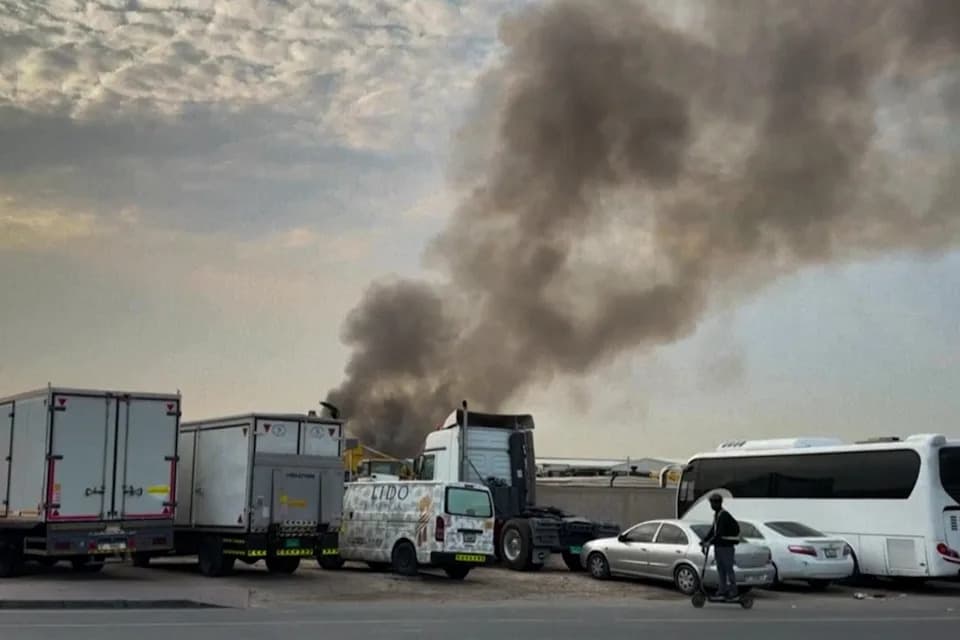
This image taken from a video shows smoke rising from a fire which, according to the authorities, was caused by a successful interception, at Dubai's Al Quoz Industrial area, United Arab Emirates, on March 13, 2026. / Credit: AP(AP)
A growing number of social media users — including tourists and expatriate workers — are being charged in the United Arab Emirates under the country's broad cybercrime laws for posting or possessing digital material that depicts or comments on the impact of recent strikes linked to Iran, the advocacy group Detained in Dubai has warned.
What Authorities Are Targeting
UAE authorities have explicitly prohibited taking or sharing imagery that shows Iranian drone or missile impacts or efforts to intercept such weapons. Officials say these measures are part of efforts to manage public safety and national security amid a wave of regional strikes and retaliatory fire.
Cases Highlighted by Advocates
Radha Stirling, CEO of Detained in Dubai and Due Process International, a specialist in Gulf legal and extradition matters, said in a social media post that even minor posts, reshares, commentary, photos and opinions can lead to detention in the UAE, “even if it was made outside the UAE.”
Stirling said 21 people were facing charges under UAE cybercrime laws as of Thursday. She gave several examples:
- A 60-year-old British tourist who deleted a video when asked by authorities but was still charged.
- An influencer whose post reached about 300,000 views was reportedly instructed only to delete the video and publish a correction.
- A Filipina domestic worker detained near the Burj Al Arab after taking a photograph while waiting for work; officers examined her phone, found an image and arrested her.
- A Vietnamese sailor from a cargo vessel who was taken ashore in Fujairah by the coast guard and detained after allegedly sharing video of missile activity he recorded while outside UAE territorial waters.
“Celebrities have long been afforded protected status in the UAE,” Stirling said, noting apparent inconsistencies in how cases are handled.
Context: Regional Tensions
The UAE is among several Gulf states that have experienced retaliatory fire from Iran since a campaign involving the United States and Israel intensified in late February. On Friday, the UAE Ministry of Defence said the country's air defences were "currently dealing with missile attacks and incoming drones originating from Iran," adding that sounds in scattered areas were the result of intercepting ballistic missiles and drones.
Detained in Dubai and other advocates say the arrests underscore the UAE's tight regulation of online content and the risks faced by residents and visitors who document or comment on military activity. Authorities emphasize security concerns; advocates warn the rules are being applied broadly and at times inconsistently.
Help us improve.