
Key takeaway: The Apollo 13 line — a concise, calm admission that something is wrong — illuminates what NASA needs now. Artemis aims to build a sustained presence near the lunar south pole but faces major obstacles: a long‑delayed SLS rocket, no operational lunar lander, complex program architecture, and political pressures. New NASA administrator Jared Isaacman has made early course corrections — postponing a lunar landing test, simplifying SLS plans, and pledging to rebuild core competencies — but timelines (2027–2028) remain ambitious and will require saying “no” to risky, unnecessary projects.
“Houston, We Have a Problem”: Can Jared Isaacman Restore NASA’s Apollo‑Era Discipline to Artemis?
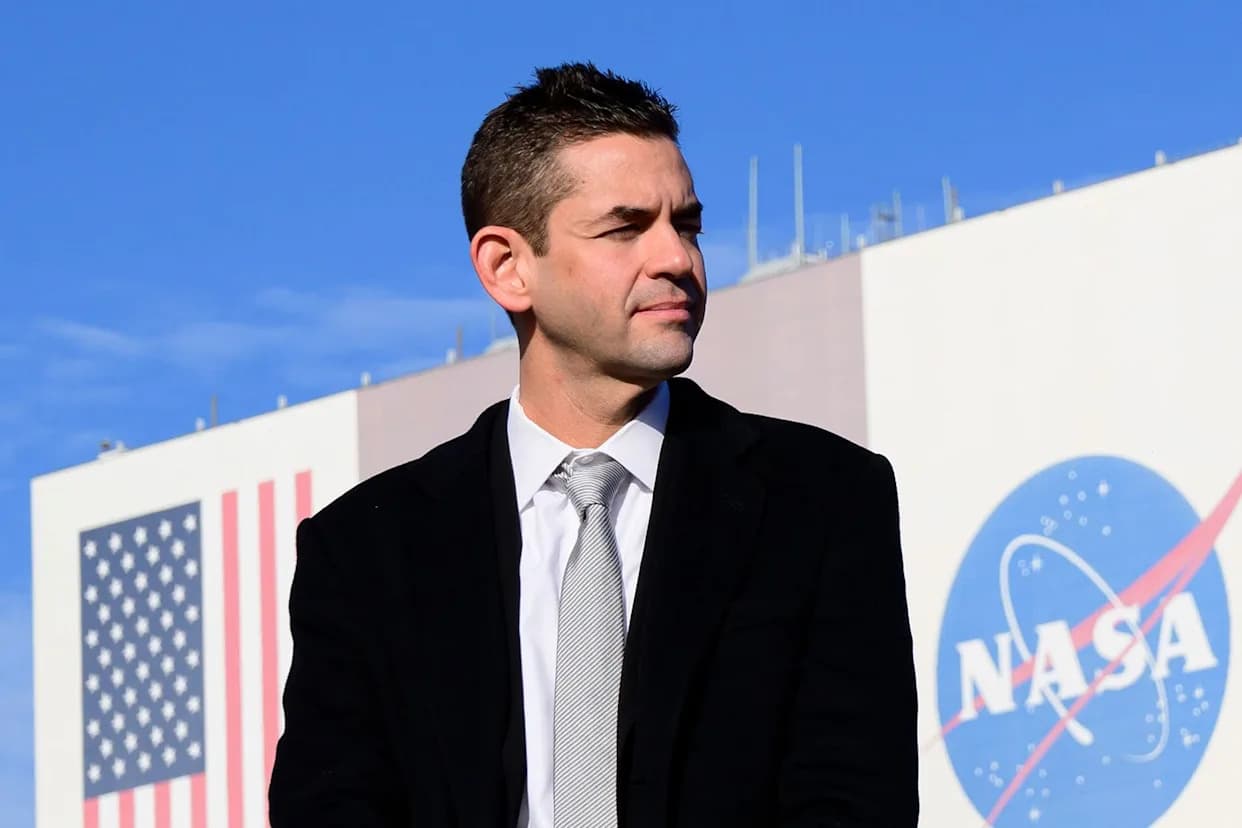
“Houston, we have a problem” is arguably the most famous line in spaceflight lore. Tom Hanks immortalized it in Apollo 13, but in reality astronaut Jack Swigert said, “Houston, we’ve had a problem,” which Jim Lovell later repeated. Whatever the precise wording, the phrase captures more than a movie moment: it encapsulates a culture of calm, clear problem‑solving that has long defined NASA at its best.
Why That Calm Matters
When Apollo 13’s oxygen tank exploded en route to the moon, the crew and Mission Control responded with disciplined, factual communications rather than panic. That combination of steady leadership, practical improvisation and technical competence turned a near‑catastrophe into a celebrated “successful failure.” Today, many observers say NASA needs that same ethos as it confronts the complexities of returning humans to the lunar surface under the Artemis program.
Where Artemis Stands
The stated objective of Artemis is to establish a sustained presence near the lunar south pole, a region believed to harbor water ice and other strategically valuable resources. Securing favorable sites there could confer long‑term scientific and strategic advantages. Meanwhile, China has publicly targeted lunar landings by 2030, intensifying the geopolitical stakes.
Artemis suffers from several structural problems. NASA has developed the Space Launch System (SLS), a heavy‑lift rocket in development for more than a decade, but it has yet to fly humans. Recently the rocket rolled back to the Vehicle Assembly Building for repairs after technical issues on the pad. More critically, NASA currently lacks an operational lunar lander: SLS and the Orion capsule can reach lunar orbit but not the surface. Without a lander, crews can only orbit and observe.
Isaacman’s Early Course Corrections
Jared Isaacman, a billionaire entrepreneur with private spaceflight experience, has moved quickly since becoming NASA administrator. His notable near‑term changes include:
- Saying Artemis 3 will not attempt a lunar landing as previously planned; instead it will remain a test of docking procedures in low Earth orbit between Orion and commercial landers.
- Confirming Artemis 2 — a 10‑day lunar flyby carrying four astronauts — is slated for as soon as April 1 as the next major human mission beyond low Earth orbit.
- Announcing intentions to simplify the SLS design, accelerate launch cadence, and rebuild NASA’s in‑house technical competencies.
Those actions signal a willingness to acknowledge and correct programmatic flaws — a leadership trait that some former officials and analysts have criticized previous administrators for lacking.
Political, Industrial, and Programmatic Headwinds
Large NASA programs are notoriously inertial. They involve contractors with vested interests and members of Congress who champion local aerospace jobs. The Gateway lunar‑orbit station is one example of a contested element that could absorb time and resources. Critics have argued that the SLS program is costly and slow, and some experts say it should be retired in favor of simpler, more frequent launches. Isaacman has hinted at that view but has not explicitly called to terminate SLS.
At the same time, the agency’s civil‑service ranks have been thinned by retirements and departures, particularly within NASA Science. Isaacman has pledged to hire more civil servants, reversing a trend of outsourcing expertise to contractors. That effort will be tested during upcoming budget negotiations, when the Office of Management and Budget may push resources toward Artemis and away from NASA Science.
What Comes Next — And What Leadership Must Do
Isaacman’s revised schedule — aiming for Artemis 3 in 2027 and lunar landings on Artemis 4 and 5 in 2028 — is ambitious and viewed by many as politically optimistic. Success will require hard choices: saying “no” to programs that add cost or complexity without clear benefit, prioritizing a functional lunar lander, and restoring core engineering and program‑management capabilities inside NASA.
Bottom line: The Apollo 13 ethos — calm, candid recognition of problems and ruthless focus on practical solutions — is the template NASA needs now. If Isaacman can institutionalize that mindset, Artemis has a better chance of delivering sustainable lunar exploration before competitors solidify their own footholds.
Help us improve.





















