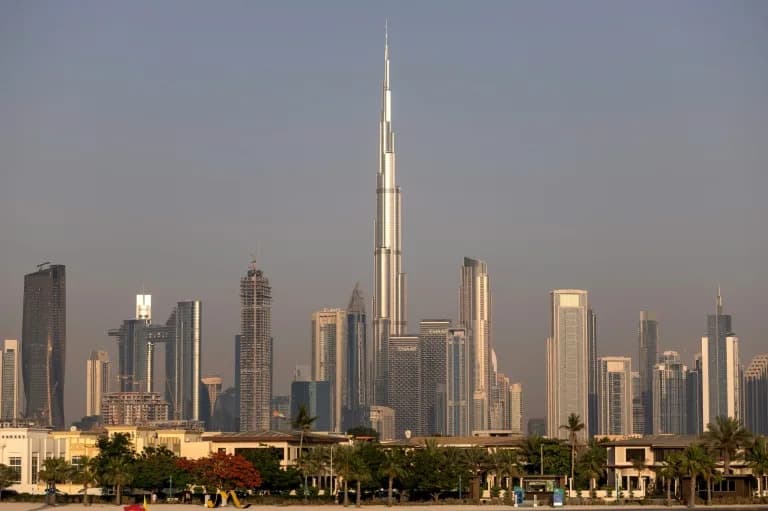
Retaliatory Iranian strikes in the Gulf have killed at least two Pakistani workers in Dubai, including 27-year-old Muzaffar Ali; a third person was reported killed in a drone strike in Iranian waters. The violence is heightening economic strain on Pakistan, where Gulf remittances support millions of households. Pakistan recorded $3.3 billion in remittances in February 2026 (up 5.2% YoY), but analysts warn prolonged conflict could curb these vital flows.
Iran Strikes Shatter Dubai Hopes for Pakistani Workers; Families Demand Protection
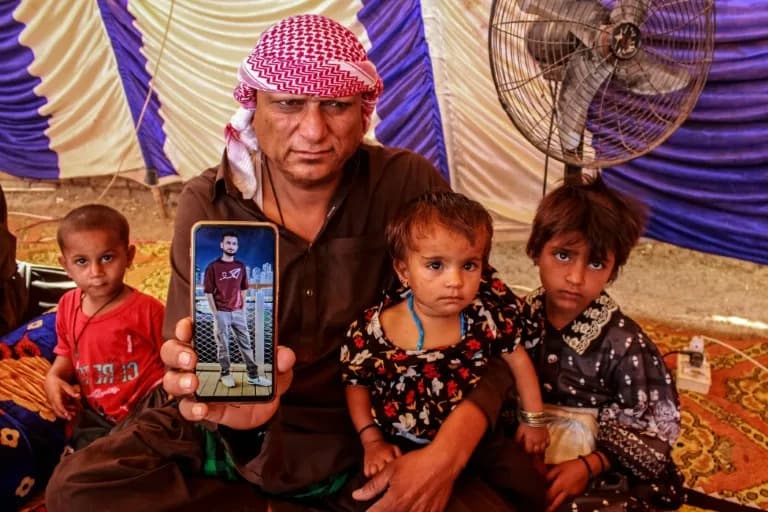
Abdul Malick (2L), a transporter and uncle of Pakistani national Muzaffar Ali, who was killed in Dubai amid the ongoing Middle East war, displays a photograph of Ali on his mobile after his funeral in Jamshoro, in Sindh province on March 12, 2026 (Husnain ALI)(Husnain ALI/AFP/AFP)
Abdul Malick sat with grieving relatives in his southern Pakistan village after receiving condolences for his nephew, Muzaffar Ali, who was killed in Dubai last week. Ali, a 27-year-old labourer, was one of two Pakistanis killed in retaliatory Iranian strikes in the Gulf following a recent regional escalation.
Officials said debris struck Ali’s vehicle when a projectile was intercepted. "It is a great tragedy for a family whose sole breadwinner was lost," Malick said, with Ali’s three young children at his side. "We have nothing to do with this war. It is unfortunate that the poor are being used as fuel for a conflict they have no part in."
Another Pakistani victim, 48-year-old Murib Zaman from Bannu in the country’s northwest, had worked in the UAE as a driver for 25 years and leaves behind five children. Officials also reported a third person killed in a drone strike while fishing inside Iranian waters.
Economic And Social Fallout
Pakistan has publicly condemned Tehran’s retaliatory strikes. The country shares a southwestern border with Iran and is increasingly feeling the direct effects of the wider Middle East conflict: rising global oil prices have pushed up domestic fuel costs, and roughly 4,000 people — including students — have returned from Iran amid the escalation.
Gulf remittances are vital to Pakistan’s economy and households. Analysts at Capital Economics estimate remittances from the Gulf account for about 3–5% of Pakistan’s GDP, and more than 5.5 million Pakistanis — many unskilled labourers — work across the Gulf region, particularly in the UAE and Saudi Arabia.
Pakistan’s central bank reported $3.3 billion in foreign remittances in February 2026, up 5.2% year-on-year. Capital Economics warned that a prolonged conflict could weaken Gulf economies and reduce remittance flows, which would have knock-on effects for household consumption, education, healthcare and small businesses back home.
Families Demand Support And Protection
Relatives of the victims called on both the UAE and Pakistani governments for support. In Sindh, Malick said the family had not yet received financial assistance from either government. "It is ironic that when he left Pakistan we were happy he was going to one of the safest countries in the world, only to later receive his dead body," he told AFP.
“We demand that this war be brought to an end so that innocent labourers like Ali are not used as fuel for it. We also demand that the UAE government provide necessary protection and security for civilian labourers,” Malick added.
For now, Pakistan’s foreign ministry says the number of returnees from the Gulf is still "too few to call a major outflow," suggesting most migrant workers remain in place despite growing worries about safety and earnings.
Help us improve.