
Israeli Prime Minister Benjamin Netanyahu said Israel is "stronger than ever" after nearly two weeks of strikes against Iran, claiming senior Iranian nuclear scientists were killed and the IRGC and Basij were damaged. He argued the February 28 operations prevented Iran from moving nuclear and ballistic programs underground and urged Iranian protesters to choose their own future. The conflict has sparked regional instability, prompted a UN Security Council draft condemning Iran’s attacks, and become a focal point in Netanyahu’s domestic political messaging ahead of November elections.
Netanyahu Says Israel 'Stronger Than Ever' After Nearly Two Weeks Of Strikes On Iran
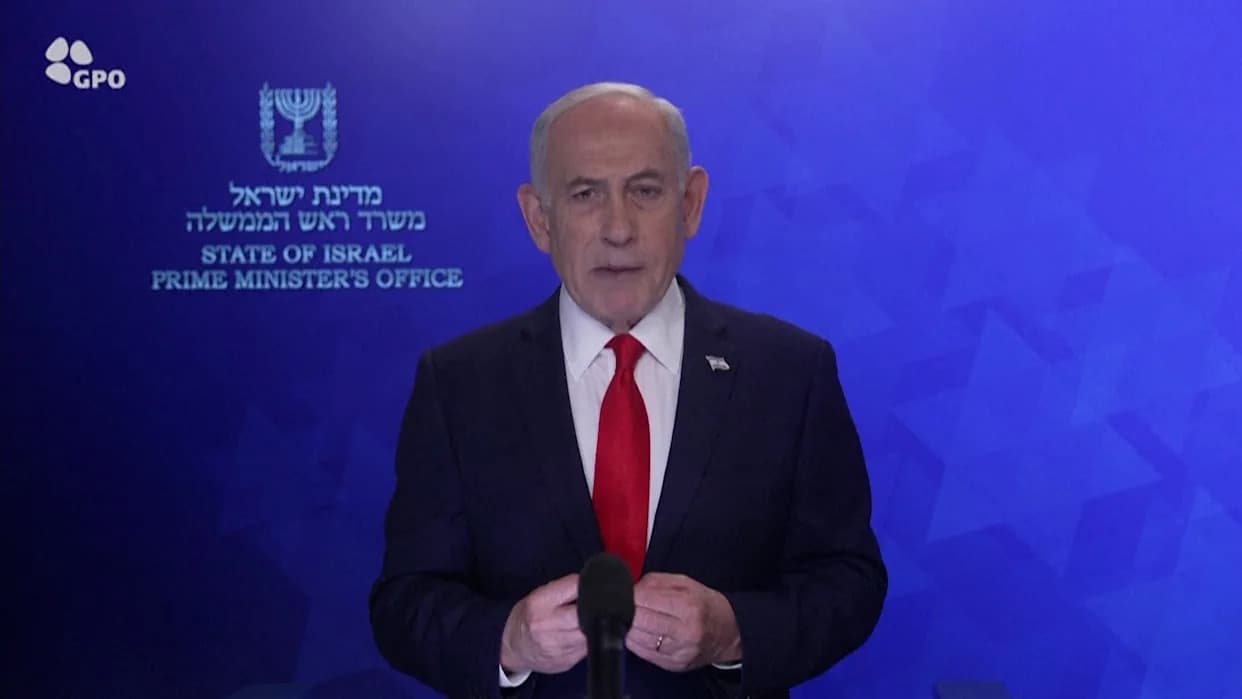
Israeli Prime Minister Benjamin Netanyahu, as seen in a video address released on February 28, 2026 [Screenshot via AFP]
Israeli Prime Minister Benjamin Netanyahu said Israel is "becoming stronger than ever" as it, alongside the United States, continues operations against Iran, which he said has endured heavy blows during nearly two weeks of strikes.
Speaking at a Thursday news conference, Netanyahu claimed Israeli raids had killed senior Iranian nuclear scientists and inflicted significant damage on the Islamic Revolutionary Guard Corps (IRGC) and Basij forces.
"Iran is no longer the same Iran," he said, asserting that the operations launched on February 28 prevented Tehran from moving its nuclear and ballistic programs underground.
When asked about reports naming Ayatollah Mojtaba Khamenei as a newly elected supreme leader and about Hezbollah deputy leader Naim Qassem, Netanyahu said he would not take out any "life insurance" on either figure. He also described Khamenei as a "puppet of the Revolutionary Guards," saying the reported supreme leader had not appeared publicly after issuing a statement that was read on state television.
Addressing Iranians who have taken to the streets in protest—most recently in January—Netanyahu said: "We are standing by your side. But at the end of the day this is up to you; it's in your hands." His comments echoed appeals by former US President Donald Trump, who has repeatedly urged Iranians to rise up against their government.
Regional Impact and International Response
Iran has launched drone and missile strikes against Gulf countries, forcing several oil terminals to suspend operations and undermining regional security. Tehran says it is targeting US assets, while neighbouring states and GCC members say the attacks have eroded trust and stability.
The United Nations Security Council on Wednesday adopted a draft resolution sponsored by the Gulf Cooperation Council condemning Iran's attacks on Gulf countries and Jordan and demanding that Tehran immediately cease hostilities.
Political Stakes at Home and Abroad
Netanyahu said the conflict has enabled Israel to forge new partnerships in the region that he believed would not have been possible previously. He framed these developments as both a strategic win and a political advantage as he prepares for parliamentary elections later this year.
Al Jazeera correspondent Nour Odeh, reporting from Ramallah, described the news conference as an effort to "repackage the narrative about the war" and present Israel as victorious. Odeh noted that polls released as Netanyahu spoke showed him losing ground.
Israel's military censor restricts reporting on incoming missile and drone strikes, a limitation that has frustrated witnesses who say they see destruction firsthand but find limited media coverage.
Note: Some of the claims made during the press conference—such as specific casualties among Iranian nuclear scientists and certain leadership developments in Iran—have not been independently verified by multiple international sources.
Help us improve.





















