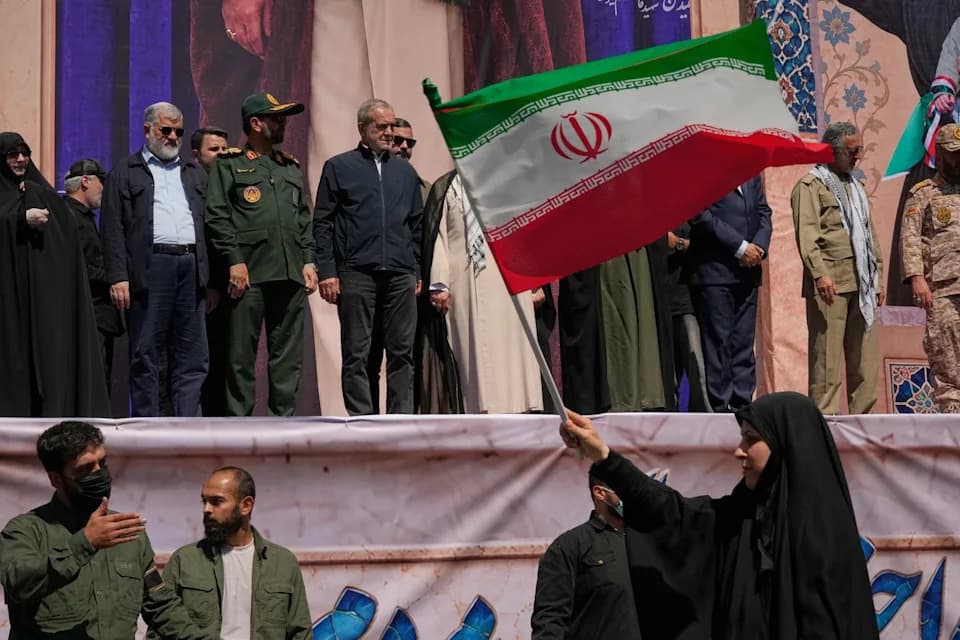
Iranian President Masoud Pezeshkian has set conditions to end the war with the US and Israel: recognition of Iran’s rights, reparations and international guarantees. The conflict has widened into an economic confrontation after Tehran disrupted the Strait of Hormuz, sending oil above $100 per barrel and prompting emergency releases from strategic reserves. Heavy military spending and internal divisions between civilian leaders and the IRGC complicate prospects for a quick negotiated settlement.
Pezeshkian Sets Conditions to End the Iran War — Is De‑Escalation Possible?
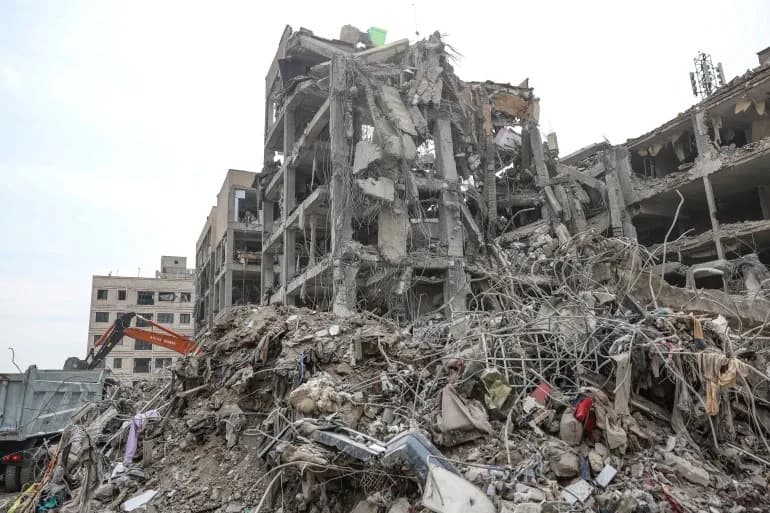
A building lies in ruins after a strike, amid the US-Israeli conflict with Iran, in Tehran, Iran, on March 12, 2026 [Majid Asgaripour/WANA (West Asia News Agency) via Reuters]
Iranian President Masoud Pezeshkian has publicly outlined conditions to end the conflict with the United States and Israel, a move analysts see as a potential sign of de‑escalation as the US‑Israel campaign entered its 13th day.
Pezeshkian’s Terms
In a post on the social platform X, Pezeshkian said he had spoken with counterparts in Russia and Pakistan and reaffirmed "Iran's commitment to peace." He wrote:
"The only way to end this war — ignited by the Zionist regime & US — is recognizing Iran’s legitimate rights, payment of reparations, and firm international guarantees against future aggression."
That tone departs from Tehran's earlier defiant messaging and signals a political preference for a negotiated halt, even as hardline military elements continue operations.
Military Pressure and Asymmetric Tactics
Iran has launched heavy retaliatory strikes against US assets and other infrastructure in Gulf countries while adopting asymmetric measures — including disruptions in the Strait of Hormuz and threats to banking‑linked entities — to maximize economic and logistical pressure on rivals and global markets.
Strait Of Hormuz And Energy Shock
Energy supplies have become a key lever. Attacks on vessels transiting the Strait of Hormuz — which normally handles roughly 20% of global oil and gas shipments — have effectively closed the route at times. Global oil prices spiked above $100 per barrel (from about $65 before the conflict), prompting the International Energy Agency to approve release of 400 million barrels from emergency reserves.
Iran warned it could prevent nearly all crude from transiting the strait and suggested prices might rise toward $200 per barrel; analysts expect any sustained spike to be limited because Tehran still needs oil revenue.
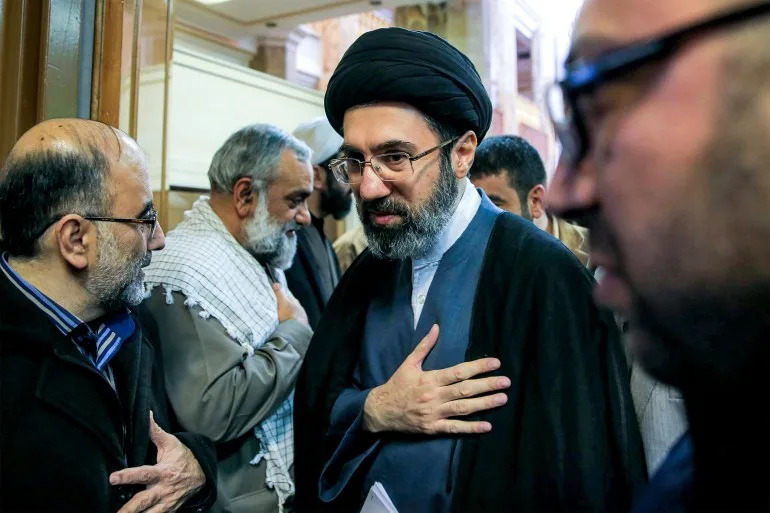
Mojtaba Khamenei, son of Iran’s late Supreme Leader Ayatollah Ali Khamenei, attends a gathering in Tehran on March 2, 2016. Iran marked the appointment of Ayatollah Mojtaba Khamenei to replace his father as its supreme leader with a barrage of missiles against Israel and the Gulf states [File: Rouhollah Vahdati/ISNA via AFP]
Costs Of The Campaign
The military campaign has already been expensive. Pentagon officials told lawmakers the US spent more than $11.3 billion in the first six days of operations, while the Center for Strategic and International Studies estimated roughly $3.7 billion in costs during the first 100 hours. These figures underscore the financial and political pressure on Washington to consider an exit strategy.
Domestic Divisions In Tehran
Internal divisions complicate a negotiated settlement. The Islamic Revolutionary Guard Corps (IRGC) continues to issue threats and conduct strikes, while the civilian political leadership, represented by President Pezeshkian, has signalled willingness to explore diplomatic solutions — including apologies to neighbouring states and conditional promises to halt attacks if those states do not enable US operations from their territories.
Analysts note the IRGC reports to the Supreme National Security Council (SNSC), chaired by Ali Larijani, a senior figure associated with hardline politics. Observers also point out that figures with IRGC backgrounds are influential in succession debates, which limits how far civilian leaders can steer policy independent of military priorities.
International Messaging And Timelines
Messages from Washington and Jerusalem have been mixed. Former US President Donald Trump told Axios the campaign would end "soon," claiming there was "practically nothing left to target," while Israel's defence minister said operations would continue "without any time limit" until objectives are met. Analysts connect calls for a quick resolution in Washington to domestic political pressures ahead of elections.
Where This Could Head
Pezeshkian’s conditional offer — recognition of rights, reparations and ironclad guarantees — provides a potential diplomatic off‑ramp, but major obstacles remain: the IRGC’s operational independence, competing hardline voices, economic incentives for Iran to keep pressure on energy markets, and divergent domestic political imperatives in the US and Israel. How and when the conflict ends will depend on how these military, economic and political pressures are balanced in the coming days.
Key ongoing uncertainties: the IRGC's willingness to accept political agreements, the velocity and effectiveness of strategic oil releases, and domestic political calculations in Washington and Jerusalem.
Help us improve.