Eswatini has received four more third-country nationals deported from the United States, raising the total taken under the arrangement to at least 19. The new arrivals are two Somalis, one Sudanese and one Tanzanian, while earlier transfers included nationals from Vietnam, Cuba, Laos and Yemen. The U.S. paid Eswatini $5.1 million for the agreement; local rights lawyers challenged the transfers but the High Court dismissed the case and an appeal is pending.
Eswatini Takes In Four More U.S.-Transferred Deportees, Total Now At Least 19
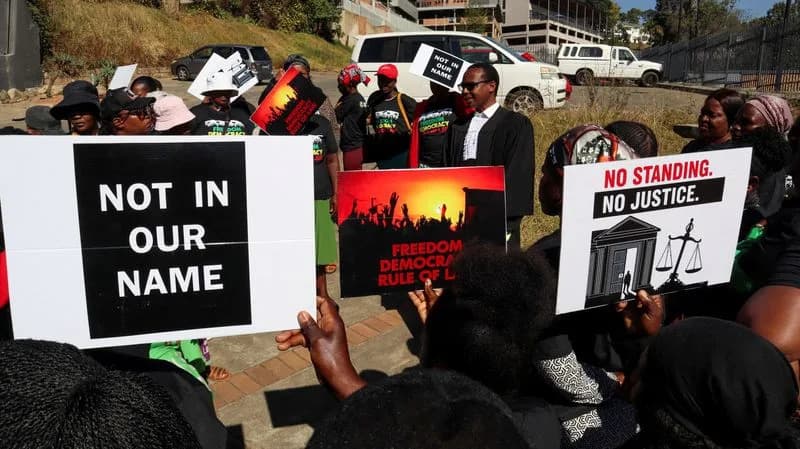
FILE PHOTO: Protesters hold placards as a lawyer addresses them outside the court, after the hearing was postponed, in Mbabane, Eswatini, August 22, 2025. Activists are challenging a secretive agreement with former U.S. President Donald Trump's administration to accept third-country deportees, which they argue is unconstitutional. REUTERS/Zakhele Mabuza/File Photo
Eswatini said on Thursday it has accepted four additional third-country nationals deported from the United States, bringing the total people received under the arrangement to at least 19. The transfers form part of a broader U.S. policy to move non‑citizen detainees to third countries.
Two of the newly arrived individuals are from Somalia, one is from Sudan and one is from Tanzania. Earlier arrivals, flown to Eswatini in July last year, included nationals of Vietnam, Cuba, Laos and Yemen.
Repatriation, Legal Challenges and Funding
A lawyer for some members of the earlier group, Alma David, told Reuters that a Cambodian national, Pheap Rom, is due to be repatriated and would be the second person released for return after another detainee was sent back to Jamaica last year.
The United States government paid Eswatini about $5.1 million under the agreement to accept the deportees. Eswatini, a small southern African absolute monarchy ruled by King Mswati III, is one of several African states reported to have entered into similar, largely confidential arrangements with the U.S.
"In line with this agreement, ... the nation has received another cohort of four third-country nationals from the United States," the government statement said.
Local human rights lawyers challenged the transfers in Eswatini's High Court, but their case was dismissed last month; the lawyers have filed an appeal. Although some returnees served sentences for crimes committed on U.S. soil, a number remain incarcerated in Eswatini while authorities conduct "intensive engagements with the respective countries of origin," the government said.
Reporting by Tim Cocks; editing by Toby Chopra.
Help us improve.