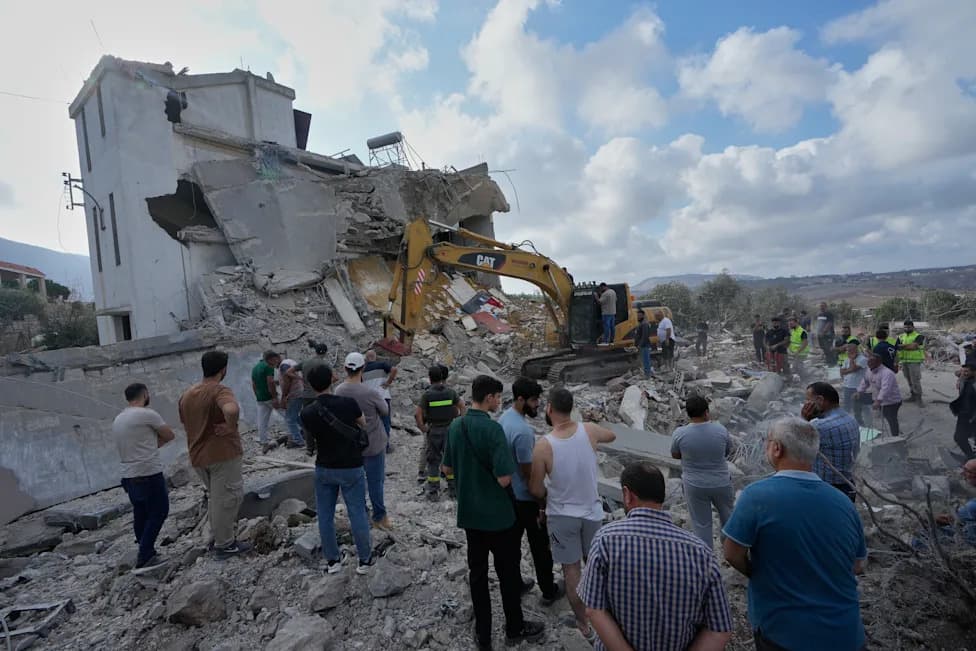
Key points: An Israeli strike on Beirut's Ramlet al-Bayda seafront killed eight people and wounded 31 as clashes between Israel and Hezbollah intensified. Hezbollah said it launched roughly 200 rockets and about 20 drones in what Israel described as the group's largest barrage since the conflict began. Israel warned it could widen operations or seize territory if Lebanon does not restrain Hezbollah. The violence has caused heavy casualties and mass displacement across Lebanon.
Israeli Strike on Beirut Seafront Kills Eight as Fighting Escalates Between Israel and Hezbollah
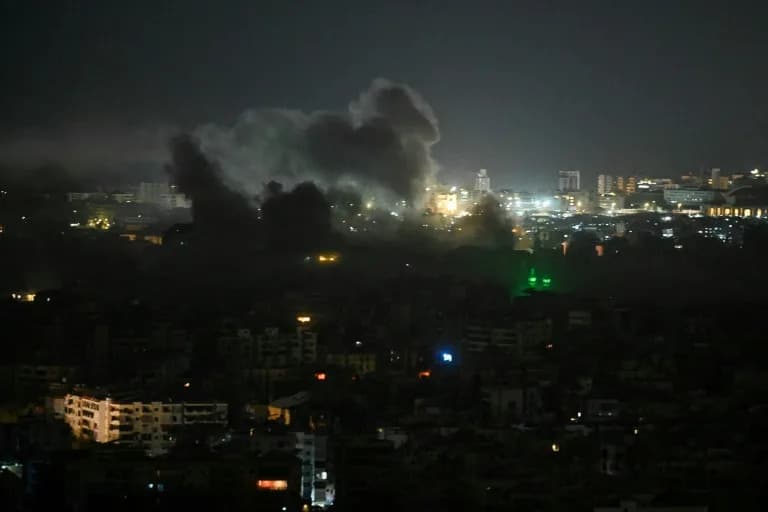
A plume of smoke rises from the site of an Israeli airstrike in the southern suburbs of Beirut early on March 12 (FADEL itani)(FADEL itani/AFP/AFP)
An Israeli strike on the Ramlet al-Bayda seafront in central Beirut killed eight people and wounded 31 on Thursday, Lebanon's health ministry said, as clashes between Israel and Hezbollah intensified and regional actors signaled wider involvement.
The attack came after Hezbollah announced a new operation against Israel. Israeli Defence Minister Israel Katz said he ordered troops to "prepare for expanding" attacks in Lebanon and warned that "if the Lebanese government does not know how to control the territory and prevent Hezbollah from threatening northern communities and firing toward Israel -- we will take the territory and do it ourselves."
The Israeli military said Hezbollah's offensive on Wednesday involved "approximately 200 rockets, approximately 20 UAVs (drones)," describing it as the largest barrage from the group since the wider conflict began.
Scene at Ramlet al-Bayda
AFP correspondents at Ramlet al-Bayda reported a damaged motorcycle, two battered cars, blood stains on the pavement and a small crater in the ground. Security forces cordoned off the normally busy seaside area. Displaced civilians sleeping in tents nearby were among those affected.
"We saw dead people on the ground," said Aseel Habbaj, a displaced woman who had been sheltering in a tent. "We were all asleep in my tent, when suddenly we heard a noise. We jumped up and went to see what was happening." A second strike wounded her husband.
Another displaced resident, 40-year-old Dalal al-Sayed, said she had pitched a tent by the sea after fleeing south Lebanon because her family could not afford rented housing. "We won't leave, we will stay here even if we die," she said.
Wider Strikes and Casualties
Lebanon's health ministry reported separate strikes on Aramoun, a residential area south of Beirut, that killed three people and wounded a child. Lebanon's National News Agency and the health ministry said dozens of strikes hit the south of the country, long a Hezbollah stronghold.
Lebanese authorities say the wave of violence has killed more than 687 people and that more than 800,000 people have registered as displaced.
Regional Involvement
Iran's Islamic Revolutionary Guard Corps said it had carried out a joint missile operation with Hezbollah against targets in Israel. The Israeli military said it launched a "wide-scale wave of strikes" across Lebanon targeting Hezbollah infrastructure, including "dozens of launchers" and intelligence and command sites in south Beirut.
Hezbollah also said it targeted Israeli military sites, including an intelligence base in the Tel Aviv suburbs and a base south of Haifa, and that its fighters used rockets, advanced missiles and drones in multiple locations.
Observers say Lebanon has been drawn deeper into the wider regional confrontation this week after a series of strikes and reprisals. Hezbollah has framed its operations as retaliation for recent strikes that it blames on Israel and allied actors.
This developing episode underscores the mounting human cost: civilians displaced, families injured and killed, and key urban areas left vulnerable to escalation. Reporting on the scene and statements from both militaries continue to emerge.
Reporting: AFP. Additional reporting and editing by international correspondents.
Help us improve.