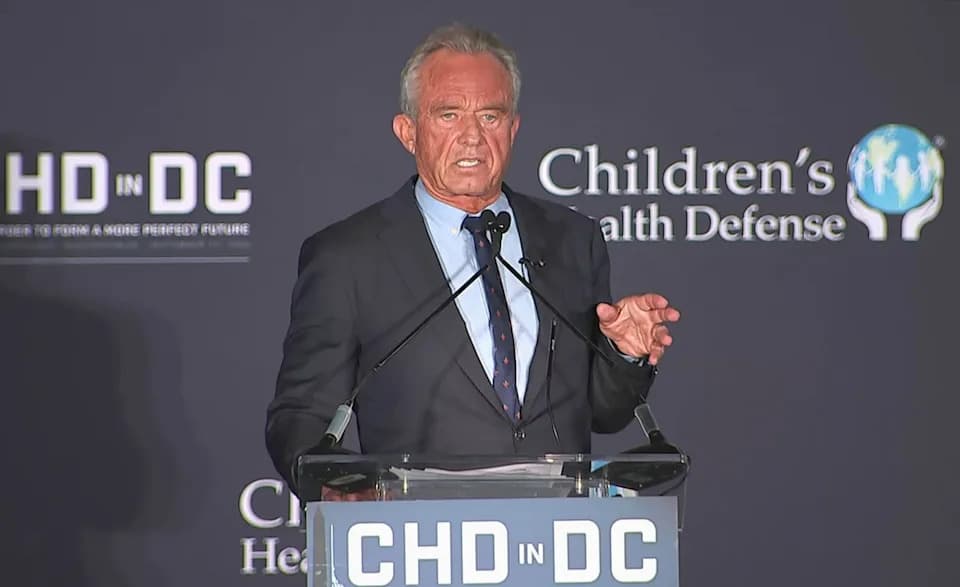
The Advisory Committee on Immunization Practices (ACIP) has paused efforts to reconsider federal recommendations for mRNA Covid‑19 vaccines amid political sensitivity ahead of the midterms. Advisers appointed by Health Secretary Robert F. Kennedy Jr. had explored removing those recommendations, but two sources told The Washington Post the initiative is stalled. HHS reiterated that ACIP’s September 2025 decision to list Covid vaccines under shared clinical decision‑making remains unchanged. Experts warn that unauthorized votes could violate federal rules and stress ACIP’s role is to provide evidence‑based vaccine guidance.
US Vaccine Advisory Panel Pauses mRNA Covid Review as Political Pressure Mounts

A healthcare employee prepares a syringe with the Moderna Covid-19 vaccine at the Dennis Avenue health center in Silver Spring, Maryland on 21 November 2022.Photograph: The Washington Post/Getty Images(Photograph: The Washington Post/Getty Images)
A federal advisory committee that helps shape US vaccine policy has stepped back from an effort to reconsider recommendations for mRNA Covid-19 vaccines, according to people familiar with the discussions. The move comes amid reported Republican concerns that further shifts in vaccine policy could be politically risky ahead of the November midterm elections.
What Happened
Several advisers on the Department of Health and Human Services’ Advisory Committee on Immunization Practices (ACIP), selected by Health Secretary Robert F. Kennedy Jr., had explored whether to remove federal recommendations for mRNA Covid-19 shots. Two sources who spoke to The Washington Post said that initiative is no longer moving forward.
Official Response
HHS press secretary Emily G. Hilliard told The Guardian that “the committee has not reconsidered its September 2025 decision to classify COVID vaccines under shared clinical decision-making on the CDC immunization schedules.” Hilliard also said the Food and Drug Administration and ACIP have been aligned: the FDA approved Covid vaccines for high‑risk groups, and ACIP recommended their inclusion on the schedule under shared clinical decision‑making, meaning vaccination decisions are based on individual patient characteristics.
Expert Analysis
Dorit Reiss, a vaccine law expert and professor at UC Law San Francisco, said the episode reflects two dynamics: an administration desire to avoid added controversy around vaccines because of political fallout, and confusion among some current ACIP members about the committee’s legal role and boundaries. Reiss warned that if ACIP had voted on Covid‑19 vaccines without proper federal notice it could have violated the Federal Advisory Committee Act, creating legal vulnerability.
“The committee’s role is to make evidence‑based vaccine recommendations,” Reiss said. “It is not to treat disease or to produce anti‑vaccine messaging.”
Political Context And Recent Developments
The two mRNA vaccines widely used in the US—Moderna’s and the Pfizer–BioNTech partnership—continue to account for the vast majority of Covid‑19 vaccinations. The ACIP’s retreat from a direct review of the vaccines coincides with slipping Republican poll numbers ahead of the midterms and ongoing criticism from medical experts.
Recent controversies include the departures of FDA vaccine official Vinay Prasad after several high‑profile disputes over vaccine reviews, and a contentious Senate hearing for President Trump’s surgeon general nominee Casey Means, who acknowledged the strong evidence refuting a vaccine‑autism link while saying she supports further study of cumulative exposures. Separately, the FDA reversed an earlier decision and agreed to review Moderna’s application for a potential mRNA‑based influenza vaccine.
What Comes Next
For now, ACIP’s September 2025 classification remains in place: Covid vaccines are on the CDC immunization schedule under shared clinical decision‑making. Any future changes would require formal notice and clear adherence to legal procedures. Observers say the situation underscores the tension between scientific guidance and political pressures shaping public health policy.
Help us improve.