
The Middle East conflict has escalated with reported maritime attacks in the Strait of Hormuz, cross‑border strikes between Iran and Israel, and heavy damage and casualties in Lebanon. Global oil prices spiked, prompting Germany and Japan to begin releasing strategic reserves at the IEA’s request. Regional leaders warned of wider contagion while maritime and airport incidents raised international concern. Verification of many claims is ongoing.
Middle East Conflict Escalates: Maritime Attacks, Cross‑Border Strikes and Soaring Oil Prices
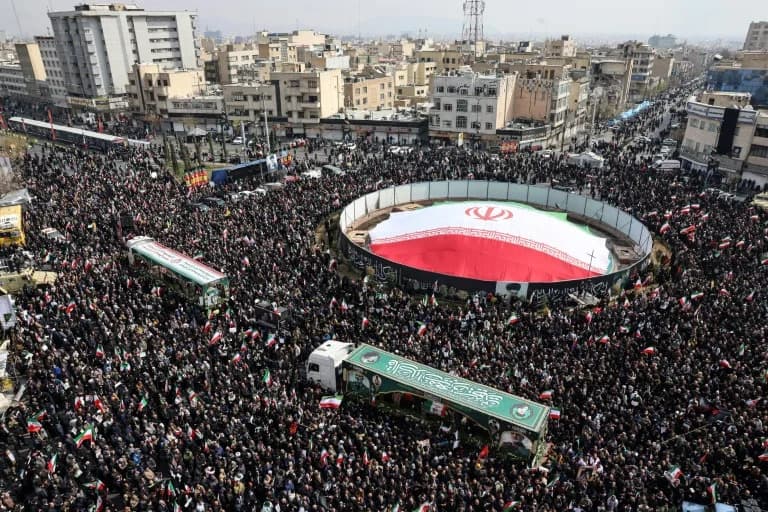
Iranians attend the funerals of fighters killed in the war, in Tehran on March 11, 2026 (Atta KENARE)(Atta KENARE/AFP/AFP)
Below are the latest, verified reports on the rapidly widening conflict across the Middle East, compiled from official statements and multiple news agencies.
Key Developments
Maritime Incidents in the Strait of Hormuz
Iran accused the United States and Israel of striking a maritime ambulance near an island in the Strait of Hormuz, according to the Mehr news agency. Multiple commercial vessels have also been reported hit in the strategic waterway in recent days. The Thai navy said a Thai bulk carrier was attacked there; 20 crew members were rescued and searches continue for three others. A British maritime security agency reported a container ship struck off the UAE coast, though all crew were reported safe.
Strikes and Counterstrikes
Iran’s army said it attacked several targets in Israel — including military intelligence facilities, a naval base in Haifa and radar installations — and also reported strikes on US bases in Kuwait and Bahrain. The Israeli military said it launched a new "wide‑scale wave of strikes" across Iran and struck Hezbollah infrastructure in Beirut. Numerous local and international sources describe fresh strikes on Beirut's southern suburbs and central districts.
Civilian Toll and Local Impact
Lebanon’s health ministry reported that Israeli strikes have so far killed 570 people, including 86 children and 14 healthcare workers; figures are being updated. State media reported specific incidents, such as a strike in Tamnin al‑Tahta that killed seven people in a building said to house a Syrian family.
Economic and Energy Response
Global energy markets reacted sharply: Brent crude climbed about 5.1% to roughly $92.23 a barrel and US West Texas Intermediate rose about 5.9% to $88.38. In response, Germany said it would release part of its oil reserve after the International Energy Agency requested 400 million barrels from member states; Japan also announced a planned release. G7 energy ministers said they stood ready to coordinate further measures with the IEA.
Regional Reactions and Security Alerts
Turkish President Recep Tayyip Erdogan warned that the conflict must be stopped to avoid engulfing the region. Iran’s military warned it may strike economic targets, including banking infrastructure, and urged civilians to avoid banks after reports of an attack on an Iranian bank. In the Gulf, two drones fell near Dubai’s airport, injuring four people while air traffic remained operational. AFP correspondents also reported several blasts in Doha.
Leadership Reports
Reports of injuries to Iran’s new supreme leader, Mojtaba Khamenei, were downplayed by a government adviser and the son of Iran’s president, who said he had been told Khamenei was "safe and sound." State television had earlier described him as a 'wounded veteran' without specifying details.
Note: Events are developing quickly and figures or claims from involved parties are still being verified by independent sources. Readers should expect updates as more information becomes available.
Help us improve.





















