
Foreign Minister Gideon Saar said Israel does not seek an endless war with Iran and will coordinate with the United States on when to stop military operations. The conflict has widened across the Middle East since strikes 11 days ago, including exchanges with Hezbollah in Lebanon. Israel says it has weakened Iran's nuclear and missile programs and is urging other countries to diplomatically isolate Tehran. German officials warned there is no clear plan for a swift end to the fighting.
Israel Says It Does Not Seek an Endless War With Iran, Will Coordinate With U.S. On When to Stop
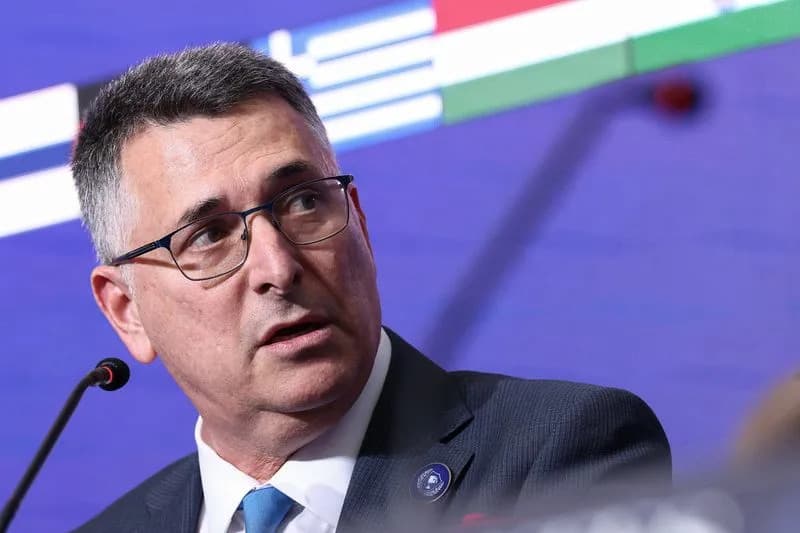
FILE PHOTO: Israeli Foreign Minister Gideon Saar attends the inaugural Board of Peace meeting at the U.S. Institute of Peace in Washington, D.C., U.S., February 19, 2026. REUTERS/Kevin Lamarque/File Photo
JERUSALEM, March 10 — Israel is not seeking a perpetual conflict with Iran and will coordinate with the United States on when to halt military operations, Foreign Minister Gideon Saar said on Tuesday, while declining to give a public timeline for an end to the fighting.
Turmoil has spread across the Middle East since the United States and Israel launched strikes on Iran 11 days ago. Tehran has carried out retaliatory attacks across the region, and the fighting has expanded into Lebanon, where Israeli forces are engaged with Hezbollah.
Saar told reporters that Israel had achieved "major successes" in degrading Iran's nuclear and ballistic missile programs and that Israel would consult with Washington about ending the conflict when conditions were right.
"We will continue until the minute that we, and our partners, think that is appropriate to stop," Saar said, speaking alongside his German counterpart in Jerusalem.
Recent Military Activity
The Israeli military announced a new wave of strikes in Tehran targeting what it described as "terror regime targets," and reported Iranian missile launches toward Israel — a sign Tehran retains the capacity to strike Israeli territory. Officials said the military aims to inflict maximum damage while the window for further strikes remains open.
Will the War End Soon?
U.S. President Donald Trump and his administration have sent mixed signals about when the war might end. Trump said on Monday it would not end this week but suggested it could conclude very soon. Saar reiterated Israel is not seeking an endless war and that any decision to stop would involve consultation with Washington.
When asked how the government envisions an end to the conflict, Saar said Israel wants to remove long-term, existential threats posed by Iran and hopes a military campaign could create conditions that allow Iranians to "regain their freedom," acknowledging such political change might occur after the fighting.
Diplomacy and Regional Response
Germany’s Chancellor Friedrich Merz said there appeared to be no plan for a swift end to the war. Visiting German Foreign Minister Johann Wadephul — the first senior foreign official to publicly visit Israel since the war began — said he believed Israel and the United States remained open to a diplomatic solution, but stressed that any deal would need to address Iran’s nuclear and missile programs and its support for regional militias.
Saar urged countries to diplomatically isolate Iran and called on other states to sever ties with Tehran. The foreign minister also described Iran's newly appointed supreme leader, Mojataba Khamenei — identified in reporting as the son of Ayatollah Ali Khamenei, who was killed on the first day of the war — as an extremist.
Background
Israeli officials have long argued that Iran poses an existential threat. In June, Israel launched a surprise attack on Iran that sparked a 12-day war, which ended abruptly after the U.S. joined the fighting and struck key Iranian nuclear sites, according to reporting. A source familiar with Israel's operational planning told Reuters the Israeli military sought to maximize damage before the possibility that President Trump might abruptly end the campaign.
Help us improve.





















