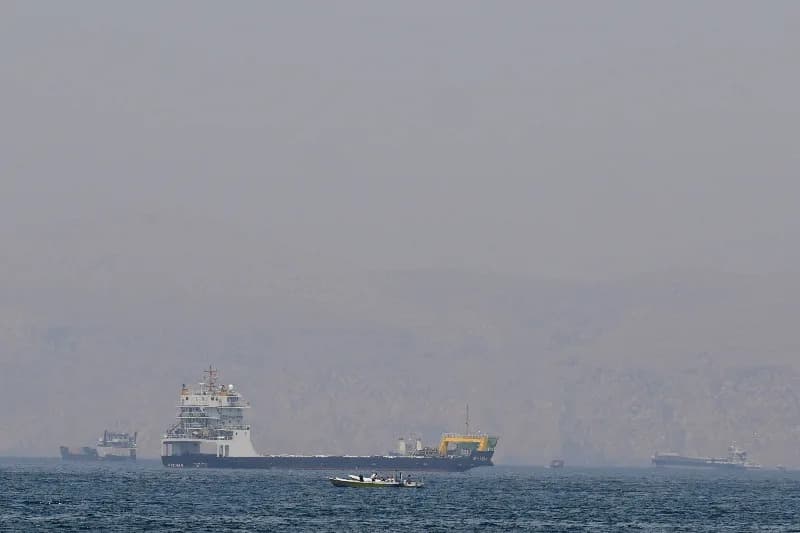
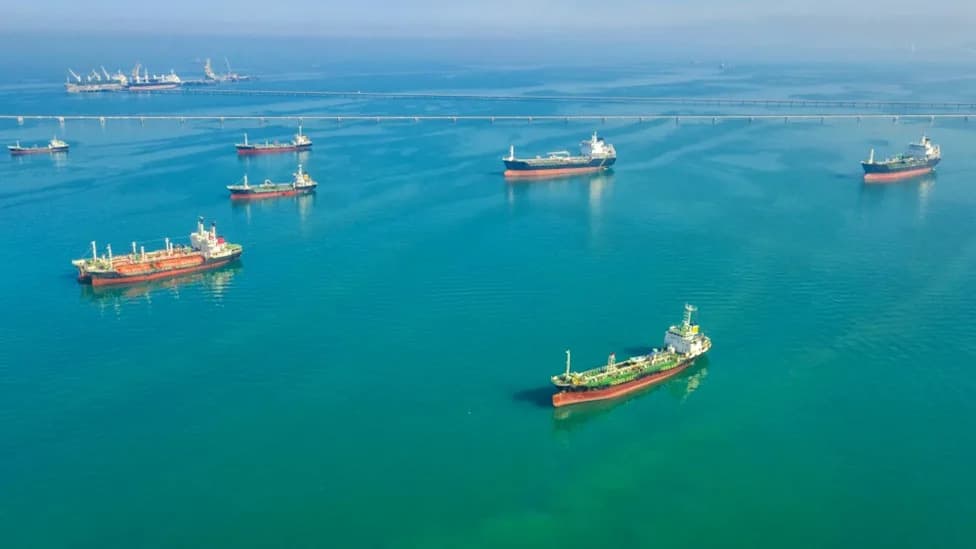
The United Nations warns that the near-shutdown of shipping through the Strait of Hormuz risks severe economic and humanitarian fallout for vulnerable countries. UNCTAD noted that large shares of global crude oil, LPG, LNG and refined products normally pass the strait, while daily transits plunged from an average of 129 to three on March 3. Rising energy, fertiliser and transport costs could push up food prices and strain public finances; the WFP says rerouting around the Cape of Good Hope adds about 25 days and roughly 50% more transit time for some deliveries.
UN Warns Hormuz Shipping Halt Could Devastate World's Most Vulnerable
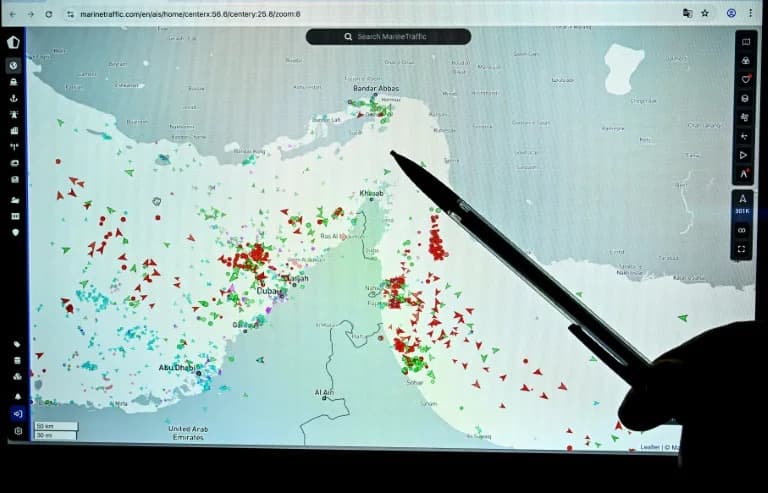
Tracking from the MarineTraffic website showed the impact the war was having shipping through the Strait of Hormuz (JULIEN DE ROSA)(JULIEN DE ROSA/AFP/AFP)
The United Nations warned Tuesday that the near-standstill of shipping through the Strait of Hormuz — triggered by the Middle East conflict after the February 28 US-Israeli airstrikes and Iran's subsequent interdiction of passage — could have severe economic and humanitarian consequences for the world's poorest and most vulnerable populations.
The Strait of Hormuz is the sole maritime corridor linking the Persian Gulf to the Indian Ocean. Before the conflict, nearly one quarter of global seaborne oil shipments and sizable volumes of other energy products and cargo transited the passage, making it a critical maritime chokepoint.
UN Conference on Trade and Development (UNCTAD) warned that the disruption comes at a delicate time for many developing economies already struggling with debt servicing, constrained fiscal space and limited capacity to absorb new price shocks.
"Higher energy, fertiliser and transport costs — including freight rates, bunker fuel prices and insurance premiums — may increase food costs and intensify cost-of-living pressures, particularly for the most vulnerable." — UNCTAD
In the week before hostilities escalated, UNCTAD reported that, by seaborne volume, 38% of crude oil, 29% of liquefied petroleum gas (LPG), 19% of liquefied natural gas (LNG) and 19% of refined oil products transited the Strait. Average daily ship transits fell from 129 per day (Feb 1–27) to just three on March 3, illustrating the abrupt collapse in traffic.
UNCTAD said the situation highlights the fragility of critical maritime chokepoints and how disruptions can ripple across global supply chains and commodity markets, driving up energy, transport and food costs. The agency warned these increases could strain public finances, squeeze household budgets and heighten social and economic pressures — especially in countries highly dependent on imported energy, fertilisers and staple foods.
Food Aid And Humanitarian Impact
UN Human Rights Chief Volker Türk echoed concerns about the impact of the plunge in commercial shipping activity, noting the effects will be felt "particularly for the world's most vulnerable."
The UN World Food Programme (WFP) has already experienced operational disruption. Jean-Martin Bauer, director of WFP's Food and Nutrition Analysis Service, said shipping lines are rerouting vessels, applying surcharges and creating congestion in regions far from Hormuz — notably in parts of Asia.
"This is nothing less than another seminal moment in global supply chain history." — Jean-Martin Bauer, WFP
To reach some key destinations, the WFP is rerouting shipments around the Cape of Good Hope, adding roughly 25 days to transit times for some routes — about a 50% increase in shipping time compared with usual schedules — and materially increasing costs. WFP's largest operation in Sudan is among those affected by the longer, costlier journeys.
As the crisis evolves, governments, humanitarian agencies and private-sector actors face difficult trade-offs between rerouting, absorbing surcharges or delaying shipments — decisions that will shape food security and fiscal outcomes in vulnerable countries.
Help us improve.